
Semaglutide_Dosage, benefits & legal status
Also known as Ozempic, Wegovy, Rybelsus, GLP-1 SM, GLP-1 S, GLP-1 (S), sema, EZP-1P, GLP-1 SG, EP-1 S, GLP-1 SMA, GLP-1 AL (S), SEMA-10, SEMA-20, IP1-S, PRL-1 SM, IPP-1 SM
The drug in Ozempic and Wegovy: a weekly shot that curbs hunger for steady weight loss.
Common vial size is what vendors typically sell, not a recommendation. Enter your own vial in the calculator.
What is Semaglutide?
Plain language first. The technical label stays, but it never stands alone.Overview
What it's used for
People use it to lose weight and steady their blood sugar. It calms appetite and cravings so you feel full sooner and eat less without white-knuckling it.
After treatment stops, see what the regain studies measured.
How does Semaglutide work?
What it does in the body, and where.Semaglutide copies a single gut hormone, GLP-1. That one target is enough to change how hungry you feel, how fast your stomach empties, and how your body handles sugar after a meal.
- 01It docks at the GLP-1 receptorThe same receptor your own gut hormone uses after you eat, so your body reads it as an ordinary fullness signal.
- 02Your stomach empties more slowlyFood sits longer, so you stay full for longer. This is also where most of the nausea comes from.
- 03Appetite signaling in the brain quiets downCravings and food noise drop, which is what most people notice first and miss most when they stop.

What else is it used for?
Each group carries its own evidence level.Approved means regulators have cleared it for that purpose. Investigational means it is in trials. Early research means it is being studied and is not established.
Trial result: 16.9% (stayed on treatment) · 14.9% (everyone randomised). The first figure describes people who stayed on treatment and the second counts everyone who started, which is why published figures for the same trial differ.
Weight loss
FDA-approved- Human trialIn a 68-week trial, average weight loss was 14.9% of body weight versus 2.4% on a dummy injection.
- Human trial86.4% of people lost at least 5% of their body weight, against 31.5% on placebo.
- Human trial34.8% lost at least a fifth of their body weight, against 2.0% on placebo.
- Human trialIn the follow-up, people who had lost 17.3% regained 11.6 percentage points within a year of stopping, leaving a net loss of 5.6%. Most of the weight comes back if you stop.
Diabetes and heart health
FDA-approved- Human trialIn people who already had type 2 diabetes, average weight loss was 9.6% versus 3.4% on placebo, so it works but somewhat less well.
- RegulatoryApproved as Ozempic in 2017 for type 2 diabetes and as Wegovy in 2021 for weight management.
Trial weight-loss figures are often quoted without the follow-up: people regained most of the weight within a year of stopping.
Our male fertility guide covers sperm and testosterone in men.
The published record
Papers and trials about Semaglutide
Searched: Semaglutide, Ozempic, Wegovy, Rybelsus.
Left out: GLP-1 SM (vendor listing code, appears in no journal); GLP-1 S (vendor listing code, appears in no journal); GLP-1 (S) (vendor listing code, appears in no journal); sema (vendor listing code, appears in no journal); EZP-1P (vendor listing code, appears in no journal); GLP-1 SG (vendor listing code, appears in no journal); EP-1 S (vendor listing code, appears in no journal).
355 papers tagged human · 189 not reviews or lab · 79 clinical trial publications
795 registered trials · 10 with posted results
Furthest stage reached: Approved in the US
Compare this against the whole library →
Indicated as an adjunct to diet and exercise to improve glycemic control in adults with type 2 diabetes mellitus; to reduce the risk of major adverse cardiovascular events in adults with type 2 diabetes and established cardiovascular disease; to reduce the risk of sustained eGFR decline, end-stage kidney disease and cardiovascular death in adults with type 2 diabetes and chronic kidney diseaseRegulatorsCounted from Europe PMC indexing, not read by a person; a human tag can land on reviews, commentary or lab papers; clinical trial publications is the narrower count. 504 papers and 100 trials indexed in detail.
At a glance
Four things to know about Semaglutide
Evidence
FDA-approved
Category
Weight loss and metabolic
Common vial
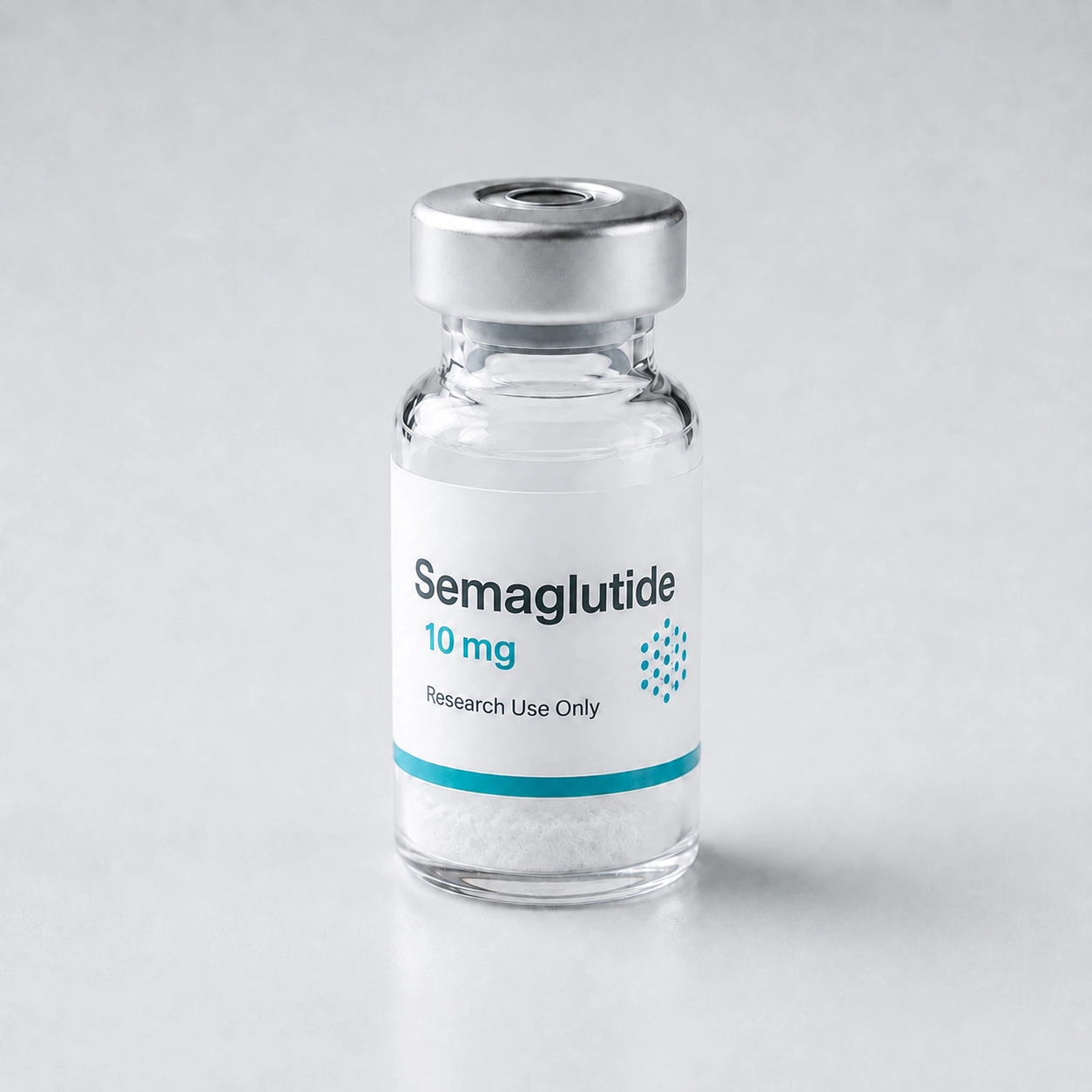
10 mg
Half-life
About 1 week
How much, and do you cycle it?
The range, and whether you take breaks.0.25 up to 2.4 mg per week (start low, increase slowly), weekly. Not cycled Human study
Taken continuously, with the dose stepped up rather than paused. In the STEP 1 extension people regained about two thirds of the weight they had lost within a year of stopping. The question is whether to stay on it, not when to take a break.
About 1 weekFDA label
The label states approximately 1 week, and that semaglutide is present in the circulation for about 5 weeks after the last dose.
Source: Ozempic (semaglutide) US prescribing information, section 12.3. DailyMed setid adec4fd2-6858-4c99-91d4-531f5f2a2d79
You can compare this against the whole library to see where it sits.
How do I dose and price it?
Enter your vial and your dose. Pick a mix. We show the draw and the cost.The vial holds a fixed amount of drug. Adding more water does not make more drug, it just spreads it thinner, so you draw a bigger number on the syringe for the same dose.
Choose your mix
Measuring the water1 mL = one full 100-unit syringe.
Semaglutide starts at $24.99 across 127 vendors, typically $3.11 – $14.00 per mg.
317 listings, last read Oct 24, 2026. Shipping and card fees are not included.
How do you store it?
Before mixing, and after.Fridge before first use. Room temperature is fine once in use.
Sealed pens live in the fridge. Once you start a pen it can stay at room temperature for the in-use window on the label (often about 4 to 6 weeks depending on the product). Keep it out of light, do not freeze it, and toss it if it has been frozen or left hot.
What are the side effects and cautions?
Known cautions and warnings for this compound.Vials sold as "GLP-1 SM" or "GLP-1 (S)" are semaglutide. GLP-1 on its own is a hormone and a whole class of drugs, so the bare term does not identify what is in a vial. Check the label for semaglutide.
Solubility, computed: 29% charged residues, 39% hydrophobic. Water usually sufficient.
A first-pass rule from peptide manufacturers' guidance. It does not account for disulfide bridges, salt form or how the powder was dried, and it predicts what should be easy rather than what will happen in your vial.
Who should avoid it
- A personal or family history of medullary thyroid cancer, or the genetic condition MEN 2
- Pregnancy, or trying to become pregnant See the two-month preconception instruction.
- A history of pancreatitis, which needs a conversation with your doctor first
- Severe stomach-emptying problems (gastroparesis)
Stop and get help
- Severe stomach pain that spreads to your back, which can signal pancreas inflammation
- A lump or swelling in your neck, hoarseness, or trouble swallowing
- Vomiting badly enough that you cannot keep fluids down
- Sudden changes in your vision
- Signs of an allergic reaction such as face or throat swelling or trouble breathing
Common effects
- Nausea, which is the most common effect and usually worst in the first weeks and after each dose increase
- Diarrhea, constipation, and vomiting
- Tiredness, which real-world users report far more often than trial write-ups suggest
- Burping and reflux
- Injection-site redness
Where this page says nothing is established, that means nobody has studied it, not that a compound is safe.
Is Semaglutide approved?
And where the numbers on this page come from.Yes. Semaglutide is FDA approved and available on prescription in the United States.
- Approval statusFDA-approved
- RouteUnder the skin (also comes as a pill)
- Checked14 August 2026
- DoseFrom the drug label. The manufacturer tested this range and a regulator reviewed it.
- Vial sizeFrom what vendors typically list; not a recommendation.
- Sources
What has happened recently
In January 2026 the FDA asked that the warning about suicidal thoughts and behavior be removed from the obesity versions of this drug family after a review found no increased risk. Labels were updated in February 2026.
What regulators say
From official documentsIndicated as an adjunct to diet and exercise to improve glycemic control in adults with type 2 diabetes mellitus; to reduce the risk of major adverse cardiovascular events in adults with type 2 diabetes and established cardiovascular disease; to reduce the risk of sustained eGFR decline, end-stage kidney disease and cardiovascular death in adults with type 2 diabetes and chronic kidney disease
Initial US approval 2017. Label revised 10/2025.
Checked 12 September 2026FDA via DailyMed: Ozempic (semaglutide) injection, prescribing information, DailyMed, label revised October 2025Indicated as an adjunct to diet and exercise to improve glycemic control in adults with type 2 diabetes mellitus; to reduce the risk of major adverse cardiovascular events in adults with type 2 diabetes who are at high risk for these events
Checked 12 September 2026FDA via DailyMed: Rybelsus and Ozempic (oral semaglutide) tablets, prescribing information, DailyMedIndicated in combination with a reduced calorie diet and increased physical activity to reduce the risk of major adverse cardiovascular events in adults with established cardiovascular disease and either obesity or overweight; to reduce excess body weight and maintain weight reduction long term in adults and pediatric patients aged 12 years and older with obesity and adults with overweight with at least one weight-related comorbid condition; for the treatment of noncirrhotic metabolic dysfunction-associated steatohepatitis (MASH) with moderate to advanced liver fibrosis
Wegovy also carries a DailyMed listing at setid f5e548d0-cc79-4c34-a3f5-e20a5b8b6564.
Checked 12 September 2026FDA via DailyMed: Wegovy (semaglutide) injection, FDA-approved prescribing information, 2025 (NDA 215256, supplement 24)
Enforcement naming this compound
Vendor product named as an unapproved new drug (Royal Peptides, August 2026)
The vendor's product, not the approved Ozempic or Wegovy This is a finding about one seller's vial, not about the compound or any approved product containing it.
Read the letter
You can compare this against the whole library, or read how to check a seller.
More on Semaglutide
- Semaglutide prices
- Semaglutide 2 mg priceWhat every tracked vendor charges for a 2 mg Semaglutide vial, which ones show testing evidence.
- Semaglutide 5 mg priceWhat every tracked vendor charges for a 5 mg Semaglutide vial, which ones show testing evidence.
- Semaglutide 10 mg priceWhat every tracked vendor charges for a 10 mg Semaglutide vial, which ones show testing evidence.
- Semaglutide 12 mg priceWhat every tracked vendor charges for a 12 mg Semaglutide vial, which ones show testing evidence.
- Semaglutide 15 mg priceWhat every tracked vendor charges for a 15 mg Semaglutide vial, which ones show testing evidence.
- Semaglutide 20 mg priceWhat every tracked vendor charges for a 20 mg Semaglutide vial, which ones show testing evidence.
- Semaglutide 30 mg priceWhat every tracked vendor charges for a 30 mg Semaglutide vial, which ones show testing evidence.
- Petrelintide Hit 9.2%. It Has Never Been Tested Against SemaglutidePetrelintide reached 9.2% weight loss in type 2 diabetes. No trial has compared its side effects with semaglutide's, and Phase 3 will not either.
- Semaglutide vs Tirzepatide vs RetatrutideOne head-to-head trial, three pivotal trials, and why their headline weight-loss figures are not directly comparable.
- Semaglutide vs LiraglutideIn STEP 8, semaglutide produced more weight loss than liraglutide; liraglutide offers generic availability and daily dosing.
- Liraglutide vs Semaglutide vs Tirzepatide vs RetatrutideOne receptor, then two, then three, and the numbers climb with them. Only two of the three steps have a head to head behind them.
- Cagrilintide vs SemaglutideBoth were tested in the same trial, in the same people, over the same 68 weeks. Semaglutide won on weight, and the combination beat both while coming in below their sum.
- Petrelintide vs SemaglutideSemaglutide produced 16.9 percent in STEP 1 against petrelintide's 10.7 in ZUPREME-1. Petrelintide's case is tolerability: no vomiting at its best dose, and no added dropouts over placebo.
- Semaglutide vs TirzepatideTirzepatide won the head-to-head at 20.2 percent against 13.7. The 47 percent figure everyone quotes is relative; the absolute gap is 6.5 points, from an open-label trial.
- CagriSema: what the REDEFINE trials foundThe only peptide stack tested against each of its compounds alone. 22.7% weight loss against 16.1% for semaglutide, which is 88% of additive.
- GLP-1 + growth hormone: the muscle questionLosing weight on a GLP-1 costs muscle. People add ipamorelin or CJC-1295 to stop it. No trial has tested that, and two things that do work are free.
- Semaglutide + MOTS-c: still untested in peopleMOTS-c has never completed a human efficacy trial, and its one listed registration is not one we count. Exercise raises it twelvefold on its own.
- Semaglutide + BPC-157: the wrong organPeople add BPC-157 to stop the nausea. The nausea comes from the brainstem, not from gut damage, and the same signal is what suppresses appetite.
- Missed a Semaglutide or Tirzepatide Dose? What the Labels SayWhat approved product labels say about missed doses, why their rules differ, and why none transfers to research peptides.
- What Happens When You Stop Semaglutide or Tirzepatide? What the Regain Studies MeasuredWhat semaglutide and tirzepatide withdrawal trials measured, why regain estimates differ, and what the labels say about stopping.
- Does Semaglutide Cause Muscle Loss? What Happens to Muscle, Skin, Hair and BoneLean tissue was 30 to 40% of weight lost in trials, and function held up. What preserves muscle has evidence behind it and is not sold in a vial.
- Can You Take Semaglutide While Breastfeeding? What Has Actually Been MeasuredWhat human milk studies found for semaglutide and tirzepatide, what their labels say, and what remains unknown about milk supply and research-vial peptides.
- Semaglutide vs Tirzepatide vs Retatrutide: What Is Actually DifferentOne receptor, two, or three. How these three compare on mechanism, published trial weight loss, side effects, legal status, and real cost per dose.
- Compounded Semaglutide: What Actually Changed, and What Is Still LegalThe shortage route closed in 2025 and a narrower one remains. Two drugs, two dockets, four different deadlines, and a proposed rule that would close the rest.
What else is like Semaglutide?
Others in GLP-1 agonists, side by side.If you're weighing Semaglutide, it's worth reading Mazdutide, Survodutide, and CagriSema in the same class.
The drug in Ozempic and Wegovy: a weekly shot that curbs hunger for steady weight loss.
- Dose
- 0.25 up to 2.4 mg per week (start low, increase slowly)
- How often
- Weekly
An experimental weekly weight-loss shot (approved in China) that also helps blood sugar and cholesterol.
- Dose
- 2 up to 9 mg per dose (start low, increase slowly)
- How often
- Weekly
An experimental weekly shot for weight loss and fatty-liver disease.
- Dose
- 2.4 up to 6 mg per week (start low, increase slowly)
- How often
- Weekly
A weekly two-in-one shot combining cagrilintide and semaglutide for bigger loss.
- Dose
- 2.4 mg cagrilintide plus 2.4 mg semaglutide per week
- How often
- Weekly
Compared with
One head-to-head trial, three pivotal trials, and why their headline weight-loss figures are not directly comparable.
Read comparison →In STEP 8, semaglutide produced more weight loss than liraglutide; liraglutide offers generic availability and daily dosing.
Read comparison →One receptor, then two, then three, and the numbers climb with them. Only two of the three steps have a head to head behind them.
Read comparison →Both were tested in the same trial, in the same people, over the same 68 weeks. Semaglutide won on weight, and the combination beat both while coming in below their sum.
Read comparison →Semaglutide produced 16.9 percent in STEP 1 against petrelintide's 10.7 in ZUPREME-1. Petrelintide's case is tolerability: no vomiting at its best dose, and no added dropouts over placebo.
Read comparison →Tirzepatide won the head-to-head at 20.2 percent against 13.7. The 47 percent figure everyone quotes is relative; the absolute gap is 6.5 points, from an open-label trial.
Read comparison →Guides for this compound
- How to Reconstitute a Peptide
Mix peptide powder with bacteriostatic water, step by step.
- How to Read an Insulin Syringe
Read the units, convert to millilitres, and draw the exact dose.
- mcg vs mg: The Peptide Dosing Mistake to Avoid
Your vial says mg and your protocol says mcg. Here is the conversion and how to check it.
- Do GLP-1 Drugs Affect Sperm, Testosterone or Male Fertility? What Has Actually Been Measured
Two 2026 reviews counted 10 studies and 639 men. One randomized trial measured semen in 25 men. No study has recorded a pregnancy. What the evidence shows.
- Can You Pay for Peptides or GLP-1s With an HSA or FSA?
A prescribed GLP-1 from a licensed pharmacy qualifies; a research-use-only vial does not.
Sources
- FDA, approval for MASH liver disease(2025)FDA accelerated approval for MASH liver disease in adults with moderate to advanced scarring.
- FDA, removal of the suicidal-ideation warning (Jan 2026)(2026)FDA asked for the suicidal-ideation warning to be removed after a review found no increased risk.
- NIH PMC, semaglutide and alcohol use disorder trial(2025)Randomized trial reporting reduced alcohol craving and fewer heavy-drinking days.
- STEP 1 trial, New England Journal of Medicine, 2021
- STEP 1 analysis, PubMed Central
Beyond these, 604 records are indexed. Browse the records