
Semaglutide vs Liraglutide
Semaglutide produced roughly two and a half times the weight loss in a direct trial, 15.8 percent against 6.4 over 68 weeks. Both act on the same receptor and the difference is that one lasts a week and the other a day. Gastrointestinal side effects were almost identical in that trial, and twice as many people left the liraglutide arm.
The weight loss figures on this page come from STEP 8, a trial that gave both drugs to different arms of the same study. Most comparisons of these two set separate trials against each other.
- Metabolic and weight loss
- A real head to head
- One has a generic
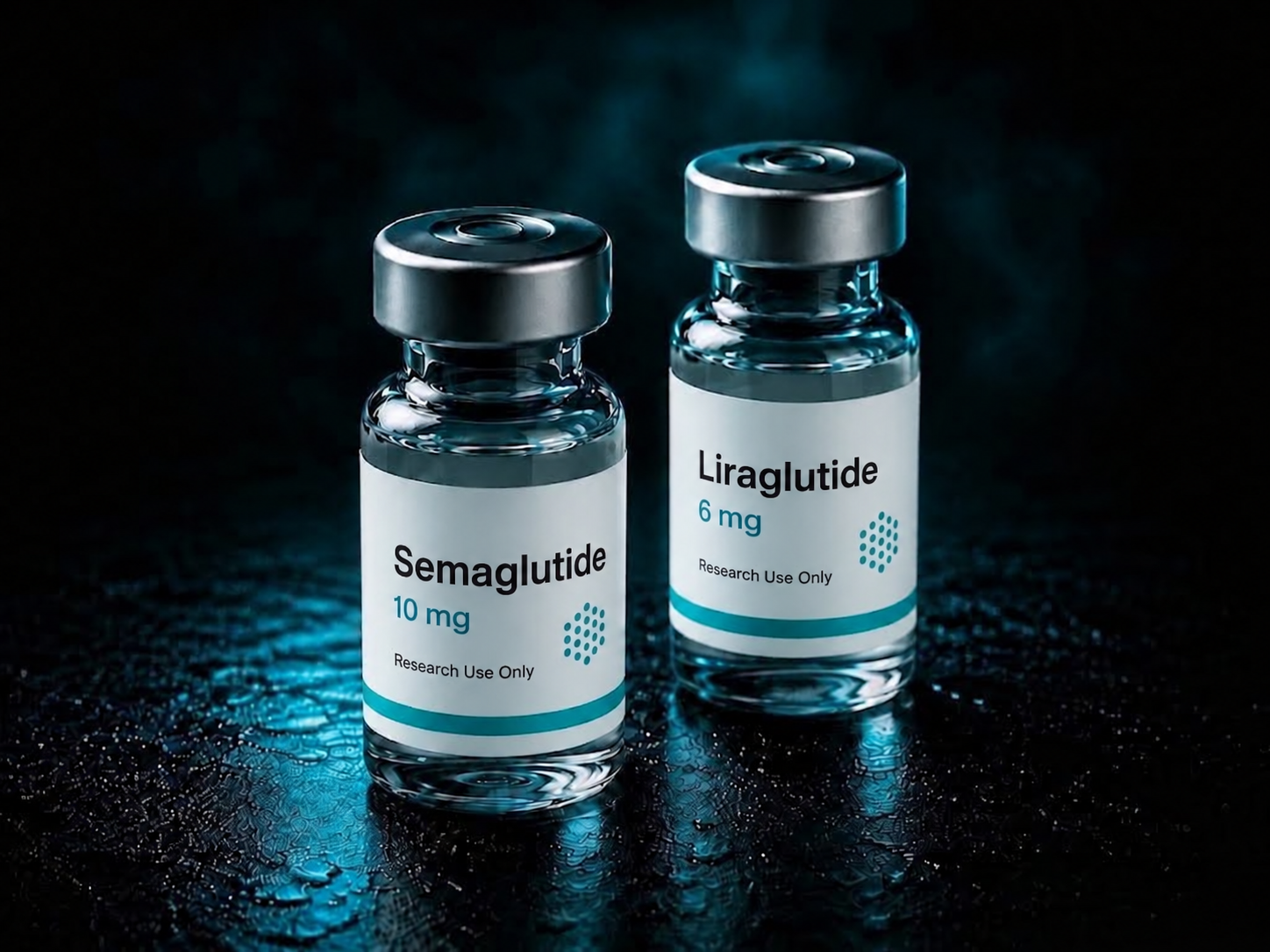
One receptor, two speeds, and a very different result.
Semaglutide produced 15.8 percent weight loss against 6.4 for liraglutide in the same trial. Both act on GLP-1; one is weekly and the other daily.
| Attribute | Semaglutide | Liraglutide |
|---|---|---|
| Receptor | GLP-1 | GLP-1, the same one |
| Dosing | Once weekly | Once daily |
| Head to head weight loss | 15.8 percent [1] | 6.4 percent [1] |
| Gastrointestinal effects in that trial | 84.1 percent [1] | 82.7 percent [1] |
| Left the trial early | 13.5 percent [1] | 27.6 percent [1] |
| Generic available | No | Yes, both indications [2] |
The two drugs made people feel almost equally unwell. Twice as many left the liraglutide arm anyway.
Semaglutide
A modified copy of GLP-1 carrying a fatty acid that binds albumin and stretches its action to about a week. Sold as Ozempic for diabetes, Wegovy for weight, and Rybelsus as a tablet. In plain terms: the drug that made this category famous.
Once weekly
15.8 percent
No
Yes
Liraglutide
The same hormone copied with a weaker albumin-binding modification, lasting about a day. Sold as Victoza for diabetes and Saxenda for weight. In plain terms: the one that got here first and is now the cheap option.
Once daily
6.4 percent
Yes, since 2024
No
Why does the same receptor give such different results?
Semaglutide and liraglutide activate the identical receptor. The difference is duration: liraglutide lasts about a day, semaglutide about a week. In a direct trial that produced 6.4 percent weight loss against 15.8.
These two are not different mechanisms. They are the same mechanism at two speeds.
Both are modified copies of GLP-1, a hormone your gut releases after eating that slows stomach emptying, prompts insulin release when blood sugar is high, and acts on appetite centres in the brain. Natural GLP-1 survives a couple of minutes. Both drugs carry a fatty acid that binds albumin and slows clearance.
The difference is in how long each survives. Liraglutide lasts roughly a day against semaglutide's week. [3]
That single change produced most of the gap. In STEP 8, a head to head over 68 weeks, semaglutide produced 15.8 percent weight loss against liraglutide's 6.4. [1] Same receptor, roughly two and a half times the result.
The averages understate the difference, because what separates these two most is how many people reached a meaningful threshold at all.
| Attribute | Semaglutide | Liraglutide |
|---|---|---|
| 10 percent or more | 70.9 percent | 25.6 percent |
| 15 percent or more | 55.6 percent | 12.0 percent |
| 20 percent or more | 38.5 percent | 6.0 percent |
At the 20 percent threshold the gap is more than sixfold. [1] Averages hide that, because a mean of 6.4 percent can describe a group where most people lost a little, and the threshold figures show what actually happened.
Why duration matters this much is not fully settled. Weekly dosing means steadier receptor occupancy with fewer peaks and troughs. It also removes six injections a week, so some of the gap may be people simply taking it more reliably. No trial has separated those two explanations.
Seven days, two schedules
Identical target.Both bind the GLP-1 receptor. Neither adds a second one.
Different clearance.About a day against about a week.
The gap is large.6.4 percent against 15.8 in the trial that compared them.
Why did twice as many people quit the weaker drug?
In STEP 8, gastrointestinal side effects were reported by 84.1 percent on semaglutide and 82.7 percent on liraglutide, a gap of under two points. Discontinuation was 13.5 percent against 27.6. Same burden, different retention.
In STEP 8, gastrointestinal side effects were reported by 84.1 percent of the semaglutide group and 82.7 percent of the liraglutide group, while 13.5 percent left the semaglutide arm against 27.6 percent on liraglutide, so tolerability cannot explain the dropout gap. [1]
That is the finding, and almost nobody reports it.
The side effect rates were within two points of each other. The two drugs made people feel about equally unwell. Discontinuation was roughly double. If the gap were about tolerability, the side effect rates would differ, and they do not.
The likeliest explanation is in the trial's own design, and it is almost never mentioned. Semaglutide was escalated to its target dose over 16 weeks and liraglutide over 4. [1]
Gastrointestinal effects in this class are worst during escalation. Liraglutide's group therefore reached full dose four times faster and absorbed the same total burden in a quarter of the time. The rates end up equal across 68 weeks, and the experience in the first month does not.
A second explanation fits alongside it and the trial separates neither. People weigh discomfort against results, and one group was losing two and a half times as much weight, which is a reason to persist through the same symptoms.
The two schedules, since the difference matters here.
| Attribute | Semaglutide | Liraglutide |
|---|---|---|
| Starting dose | 0.25 mg weekly | 0.6 mg daily |
| Target dose for weight | 2.4 mg weekly | 3.0 mg daily |
| Time to reach it | 16 weeks [1] | 4 weeks [1] |
| Injections to get there | 16 | 28 |
Either way, the practical reading is the same. A drug you stop taking does not work, and the discontinuation figure may matter more to an individual than the efficacy figure.
What does the evidence actually show?
Liraglutide's own trial produced 8.0 percent at 56 weeks. Semaglutide's produced 14.9 at 68. The head to head gave 6.4 and 15.8, and head to head figures are the more reliable ones because both groups went through the same study.
The FDA approves liraglutide as Victoza for type 2 diabetes, following European approval in 2009. It is the first of this family to reach the US market. [2]
Approved again as Saxenda, at a higher dose, for chronic weight management. The first GLP-1 drug approved for obesity. [2]
Pi-Sunyer publishes SCALE in the New England Journal of Medicine. 3,731 adults, 56 weeks, 8.0 percent weight loss against 2.6 on placebo, with 33.1 percent losing 10 percent or more. [4]
LEADER reports a 13 percent reduction in major adverse cardiovascular events in patients with type 2 diabetes at high cardiovascular risk. An approval for cardiovascular risk reduction follows in 2017. [2]
Approved as Ozempic for diabetes, then as Wegovy for weight management after STEP 1 reports 14.9 percent at 68 weeks. [5]
STEP 8, the head to head. 68 weeks, 19 US sites, 338 adults with obesity and without diabetes, randomised 3:1:3:1. Semaglutide 15.8 percent against liraglutide 6.4, a difference of 9.4 percentage points. Published in JAMA. [1]
SELECT reports a 20 percent reduction in major cardiovascular events against placebo in 17,604 adults with existing heart disease and obesity but no diabetes. [6]
The first generic GLP-1 reaches the US market, a generic Victoza for type 2 diabetes. [2]
Teva launches a generic Saxenda. This is the first generic GLP-1 indicated for weight loss anywhere in the US. [2]
The drug people quit twice as often did not make them feel any worse.
STEP 8 measured both. Gastrointestinal side effects were reported by 84.1 percent on semaglutide and 82.7 percent on liraglutide. Discontinuation was 13.5 percent against 27.6. [1]
That rules out the obvious explanation. Liraglutide was not harder to tolerate, so tolerability cannot be why people left it.
The trial separates neither of the two candidate explanations. People weigh discomfort against results, and one group was losing two and a half times more weight. And liraglutide's dose was escalated over four weeks against semaglutide's sixteen, so the same burden arrived four times faster. [1]
The gap in results is real regardless. 15.8 percent against 6.4, in the same trial, in the same population, over the same 68 weeks, from two drugs acting on the same receptor. The difference between them is how long each one lasts.
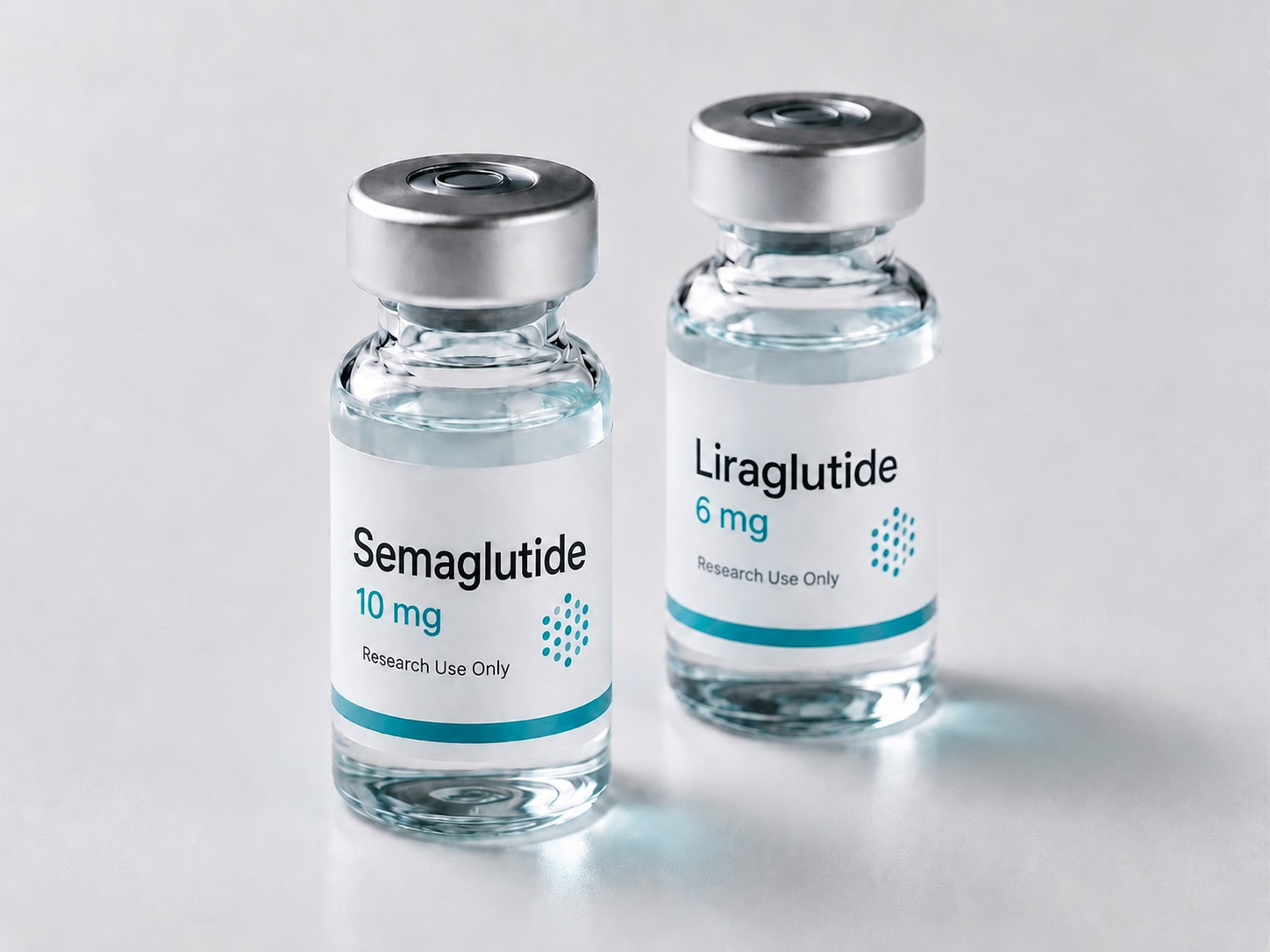
How do they compare, side by side?
| Attribute | Semaglutide | Liraglutide |
|---|---|---|
| Brands | Ozempic, Wegovy, Rybelsus | Victoza, Saxenda |
| Receptor | GLP-1 | GLP-1 |
| Duration | About a week | About a day |
| Dosing | Once weekly | Once daily |
| Top weight dose | 2.4 mg | 3.0 mg |
| Head to head weight loss | 15.8 percent [1] | 6.4 percent [1] |
| Own pivotal trial | STEP 1, 14.9 percent at 68 weeks [5] | SCALE, 8.0 percent at 56 weeks [4] |
| Cardiovascular trial | SELECT, 20 percent MACE reduction, no diabetes [6] | LEADER, 13 percent MACE reduction, in diabetes [2] |
| First approved | 2017 for diabetes [5] | 2010 for diabetes [2] |
| First approved for weight | 2021 [5] | 2014, the first ever [2] |
| Oral form | Yes | No |
| Generic | No | Yes, both indications [2] |
| Paediatric approval | Limited | Diabetes from age 10, and adolescent obesity [2] |
| Boxed warning | Thyroid C-cell tumours [7] | Thyroid C-cell tumours [7] |
What are the key differences?
Semaglutide produced 15.8 percent weight loss against 6.4 and has the stronger cardiovascular evidence, at 20 percent against 13. Liraglutide is dosed daily, is the only one available as a generic, and has paediatric approvals semaglutide does not.
Shared: both activate GLP-1 · both are injected · both carry the same boxed warning for thyroid C-cell tumours · both produce gastrointestinal effects at nearly identical rates · neither appears on the 2026 WADA Prohibited List
Semaglutide
About a week
15.8 percent
13.5 percent
20 percent, in obesity without diabetes
Yes
No
Liraglutide
About a day
6.4 percent
27.6 percent
13 percent, in diabetes
No
Yes
Summary compiled from published trials and FDA records.
What does each one cost?
Liraglutide is the only GLP-1 with a generic, for both indications. Generic Victoza arrived in December 2024 and generic Saxenda in August 2025, the first generic GLP-1 for weight loss in the US. Generic liraglutide runs roughly $370 to $700 a month against brand prices near $1,350.
This is the practical difference between these two, and it goes the opposite way to the efficacy difference.
Liraglutide's patents expired and semaglutide's have not. Novo Nordisk held exclusive rights for more than fifteen years. Meitheal launched the first generic liraglutide injection for diabetes in April 2025, Teva followed, and Teva launched a generic Saxenda in August 2025, the first generic GLP-1 indicated for weight loss in the United States. [2]
| Attribute | Semaglutide | Liraglutide |
|---|---|---|
| Brand list price | About $1,349 a month for Wegovy | About $1,349 a month for Saxenda [2] |
| Manufacturer self-pay | About $349 a month | Not applicable |
| Generic | None | Roughly $370 to $700 a month [2] |
| With insurance and savings card | As low as $25 | Varies, coverage for weight use is limited [2] |
Those figures come with caveats.
Generic pricing varies widely by pharmacy, with reported ranges from about $263 to $750 for a two-pen package depending on retailer. [2] Calling around is worth real money here.
And brand Victoza has been on FDA shortage status into 2026 because of manufacturing delays, which is an unusual position for a drug whose generics are already on the market. [2]
Every figure here is perishable. Prices in this category moved repeatedly through 2025 and 2026.
Which one should you choose?
If cost is the constraint, liraglutide is the only generic option at roughly $370 to $700 a month. If weight loss is the goal, semaglutide produced 15.8 percent against 6.4 in the trial that compared them. If you will not inject at all, only semaglutide has a tablet.
Is cost the binding constraint? Liraglutide is the only GLP-1 you can buy as a generic, for either indication. [2] It also produces less weight loss, so the trade is explicit rather than hidden.
Daily or weekly, needle or tablet? Liraglutide is a daily injection and has no oral form. Semaglutide is weekly, and since January 2026 there is an oral Wegovy approved specifically for weight loss, at $149 to $299 a month through the manufacturer's pharmacy. [2] For anyone who will not inject, that decides it outright.
What are you treating? Semaglutide has the stronger cardiovascular evidence, from a trial in people with heart disease and obesity but no diabetes. [6] Liraglutide's cardiovascular data is in a diabetes population. [2] Liraglutide also has paediatric approvals semaglutide does not.
How much does the discontinuation figure matter to you? Twice as many people left the liraglutide arm of the head to head, despite nearly identical side effect rates. [1] A drug you stop taking does not work.
What has nobody answered?
Nobody has separated duration from adherence, or explained why discontinuation was 27.6 percent against 13.5 when side effect rates were within two points. No trial has compared the two on cardiovascular events.
Nobody has separated duration from adherence. Semaglutide lasts a week and requires one injection. Liraglutide lasts a day and requires seven. Whether the gap in results comes from steadier receptor occupancy or from people simply taking it more reliably has not been tested.
Nobody has explained the discontinuation gap. Side effect rates were within two points and dropout was double. [1] The escalation asymmetry, sixteen weeks against four, is a plausible cause and the trial was not designed to test it.
Nobody has compared them on cardiovascular events. Each has its own outcome trial in a different population answering a different question. [2][6] No trial has put them against each other on events.
Nobody has tested whether a slower liraglutide escalation changes anything, either. If the dropout gap is partly about how fast the dose rises, that is a fixable problem and nobody has tried to fix it.
What are the side effects, and what are you buying?
Gastrointestinal effects dominate for both at nearly identical rates, 84.1 and 82.7 percent in the head to head. Both carry a boxed warning for thyroid C-cell tumours based on rodent studies, with a hard contraindication for a family history of medullary thyroid carcinoma.
The same boxed warning for both
Risk of thyroid C-cell tumours. Rodents developed dose-dependent tumours at clinically relevant exposures [7]
Contraindicated with a personal or family history of medullary thyroid carcinoma, or with multiple endocrine neoplasia syndrome type 2 [7]
Pancreatitis and gallbladder disease are labelled warnings for both [7]
Whether these tumours occur in humans is unknown, and no confirmed cases have emerged from the trial programmes
From the head to head
What you are actually buying
The boxed warning needs context in both directions. It exists because rodents given GLP-1 drugs developed thyroid C-cell tumours in a dose-dependent way, and rodents carry far more of the relevant receptors on those cells than people do. Whether it happens in humans is unknown, and no confirmed cases have come out of the trial programmes. [7]
It also carries a hard contraindication, and a prescriber is meant to ask about your family's thyroid history before writing either drug.
Are they banned in sport?
Neither appears on the 2026 WADA Prohibited List. The relevant risk sits in weight class sports, where rapid weight loss has obvious competitive relevance, and absence from the list is not permission.
Neither semaglutide nor liraglutide appears on the 2026 Prohibited List.
Weight class sports are where this could matter, since rapid weight loss has obvious competitive relevance, and WADA states that absence from the list does not mean a substance is permitted.
If you compete under a testing body, ask that body directly.
Are they FDA approved?
Both, several times over. Liraglutide was approved in 2010 for diabetes and 2014 for weight, the first GLP-1 approved for obesity. It is also the only one of the two available as a generic, since December 2024 for diabetes and August 2025 for weight.
Liraglutide is approved twice and available as a generic. As Victoza for type 2 diabetes from January 2010, and as Saxenda for chronic weight management from December 2014, the first GLP-1 approved for obesity. Victoza additionally carries an approval for cardiovascular risk reduction in adults with type 2 diabetes and established cardiovascular disease, and a paediatric approval for type 2 diabetes from age 10. [2]
Generic liraglutide is approved for both indications. Generic Victoza reached the US market in December 2024 and generic Saxenda in August 2025. No other GLP-1 has a generic for either indication. [2]
Semaglutide is approved three times over. As Ozempic for diabetes, Wegovy for chronic weight management, and Rybelsus in tablet form, with Wegovy additionally approved for cardiovascular risk reduction in certain adults with established cardiovascular disease and obesity or overweight. [5]
Neither has a generic semaglutide equivalent, and compounded semaglutide has been restricted following FDA action. [8]
Common questions
Which is better, semaglutide or liraglutide?
Semaglutide, for weight loss, by a wide margin. In the trial that compared them directly over 68 weeks it produced 15.8 percent weight loss against liraglutide's 6.4.[1] Both act on the same receptor, and the difference is that semaglutide lasts about a week and liraglutide about a day.
Why did more people quit liraglutide?
Not because it was harder to tolerate: gastrointestinal side effects were 84.1 percent on semaglutide against 82.7 on liraglutide, while discontinuation was 13.5 percent against 27.6. Gastrointestinal side effects were reported by 84.1 percent on semaglutide and 82.7 percent on liraglutide, within two points of each other, while discontinuation was 13.5 percent against 27.6.[1] Liraglutide's dose was also escalated over four weeks against semaglutide's sixteen, so the same burden arrived four times faster.
Is there a generic for either?
For liraglutide only. Generic Victoza reached the US market in December 2024 for diabetes and Teva launched a generic Saxenda in August 2025, the first generic GLP-1 indicated for weight loss in the US.[2] No generic semaglutide exists.
How much cheaper is generic liraglutide?
Roughly $370 to $700 a month against brand prices near $1,350, though pricing varies widely by pharmacy.[2] It is the only genuinely cheaper option in this class, and it produces the least weight loss of the two.
What are the side effects?
Gastrointestinal effects dominate for both and at nearly identical rates: nausea, vomiting, diarrhoea and constipation, reported by 84.1 percent on semaglutide and 82.7 percent on liraglutide in the head to head.[1] They are worst during dose escalation. Both carry a boxed warning for thyroid C-cell tumours based on rodent studies, with a hard contraindication for a family history of medullary thyroid carcinoma.[7]
How long do they take to work?
Weight loss begins within weeks and continues for most of a year. The pivotal trials ran 56 weeks for liraglutide and 68 for semaglutide, and the curves were still descending at the end.[4][5] Dose escalation takes the first 4 weeks for liraglutide and 16 for semaglutide, and that is when side effects are worst.[1]
Do you regain the weight if you stop?
Yes, across this class. Weight regain after discontinuation is documented for both, and no trial has compared the two on what happens after stopping.
Can you take semaglutide as a pill?
Yes. Rybelsus is oral semaglutide for diabetes, and since January 2026 there is an oral Wegovy approved specifically for weight loss at $149 to $299 a month.[2] Liraglutide has no oral form, so for anyone who will not inject, semaglutide is the only one of the two available.
How many people actually lose 15 percent?
55.6 percent on semaglutide against 12.0 percent on liraglutide, in the trial that compared them.[1] At the 20 percent threshold it is 38.5 against 6.0, a gap of more than sixfold. Those figures separate the two drugs more sharply than the averages do.
Is Ozempic or Wegovy better than Saxenda?
Wegovy, if the goal is weight loss. Wegovy is semaglutide and Saxenda is liraglutide, and in the trial that compared the two molecules directly semaglutide produced 15.8 percent weight loss against 6.4.[1] Ozempic is the same molecule as Wegovy approved for diabetes at lower doses. Saxenda has a generic and Wegovy does not.[2]
Is Saxenda the same as Victoza?
Yes, both are liraglutide. They differ in approved indication and dose range: Victoza for type 2 diabetes and Saxenda at a higher dose for chronic weight management.
Can you switch from liraglutide to semaglutide?
No trial has studied switching, and people do it constantly. The head to head randomised people who had been on neither drug, so it says nothing about what happens when you change.[1] Dose titration starts again from the bottom.
Which is better for the heart?
Semaglutide has the stronger evidence, though the two trials asked different questions. SELECT found a 20 percent reduction in major cardiovascular events against placebo in people with heart disease and obesity but no diabetes.[6] LEADER found 13 percent in a type 2 diabetes population.[2] No trial has compared them on events.
Do they both have a boxed warning?
Yes, the same one, for thyroid C-cell tumours based on rodent studies, with a hard contraindication for a personal or family history of medullary thyroid carcinoma or MEN 2.[7]
Is liraglutide obsolete?
Not for everyone. It produces less weight loss than semaglutide, and it has generic availability, daily dosing for anyone who prefers it, paediatric approvals semaglutide lacks, and the longest real-world safety record in the class.
The published record
What Europe PMC and ClinicalTrials.gov hold for each, on the same rule.
Semaglutide has 604 records to Liraglutide's 600. 191 original human studies against 166. Semaglutide has 764 registered trials to Liraglutide's 514.
Semaglutide: FDA via DailyMed: Indicated as an adjunct to diet and exercise to improve glycemic control in adults with type 2 diabetes mellitus; to reduce the risk of major adverse cardiovascular events in adults with type 2 diabetes and established cardiovascular disease; to reduce the risk of sustained eGFR decline, end-stage kidney disease and cardiovascular death in adults with type 2 diabetes and chronic kidney disease · FDA via DailyMed: Indicated as an adjunct to diet and exercise to improve glycemic control in adults with type 2 diabetes mellitus; to reduce the risk of major adverse cardiovascular events in adults with type 2 diabetes who are at high risk for these events · FDA via DailyMed: Indicated in combination with a reduced calorie diet and increased physical activity to reduce the risk of major adverse cardiovascular events in adults with established cardiovascular disease and either obesity or overweight; to reduce excess body weight and maintain weight reduction long term in adults and pediatric patients aged 12 years and older with obesity and adults with overweight with at least one weight-related comorbid condition; for the treatment of noncirrhotic metabolic dysfunction-associated steatohepatitis (MASH) with moderate to advanced liver fibrosis
The published recordSemaglutide
Papers and trials about Semaglutide
354 papers tagged human · 191 not reviews or lab · 78 clinical trial publications
764 registered trials · 13 with posted results
Compare this against the whole library →
Indicated as an adjunct to diet and exercise to improve glycemic control in adults with type 2 diabetes mellitus; to reduce the risk of major adverse cardiovascular events in adults with type 2 diabetes and established cardiovascular disease; to reduce the risk of sustained eGFR decline, end-stage kidney disease and cardiovascular death in adults with type 2 diabetes and chronic kidney diseaseRegulatorsCounted from Europe PMC indexing, not read by a person; a human tag can land on reviews, commentary or lab papers; clinical trial publications is the narrower count. 504 papers and 100 trials indexed in detail.
The published recordLiraglutide
Papers and trials about Liraglutide
332 papers tagged human · 166 not reviews or lab · 66 clinical trial publications
514 registered trials · 24 with posted results
Counted from Europe PMC indexing, not read by a person; a human tag can land on reviews, commentary or lab papers; clinical trial publications is the narrower count. 500 papers and 100 trials indexed in detail.
References
- 01
Rubino DM, Greenway FL, Khalid U, O'Neil PM, Rosenstock J, Sørrig R, Wadden TA, Wizert A, Garvey WT; STEP 8 Investigators. Effect of weekly subcutaneous semaglutide vs daily liraglutide on body weight in adults with overweight or obesity without diabetes: the STEP 8 randomized clinical trial. JAMA. 2022 Jan 11;327(2):138-150. DOI 10.1001/jama.2021.23619. PMID 35015037. Trial NCT04074161.
Phase 3b, randomised, open-label, 68 weeks, 19 US sites. Randomised 3:1:3:1 to semaglutide 2.4 mg weekly (n=126) or matching placebo, or liraglutide 3.0 mg daily (n=127) or matching placebo, with placebo groups pooled (n=85). Semaglutide used a 16-week dose escalation and liraglutide a 4-week escalation.
Mean weight change: semaglutide 15.8 percent against liraglutide 6.4 percent, difference 9.4 percentage points, 95% CI 12.0 to 6.8, p less than 0.001. Pooled placebo 1.9 percent. Absolute weight loss 15.3 kg against 6.8 kg. Waist circumference 13.2 cm against 6.6 cm. Reaching 10 percent loss: 70.9 against 25.6 percent. 15 percent: 55.6 against 12.0. 20 percent: 38.5 against 6.0.
Gastrointestinal adverse events: 84.1 percent on semaglutide, 82.7 percent on liraglutide. Discontinuation for any reason: 13.5 percent against 27.6 percent.
- 02
Liraglutide approvals, trials and generic status. FDA approval as VICTOZA for type 2 diabetes January 2010, following EMA approval 2009. FDA approval as SAXENDA for chronic weight management December 2014, the first GLP-1 receptor agonist approved for obesity. Cardiovascular risk reduction indication added 2017 following LEADER, which reported a 13 percent reduction in major adverse cardiovascular events in type 2 diabetes patients at high cardiovascular risk. Paediatric approval for type 2 diabetes from age 10 in 2019.
Generic availability: Novo Nordisk held exclusivity for more than fifteen years. Teva released an authorised generic of Victoza in June 2024; FDA-approved generic liraglutide for type 2 diabetes reached the market December 2024; Meitheal Pharmaceuticals launched a generic liraglutide injection for type 2 diabetes in April 2025; Teva launched a generic Saxenda in August 2025, the first generic GLP-1 indicated for weight loss in the United States. Brand Victoza has been on FDA shortage status into 2026 due to manufacturing delays.
Pricing, indicative: Saxenda list price about $1,349 for a five-pen package; Victoza list about $543 for two pens and $815 for three. Generic liraglutide reported roughly $370 to $700 a month, with two-pen packages from about $263 to $750 depending on retailer.
- 03
GLP-1 receptor agonist pharmacology. Both semaglutide and liraglutide are acylated GLP-1 analogues carrying a fatty acid that binds albumin and slows clearance. Liraglutide's half-life is approximately 13 hours, supporting daily dosing; semaglutide's is approximately one week.
- 04
Pi-Sunyer X, Astrup A, Fujioka K, Greenway F, Halpern A, Krempf M, et al. A randomized, controlled trial of 3.0 mg of liraglutide in weight management. N Engl J Med. 2015 Jul 2;373(1):11-22. DOI 10.1056/NEJMoa1411892. PMID 26132939. SCALE Obesity and Prediabetes: 3,731 adults randomised 2:1, 56 weeks, 8.0 percent weight loss against 2.6 percent on placebo, 33.1 percent achieving 10 percent or more.
- 05
Wilding JPH, Batterham RL, Calanna S, et al. Once-weekly semaglutide in adults with overweight or obesity. N Engl J Med. 2021 Mar 18;384(11):989-1002. DOI 10.1056/NEJMoa2032183. STEP 1: 68 weeks, 14.9 percent weight loss.
- 06
Lincoff AM, et al. Semaglutide and cardiovascular outcomes in obesity without diabetes. N Engl J Med. 2023. SELECT. 17,604 adults with pre-existing cardiovascular disease, BMI 27 or above, no diabetes. 20 percent reduction in major adverse cardiovascular events, hazard ratio 0.80. Absolute reduction 1.5 percentage points, from 8.0 percent to 6.5, number needed to treat 67.
- 07
VICTOZA, SAXENDA, OZEMPIC, WEGOVY and RYBELSUS prescribing information. Novo Nordisk. FDA labels. All carry a boxed warning for risk of thyroid C-cell tumours, based on rodent studies showing dose-dependent tumours at clinically relevant exposures. Whether they occur in humans is unknown. All are contraindicated with a personal or family history of medullary thyroid carcinoma or multiple endocrine neoplasia syndrome type 2. Labelled warnings include pancreatitis and gallbladder disease.
- 08
Compounding status. In April 2026 the FDA proposed removing semaglutide from the 503B bulk drug substances list, which would end large-scale compounding of semaglutide once finalised.