
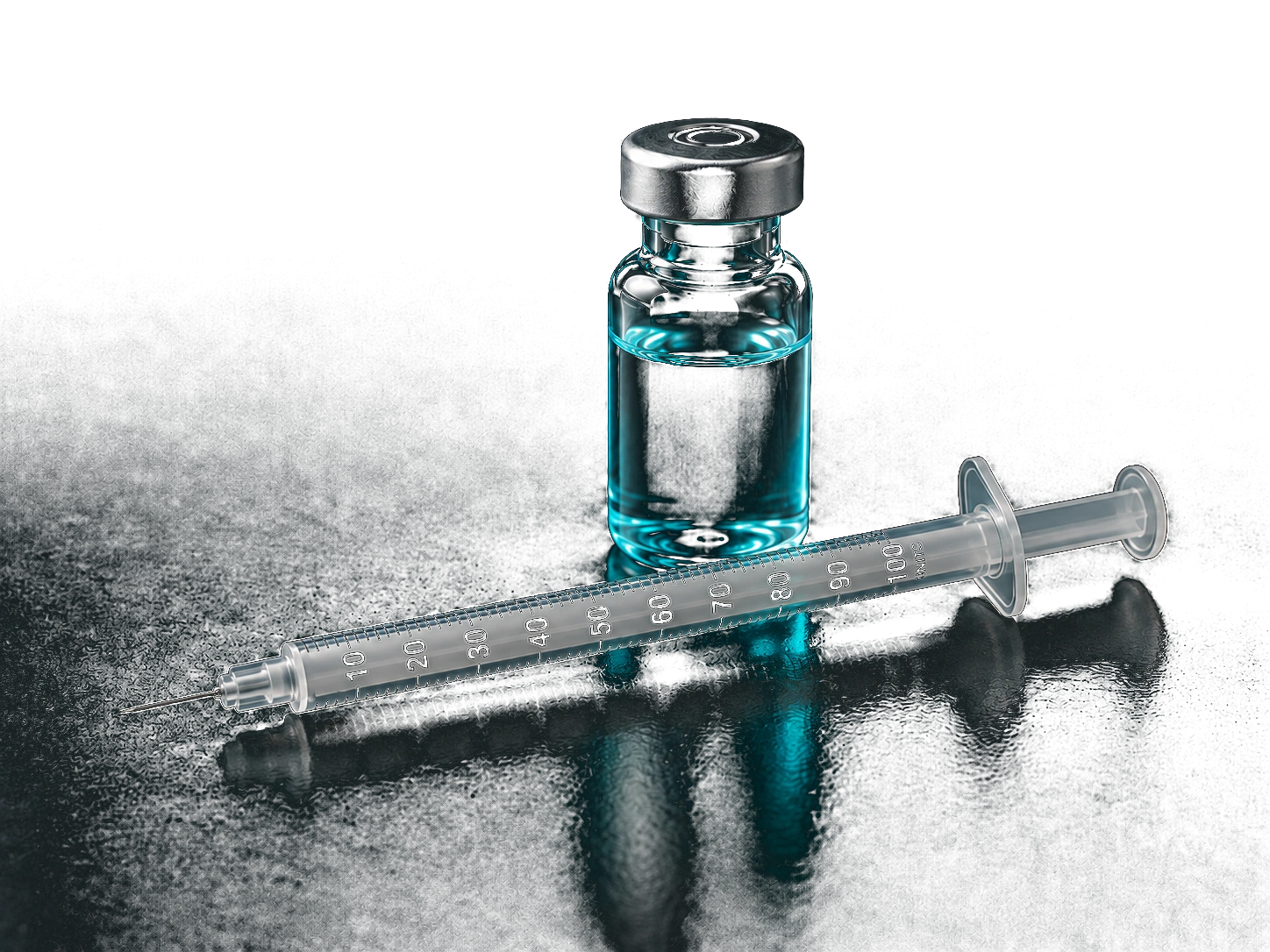
Plain guide to peptides
What peptides are, how to mix and measure them, and what they cost — in plain language, with no dose advice.
Not sure where to start? Take the three-question quiz.
First, what is a peptide?
A peptide is a short chain of amino acids, the same building blocks that make up the proteins in your body. Many act like little signals that tell your cells to do something: build muscle, calm inflammation, curb appetite, or repair tissue. Some peptides are FDA-approved medicines. Most of the ones people talk about online are not, and that difference matters more than anything else on this page.
Setting expectations
Before anything else, a reality check, because this is where people get burned. Peptides are not magic, and the internet oversells them. A few honest truths:
- Results take time. Most effects build over weeks, not days. If nothing happens on day three, that is normal.
- More is not better. Higher doses usually mean more side effects, not more benefit. The reference ranges exist for a reason.
- Side effects are common early. Nausea, injection-site redness, and fatigue often show up first and then settle. Starting low and going slow is how people manage that.
- The hype outruns the evidence. Especially for research-only compounds, the confident claims online are usually far ahead of any real proof.
Go in expecting a gradual, uncertain process you adjust as you learn, not an overnight transformation.
The honest legal picture
Which bucket a peptide falls into tells you almost everything about the risk:
- Approved medicines. A few, like the GLP-1 weight-loss drugs, are FDA-approved and prescribed by a doctor.
- Prescription or compounded. Some are made for you by a compounding pharmacy with a prescription.
- Research only. Most others are sold "for research use only, not for human consumption." These are not reviewed by the FDA for safety, quality, or whether they even work.
Some are also banned in drug-tested sport. None of this is legal advice, it is just the lay of the land. On every compound page, the colored evidence badge tells you which bucket that peptide is in.
Browse the library→Where people get them
There are two very different routes, and they are not the same on safety or legality.
- The prescription route: a licensed clinic or compounding pharmacy, with a prescription. This is the above-board path for the approved and prescribable compounds.
- The research route: research-chemical vendors, a legal gray area where quality is entirely on the seller.
We do not sell peptides. We do track the market: every price page lists the sellers we found, cheapest per milligram first, and our vendor coverage page profiles the stores behind those listings — including who has received an FDA warning letter and who pays us a commission. That market still changes constantly, so treat every listing as a snapshot, not a recommendation. What never changes is how to judge a source for yourself.
Understand it: reading a compound page
Every peptide in the library is laid out the same way: what it is in plain terms, what people use it for, the commonly referenced dose range, how it is taken, and the side effects. The evidence badge shows how much real proof exists, from FDA-approved down to animal studies only. Start here, so you know what a thing actually is before you ever think about using it.
Open any compound→Calculate it: reconstitution, the part that confuses everyone
Most peptides arrive as a freeze-dried powder in a small vial. Before you can use one, you mix it with a liquid called bacteriostatic water. That mixing step is called reconstitution, and it is where most beginners get lost. Two things make it click:
There is no single correct amount of water. The amount you add decides how concentrated the mix is. More water makes each drop weaker, less water makes it stronger. Neither is wrong. It only changes the number you draw to, not how much peptide you have.
The water amount is a convenience choice. You pick the amount that makes your dose easy to measure. That is really all it is.
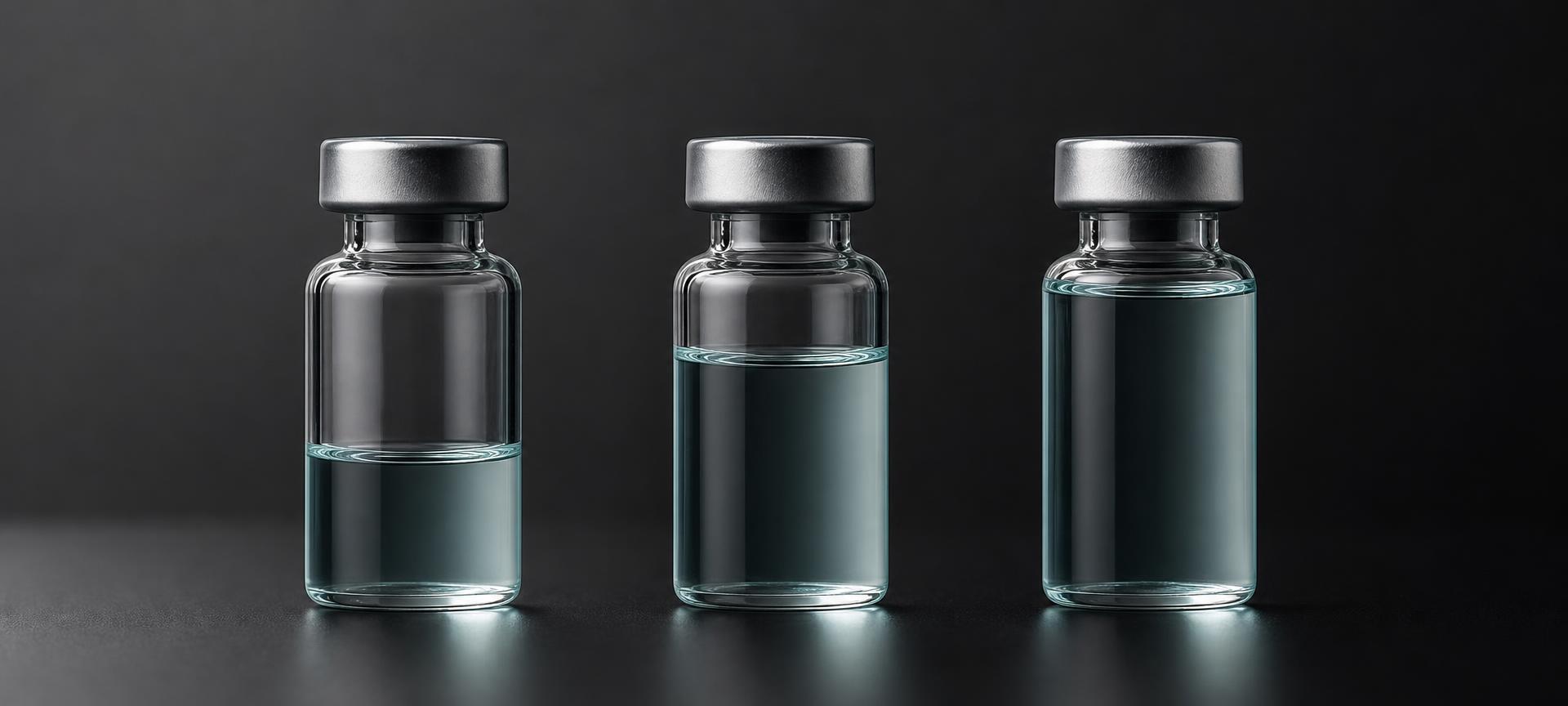
Our calculator shows the options side by side, the concentration and the syringe draw for each, and labels the one that is easiest to measure. Try the calculator →
How to actually mix it
A few mechanical rules most people agree on: add the water slowly, letting it run down the inside wall of the vial, and do not shake it. Swirl it gently until the powder dissolves, since shaking can damage some peptides.
One real exception is worth knowing. IGF-1 LR3 is usually mixed with a dilute acetic acid solution, not bacteriostatic water. It is the odd one out, so follow that product's own instructions. For almost everything else, bacteriostatic water is the standard.
Reading an insulin syringe
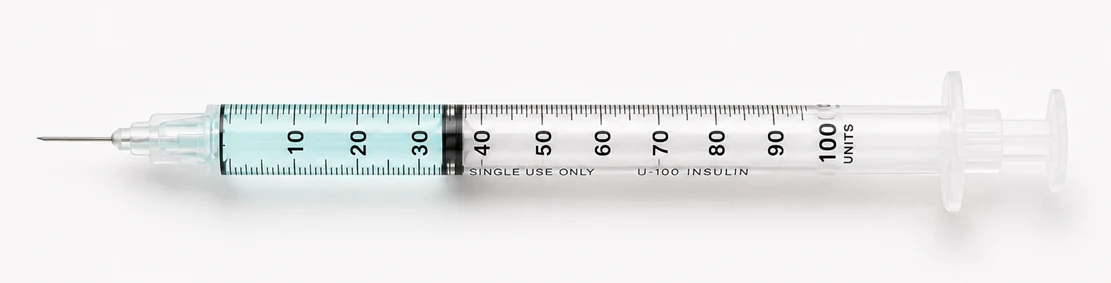
Peptide doses are drawn with an insulin syringe, marked in units. Here is the one fact that unlocks it: 100 units equals 1 mL. Units measure how much liquid you pull into the syringe, not how much peptide is in it. The calculator turns your dose and your water amount into an exact unit mark to draw to, and shows it on a picture of a syringe so you can see it.
Micrograms versus milligrams (the mistake to avoid)
250 mcg = 0.25 mg
This trips up almost everyone. Doses are written in either micrograms (mcg) or milligrams (mg), and 1 mg equals 1,000 mcg. A "250 mcg" dose and a "0.25 mg" dose are the exact same amount. Mixing these two up is the most common and most dangerous beginner mistake, so the calculator lets you pick your unit and does the conversion for you.
One thing we will never do is tell you how much to take. On every page you will see the commonly referenced range and the evidence behind it, and then you enter your own number, the one your clinician gave you, or one you choose to model. We show the math. The decision is yours and your clinician's.
Cost it: what it really costs
Once you know your dose and how many doses are in a vial, you can work out the true cost, which is almost never the sticker price. The number that matters is cost per dose, and then cost per month. A cheap vial you burn through quickly can cost more than a pricier one that lasts. The calculator works out cost per dose, monthly cost, and how long a vial lasts, from the price you paid.
See cost per dose→Plan it: supply and reordering
The last piece is simply not running out. Once the tool knows your dose, how often you take it, and how many vials you have, it tells you how many months your supply will last and the date to reorder by. That is the whole point of planning ahead instead of scrambling at the end of a vial.
Save a plan to track it→Health monitoring
Using anything that affects your body means paying attention to your body. You do not need to be a doctor to do this well, you just need to watch a few things:
Bloodwork before you start, ordered and read by a clinician, tells you where you began.
Note what you take, when, and how you feel. Patterns are easy to miss without a record.
New or worsening symptoms, or side effects that do not settle, are reasons to pause and check in.
The single best safety step, especially for anything prescription, hormonal, or research-only.
We will not tell you your target numbers or how to read your results, that is your clinician's job. But here is a rough map of which labs commonly come up for each kind of compound, so you know what to ask about.
Which labs come up, by goal
Blood sugar and HbA1c, a lipid panel, and sometimes pancreatic enzymes.
IGF-1 and blood sugar.
A complete blood count, an inflammation marker like CRP, and liver enzymes.
A complete blood count and inflammation markers.
Blood pressure, and for Melanotan a skin and mole check before you start and while you use it.
The usual rhythm is a baseline before you start and a recheck a few weeks in, but your clinician decides what to run and what it means. Monitor, record, and do not go it alone.
If something feels wrong, stop and talk to a clinician. No dose or schedule is worth pushing through a warning sign.
Reactions: what's normal and what's not
Reactions are common, and most are minor. The important thing is telling the difference between annoying-but-fine and stop-and-get-help. There are three kinds worth knowing.
Injection-site irritation (most common)
Redness, itching, or a small bump right where the needle went in. It usually comes from the needle or the liquid, not from an allergy, and it fades within a few hours to a day. Rotating where you inject helps.
A mast cell or histamine reaction (looks scary, usually mild)
Your skin is full of immune cells called mast cells. Some peptides poke them directly into releasing histamine, without your immune system deciding the peptide is an enemy. That is what causes the local welt, redness, or itch that looks like a bug bite, or a broader flush across the skin. A few peptides are known for this, CJC-1295 and the GHRP growth-hormone peptides in particular.
Here is the key point: this looks like an allergy, but it is not one. It is a direct chemical reaction, usually mild, and it often settles on its own fairly quickly. A welt or flush is not the same as being allergic. If you choose to keep injecting, go slowly and keep an eye on how your skin responds over the next few doses. This is a different thing from the true allergic reaction below, which is the one to act on right away.
A true allergic reaction (rare, serious)
Here your immune system treats the peptide as a threat, and the warning signs are different from a little redness: hives that spread beyond the injection site, swelling of the face, lips, tongue, or throat, trouble breathing, dizziness, or a racing heart. This one is a medical emergency.
Trouble breathing, throat or face swelling, spreading hives, or dizziness are signs of a severe reaction. Call emergency services now. Do not wait to see if it passes.
What to do
- Stop using it. If a peptide causes anything more than brief, minor site redness, stop and do not re-dose it without talking to a clinician first.
- For mild itching or redness, a cold compress helps, and a pharmacist can point you to an over-the-counter antihistamine if it is truly minor.
- For any severe sign, the breathing, swelling, or spreading hives above, get emergency help immediately.
- Tell your clinician about any reaction, even one that settled on its own. It changes what is safe for you going forward.
This is one of the clearest reasons the rest of this guide matters. Start low, go slow, watch your body, and keep someone medical in the loop, so that if a reaction does happen you catch it early and handle it right.
Storing and handling
A few plain rules most sources agree on. Unmixed powder keeps for a long time in the freezer, dry and dark. Once you mix a vial, store it in the fridge, roughly 2 to 8 degrees Celsius, and use it within about a month. Do not freeze a vial that has already been mixed. Wipe the vial top with alcohol before each draw, and use a clean needle every time.
One that surprises people: GHK-Cu, the copper skin peptide, usually stings going in. Injecting slowly into a fattier area helps. A reaction that spreads or hardens is a different matter and needs a doctor. When in doubt, check the specific compound's page and your source's guidance.
Where to start
Peptides feel confusing because nobody explains the mechanics plainly and honestly. That is what this whole site is for. Understand what a thing is, calculate your mix and your draw, see what it really costs, and plan your supply. What we will not do is pick your dose or your seller. Those are yours to decide, ideally with a clinician in the loop.
Start with the library→External resources
Affiliate disclosure
Peptide Decoding lists outside links for education. Some links are affiliate links, so we may receive a commission if you visit or buy through them. Our affiliate relationships are disclosed in full and do not influence which vendors, communities, or labs we list or how we present them. We do not accept payment for coverage, inclusion, or ranking.
Independent testing labs
These labs test what is actually in a vial. Most of their customers are vendors, so a clean report tells you what a sample contained on the day it was tested. It does not tell you a compound is safe to use.
Testing databases
Published test results, collected in one place. These sites run on their own business models, so read them as a starting point and check the underlying COA.
Research databases
Where the studies live.
Chemical structures, identifiers, and published literature summaries from the NCBI.
PubMed→Search peer-reviewed studies by peptide name, mechanism, or clinical outcome.
Europe PMC→Read millions of science papers for free, often with the full text that PubMed puts behind a paywall.
MedlinePlus→Plain, easy health facts from the U.S. National Library of Medicine.
Retraction Watch Database→Check whether a study was later pulled back for errors or fraud.
Community boards
What people report, not evidence. These boards also carry sourcing talk, and we do not endorse buying research chemicals for human use. Check any claim against lab data and a clinician.
Checking a pharmacy
For anyone going the prescription route.
Check it yourself
Official government sources. Free, and no account needed.
Check if a peptide has ever been tested in real people, and what those studies looked at.
Drugs@FDA→See whether a drug is FDA approved, and when it was approved.
DailyMed→Read the official FDA label for any approved drug, in full.
FDA compounding lists→See which ingredients compounding pharmacies are allowed to use right now.
FDA safety risk list→The FDA list of bulk ingredients flagged for safety risk. This is the page behind most of the confusion about BPC-157.
WADA Prohibited List→See which substances are banned for athletes in tested sports. Updated every January.
FDA MedWatch→Report a bad reaction to a drug or supplement directly to the FDA.
Keep reading
- How to Reconstitute a Peptide
Mix peptide powder with bacteriostatic water, step by step.
- mcg vs mg
1 mg equals 1,000 mcg.
- How to Vet a Peptide Vendor
Independent third-party COAs, HPLC purity, mass spectrometry, US synthesis, and the red flags that mean walk away.
The peptide stuff worth knowing.
Get new guides, tools, compound pages, and important peptide news in your inbox 1–3 times a month. If there’s nothing worth sending, we don’t send one.