
Semaglutide vs Tirzepatide vs Retatrutide: What Is Actually Different
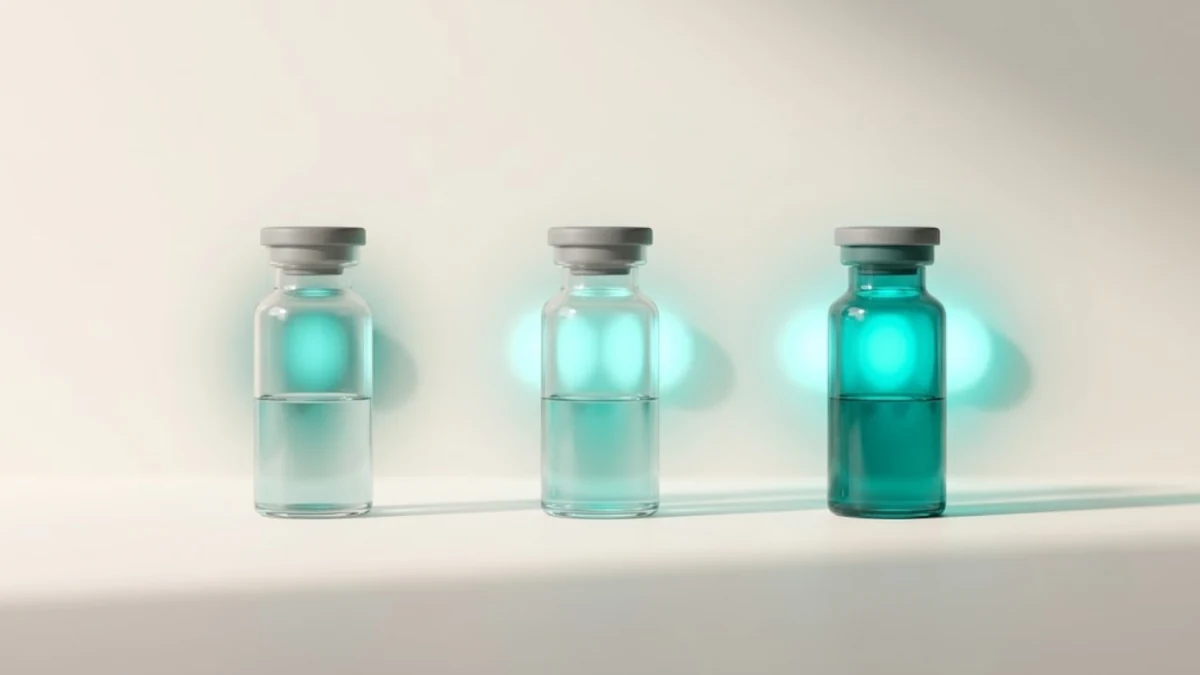
Retatrutide comes up in almost every peptide conversation right now, usually from someone who does not realise it is not a thing you can legally buy. That is the part that gets lost in the comparison, so it is worth saying early.
The other two you can get from a doctor. The third one you cannot get at all.
The actual difference
Each of these activates more of your body's appetite and metabolism receptors than the last.
Semaglutide hits one, GLP-1. Tirzepatide hits two, GLP-1 and GIP. Retatrutide hits three, adding glucagon.
More receptors has meant more weight loss in trials, and more side effects along with it. Everything below is a variation on that.
Semaglutide
A lab-made copy of GLP-1, a gut hormone your body releases after eating. It turns up your fullness signal so you eat less without fighting yourself the whole time. This is the drug in Ozempic and Wegovy. Semaglutide is FDA-approved, weekly, and the most established of the three by a wide margin.
Tirzepatide
Same idea, plus a second gut hormone receptor called GIP. Two signals instead of one, and the trials showed a meaningful jump in weight loss because of it. Tirzepatide is the drug in Mounjaro and Zepbound. Also FDA-approved and weekly.
Retatrutide
The third receptor is the interesting one. GLP-1 and GIP mostly reduce how much you eat. Glucagon activation also pushes your body to burn more energy, so retatrutide is working on intake and expenditure at the same time.
That is the theory, and the trial numbers back it up. Eli Lilly announced Phase 3 results in May 2026 from a trial called TRIUMPH-1, with 2,339 participants over 80 weeks, and published them in full in the New England Journal of Medicine in September 2026[1], and the published trial has its own write-up. Nearly half of the people on the highest dose, 45.3%, lost 30% or more of their body weight[1], a level usually associated with surgery.
Sellers usually list it as GLP-3 or GLP-3 RT rather than by name.
It is also not approved anywhere in the world, which is the part that decides this.
The reward question sits outside all of these numbers, and whether retatrutide flattens how much you care about anything has no data behind it at all.
The pills changed the question
When these three were the whole conversation, the choice was between injections. It no longer is.
Oral semaglutide was approved in December 2025. Foundayo, the orforglipron pill, followed on 1 April 2026.[9]
Foundayo is the more interesting of the two. It is not a peptide at all but a small molecule, which is why it survives your stomach, and it can be taken any time of day with or without food or water. Oral semaglutide has to be taken in the morning on an empty stomach with no more than four ounces of water, then a thirty-minute wait before eating.
Weight loss on Foundayo averaged around 27 pounds at the highest dose, which places it below the injectables. That is the trade on offer: less weight loss, no needle, and a starting price of $25 a month with commercial insurance or $149 self-pay.[9] What the approval covers, and what it costs in weight loss.
Putting the numbers side by side
| Compound | Approx. average weight loss | Trial length |
|---|---|---|
| Semaglutide (2.4 mg) | around 15%[3] | 68 weeks |
| Tirzepatide (15 mg) | around 21% to 22.5%[4] | 72 weeks |
| Retatrutide (12 mg) | around 25% to 28%[1] | 80 weeks |
Three things make this table more slippery than it looks.
Two of these have been compared directly, and one has not. SURMOUNT-5 put tirzepatide against semaglutide in 751 adults over 72 weeks and tirzepatide won, 20.2% against 13.7%[5]. That is a real head-to-head result and it is the strongest evidence available for choosing between the two approved drugs. Retatrutide has never been tested against either one, so its place at the top of this table is directionally right and the size of the gap is not precise.
The retatrutide figure depends on which number you use. Lilly reported two. Assuming everyone stayed on the drug, average loss was 19.0% at 4 mg, 25.9% at 9 mg and 28.3% at 12 mg. Counting everyone who started, including those who stopped, the figures come out lower, at 17.6%, 23.7% and 25.0%.[1] Headlines use the first set. The second is closer to what happens across a real group of people, some of whom will not tolerate it.
These are averages, from trials. Everyone in them was also getting diet and exercise support, and individual results ranged enormously in every study. They also say little about one group: what this means for midlife women, since menopausal women were underrepresented in these trials.
What the weight is made of
Every number above is total body weight. None of them tell you what came off.
That matters more than it sounds. In a trial that measured body composition directly, about a third of the weight people lost on semaglutide was lean mass rather than fat[10]. Muscle, in other words, along with the fat.
Some of that is expected. Anyone losing a large amount of weight by any method loses some lean tissue with it, and a smaller body needs less muscle to carry itself around. But a third is enough that drug companies are now running trials specifically to prevent it, pairing these drugs with antibodies that block a muscle-limiting signal called myostatin. One such trial preserved about half the muscle that would otherwise have gone.[10]
None of those are approved either. The version available to anyone taking one of these today is unglamorous and much better evidenced: eat enough protein and do resistance training.
What happens when you stop
This is the question the percentages do not answer, and it applies to all three equally.
In the STEP 1 extension, participants who had lost 17.3% of their body weight on semaglutide stopped the drug and the lifestyle program together. Over the following year they regained about two-thirds of it, 11.6 percentage points, leaving them 5.6% below where they started.[6] The improvements in blood pressure and cholesterol drifted back toward baseline as well.
Tirzepatide behaves the same way. In SURMOUNT-4, people who had lost around 21% during an open-label lead-in were switched to placebo, and most regained a substantial share.[7]
The researchers' own conclusion was that ongoing treatment appears to be required to maintain the result. That is worth knowing before you start, because it reframes the whole comparison. The question is less which of these produces the biggest number and more which one you can afford and tolerate for a long time.
Side effects
All three share the same core problem, which is your stomach. Nausea, vomiting, diarrhea, constipation, worst in the first weeks and again every time the dose steps up. This is why all of them start low and climb slowly over months.
Our GLP-1 side-effects guide puts the trial rates by dose beside the warnings on the approved labels.
Eating less and losing fluid through gut effects also has consequences beyond nausea. See the dehydration nobody warns you about.
The approved ones carry a boxed warning about a rare thyroid tumor risk seen in rodents.[12]
Retatrutide's trials also flagged dysesthesia, meaning strange skin sensations, plus urinary tract infections and a mild temporary rise in heart rate. Dropouts from side effects climbed with the dose: 4.1% at 4 mg, 6.9% at 9 mg and 11.3% at 12 mg, against 4.9% on placebo.[1]
That climb is worth sitting with. The bigger numbers come with a real tolerance cost, and roughly one in nine people at the top dose stopped because of it. Our guides cover which day to inject, whether you can drink on these, and what those week numbers actually mean.
The next set of questions starts after the weight comes off. Our guide to what happens after significant weight loss covers lean tissue, loose skin, hair shedding and regain.
What the trials measured, and what people actually report
Clinical trials count what they set out to count. They are much better at capturing weight and nausea than at capturing what it feels like to be on one of these for a year.
In 2026, researchers at the University of Pennsylvania went at it from the other direction. They analyzed 410,198 Reddit posts about semaglutide and tirzepatide going back to 2019 and found 67,008 people who said they were using one of them. Of those, 43.5% described at least one side effect.[8]
What those people reported, in order:
| Reported side effect | Share mentioning it |
|---|---|
| Nausea | 36.9%[8] |
| Fatigue | 16.7% |
| Vomiting | 16.3% |
| Constipation | 15.3% |
| Diarrhea | 12.6% |
Read that table with one thing in mind. Those percentages are of the roughly 29,000 people who reported any side effect, not of all 67,008 users. People also post about problems more than they post about nothing happening. It is a ranking of what gets talked about, which is a different and still useful thing from an incidence rate.
Nausea leading is no surprise. Fatigue sitting second is, and it is not what the marketing prepares you for. If you go in expecting stomach trouble and instead get flattened for a few weeks, it helps to know that is common. Delayed gastric emptying also has a specific consequence before sedation or an anaesthetic; our guide explains what it means before surgery.
The two drugs did not score the same
The study also separated people who mentioned only one of the drugs. Among the 17,937 who talked only about semaglutide, 39.4% reported nausea and 18.0% reported vomiting. Among the 7,125 who talked only about tirzepatide, nausea was 28.6% and vomiting 11.1%.[8]
That is a comparative signal you will not find in the trial tables, since no trial reported the two side by side this way. It lines up with what people say informally, which is that tirzepatide tends to sit easier.
The symptoms nobody had written down
The researchers' own headline finding was not the nausea ranking. It was two categories that barely appear in the official labeling.
Nearly 4% of people reporting side effects described reproductive symptoms, including irregular periods, bleeding between periods, and heavy bleeding. Others described temperature problems: chills, feeling cold, hot flushes. The authors called both unrecognised potential effects.[8] Our guide looks more closely at period changes on GLP-1 drugs.
There is more in the same data. Of everyone reporting side effects, 65.8% described at least one gastrointestinal symptom and 12.9% described psychiatric ones, most commonly anxiety at 4.2% and depression at 2.8%.[8]
The thing with no line item anywhere
The effect people describe most consistently is appetite going quiet. Not willpower improving, not being too nauseated to eat, but the constant background chatter about food simply stopping. People describe forgetting to eat, getting full halfway through a normal plate, or losing interest in a snack they used to think about daily. It is the single most repeated subjective experience in these communities, and it has no line item in any trial table.
Novo's CagriSema brain study raises the same question. Our guide explains why food-cue imaging is not the same as a craving score.
If you have seen it called GLP-3
There is no hormone called GLP-3. The name was invented by sellers counting receptors: semaglutide hits one, tirzepatide hits two, retatrutide hits three, so somebody numbered them.
The counting is not biology. GLP-2 is already the name of a real gut hormone with its own approved drug for a bowel condition, and it has nothing to do with weight loss.
Vials labelled GLP-1 (S), GLP-2 TZ and GLP-3 are semaglutide, tirzepatide and retatrutide under different names, relabelled to get past payment processors and advertising rules. Codes like R5, R20 and R30 refer to the milligrams in the vial, not to a dose.
The counting has since run past three. Vials are now sold as GLP-4, and what turns up under that name is three different substances, none of them a fourth drug in this family.
The part that actually decides this
Semaglutide and tirzepatide are approved medicines. A doctor can prescribe them, a pharmacy makes them, and the vial contains what the label says.
Retatrutide has no legal route. Lilly has said it plans to file for FDA approval in the first quarter of 2027[2], but right now the drug exists legally only inside clinical trials.
So anything sold as retatrutide is a research chemical from a vendor, and every impressive number above was produced with Lilly's molecule under clinical supervision. Those results say nothing about what is in a vial you bought from a website. Different molecule, potentially. Different purity, probably. Nobody checked on your behalf.
That gap stopped being theoretical this month. On 12 August 2026, Lilly filed six federal lawsuits against US sellers of black-market retatrutide, four of them in Texas. The company also said it had referred more than 200 individuals and businesses to the FDA, the Department of Justice, state attorneys general and licensing boards, and had reported more than 14,000 listings across over 100 countries. Alongside the filings it asked payment processors, card companies, online marketplaces and shipping carriers to cut sellers off.[11]
If you are going that route anyway, read how to vet a vendor first. Independent testing and a batch COA are the only things between you and an unlabelled powder.
There is a middle tier
Between an approved prescription and a research vial sits compounded semaglutide and tirzepatide, which is how a lot of people are actually getting these.
A compounding pharmacy operates under state oversight and dispenses against a prescription, so it is a long way from a website selling research chemicals. It is also not the approved product. Nobody has reviewed that specific formulation for potency or consistency, which is the difference between a regulated pharmacy and an approved drug.
The quality question is real and measurable. When researchers bought semaglutide from illegal online pharmacies and tested it, measured purity ran between 7.7% and 14.37% against 99% claimed on the labels, with bacterial residue in every vial they received. Our guide on what actually goes wrong covers that study in full, and the distinction between an illegal online pharmacy and a licensed compounding pharmacy matters enormously here.
Our guide on what peptide therapy costs sets out what each route runs to, and our legality guide covers where compounding currently stands.
What it costs
For a dated comparison of vials against the prescription route, see our market price guide.
Sticker price tells you almost nothing here, because the dosing differs so much between them and changes as you escalate. A vial that lasts eight weeks at a starting dose might last three at a maintenance dose. Read why holding a starting dose is not the same as microdosing.
That is the part people get wrong when they budget. They price the vial once, at the dose they are starting on, and then get a surprise four months later when they are running through the same vial in half the time. Your monthly cost does not stay still. It climbs with your dose and then settles wherever you land.
Cost per dose and cost per month are the only comparisons worth making. Put your vial size, dose, and price into the calculator and it will work out what you are actually spending and when you run out. Then change the dose to where you expect to end up and run it again, because that second number is the one you will be living with.
Common questions
Is retatrutide better than tirzepatide?
The trial numbers are larger. They also come from separate studies with different participants, and no trial has compared the two directly. Tirzepatide has been compared directly with semaglutide and beat it. Retatrutide has only been compared with placebo, and it is not approved anywhere.
Why do different sites give different weight loss numbers for retatrutide?
Because Lilly published two sets. One estimates the effect if everyone had stayed on the drug and reaches 28.3% at the top dose. The other counts everyone who started, including people who stopped, and comes out at 25.0%. Neither is wrong. Sites rarely say which one they are quoting.
Will I keep the weight off if I stop?
The trial evidence says most people do not. In the STEP 1 extension, participants regained about two-thirds of what they had lost within a year of stopping. Tirzepatide showed the same pattern. The researchers concluded that ongoing treatment appears to be needed to hold the result.
Is a GLP-1 pill as good as the injection?
Not on weight loss. Foundayo averaged around 27 pounds at the highest dose, below what the injectables produce. It is easier to take, cheaper to start, and there is no needle.
What about compounded semaglutide or tirzepatide?
It is a third category, between the approved product and a research vial. A compounding pharmacy works under state oversight and dispenses against a prescription, and the specific formulation has not been reviewed by the FDA for potency or consistency. That is a real distinction from an illegal online seller, where tested vials have come in at a fraction of their labeled purity.
What is GLP-3?
Nothing. There is no such hormone. Vials sold under that name contain retatrutide.
Does the weight I lose come off as fat?
Partly. Measured directly, about a third of the weight lost on semaglutide alone was lean mass. Protein intake and resistance training are the established ways to reduce that, and drug approaches are in trials but not approved.
Where that leaves you
CagriSema is the fourth drug in this race. Its first direct trial against tirzepatide missed non-inferiority, and our report on the fourth drug in this race explains why that result does not undo its FDA filing. Behind it come the amylin drugs, which work through a different hormone altogether.
Going from one receptor to two to three has produced bigger weight loss each time, with more side effects each time. That pattern is real and well evidenced.
But two of these are medicines and one is not, and that gap matters more than the percentages. A verified 15% beats an unverified 28% every time.
References
- Jastreboff AM, Kaplan LM, Davies MJ, et al. Retatrutide, a Triple Hormone Receptor Agonist, for Treatment of Obesity. New England Journal of Medicine, published online 29 September 2026. TRIUMPH-1, peer-reviewed phase 3 trial.
- TRIUMPH-2: journal reference only, The Lancet, September 2026;407:2402-2413. Taken from a secondary source; authors and title pending verification against the journal. TRIUMPH-3: Eli Lilly and Company, TRIUMPH-3 topline results, 23 July 2026. Company release; not yet published.
- Wilding JPH, et al. Once-weekly semaglutide in adults with overweight or obesity (STEP 1). New England Journal of Medicine, 2021. PubMed. Human trial.
- Jastreboff AM, et al. Tirzepatide once weekly for the treatment of obesity (SURMOUNT-1). New England Journal of Medicine, 2022. PubMed. Human trial.
- Aronne LJ, et al. Tirzepatide as compared with semaglutide for the treatment of obesity (SURMOUNT-5). New England Journal of Medicine, May 2025. Human trial, head to head.
- Wilding JPH, et al. Weight regain and cardiometabolic effects after withdrawal of semaglutide: the STEP 1 trial extension. Diabetes, Obesity and Metabolism, 2022;24(8):1553-1564. Human trial.
- Aronne LJ, et al. Continued treatment with tirzepatide for maintenance of weight reduction (SURMOUNT-4). JAMA, January 2024;331(1):38-48. DOI 10.1001/jama.2023.24945. Human trial.
- Sehgal NKR, Tronieri JS, Ungar L, Guntuku SC. Self-reported side effects of semaglutide and tirzepatide in online communities. Nature Health, 2026. DOI 10.1038/s44360-026-00108-y. Observational, self-reported.
- Eli Lilly and Company. FDA approves Foundayo (orforglipron), 1 April 2026. Regulatory announcement.
- Regeneron Pharmaceuticals. Complete 26-week Phase 2 COURAGE results, 2025. Human trial.
- Eli Lilly and Company. Statement on illegal retatrutide sales, 12 August 2026. Company release.
- FDA prescribing information: Wegovy (semaglutide), Zepbound (tirzepatide) and Foundayo (orforglipron). Regulatory documents.
Keep reading
- mcg vs mg
1 mg equals 1,000 mcg.
- What Does a Peptide Actually Cost Per Dose?
Sticker price is misleading.
- What Are Peptides? A Plain-Language Guide
What a peptide actually is, how the category differs from proteins, hormones, steroids and supplements, what research use only means, and the words you need before reading anything else.
- BPC-157 and TB-500
TB-500 is a seven amino acid piece of a protein, not the protein itself, and the research belongs to the full version.
- Can You Drink Alcohol on Peptides?
Three different answers.
- What Is the Best Time of Day to Take Peptides?
For growth hormone compounds the timing advice has real physiology behind it.
- What Is GLP-4? Bioglutide, NA-931 and What Tests Found
There is no GLP-4.
- CagriSema Lost Its Head-to-Head. The Filing Is Unaffected
It missed non-inferiority in the only direct comparison.
- Does Retatrutide Make You Not Care About Anything?
Nobody knows, and that means something different here.
- Eloralintide
Lilly's amylin drug lost up to 20.1% in phase 2, or 17.5% counting everyone.
- Is GLP-3 Retatrutide? What the Peptide Vendor Codes Mean
GLP-3, GLP-3 RT and GLP3-Reta all mean retatrutide.
The peptide stuff worth knowing.
Get new guides, tools, compound pages, and important peptide news in your inbox 1–3 times a month. If there’s nothing worth sending, we don’t send one.