
TB-500 / Thymosin Beta-4_Dosage, benefits & legal status
Also known as TB4, thymosin beta 4, TB-500 Frag 17-23, TB-500 fragment 17-23, Ac-LKKTETQ, Thymosin Beta, ABP-7
A recovery peptide for healing muscle and tendon, often paired with BPC-157.
Common vial size is what vendors typically sell, not a recommendation. Enter your own vial in the calculator.
What is TB-500 / Thymosin Beta-4?
Plain language first. The technical label stays, but it never stands alone.Overview
People use it to help muscles, tendons and other tissue heal, and to move more freely. Most of the evidence is from animals. Most products sold are the short fragment rather than the full protein.
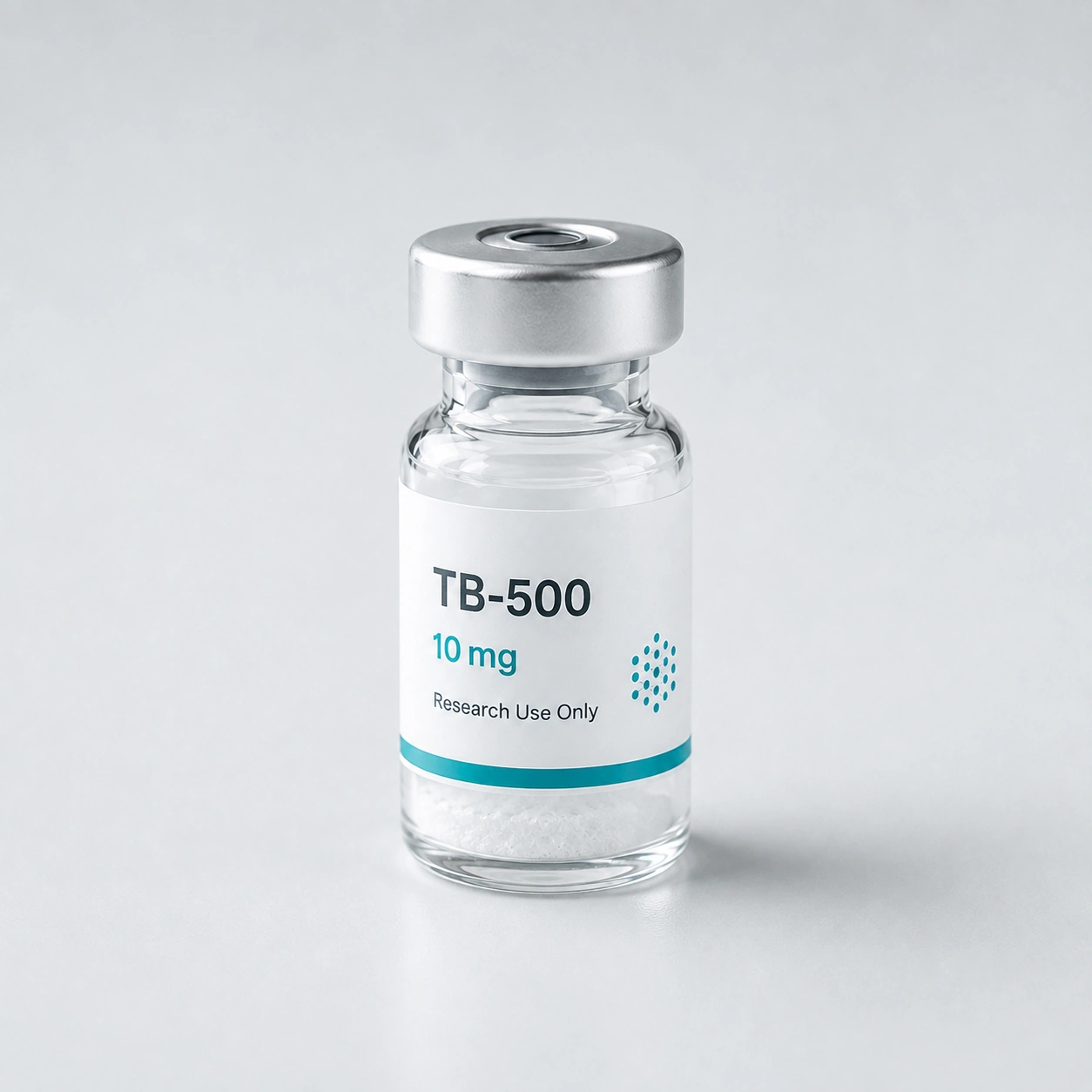
TB-500 is a synthetic fragment of thymosin beta-4, a natural protein involved in cell repair and movement.
What it's used for
A recovery peptide used to heal muscles, tendons, and other injuries faster and move more freely. It is often paired with BPC-157.
How does TB-500 / Thymosin Beta-4 work?
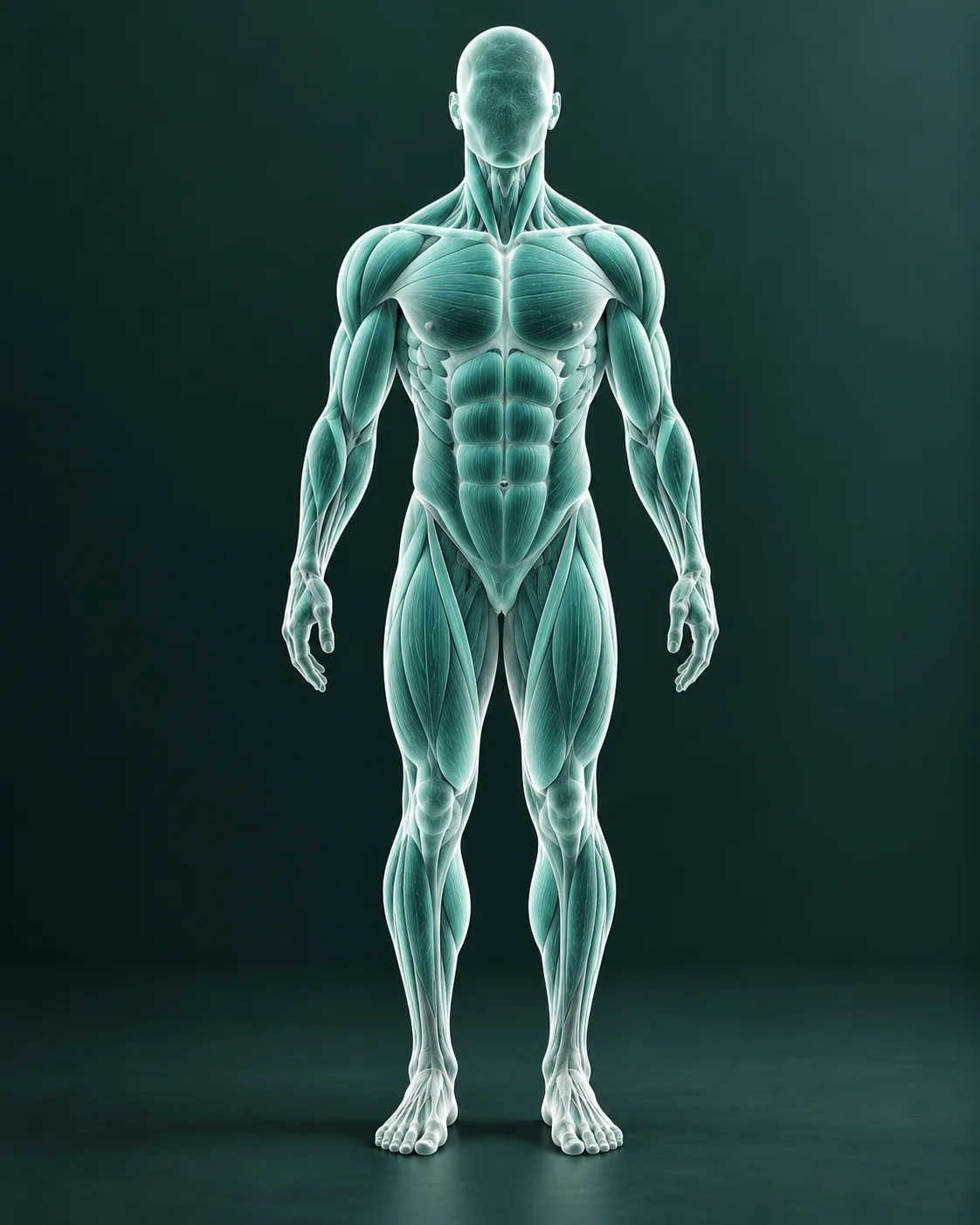
What it does in the body, and where.TB-500 is a fragment of thymosin beta-4, a protein your body already uses when tissue needs repairing. Its main job is helping cells move.
- 01It binds actin, the protein cells use to moveRepair depends on the right cells physically reaching the damaged area, and that movement runs on actin.
- 02Repair cells migrate to the injuryMore cells arriving means faster closure of a wound and, in animals, better-organised tissue afterward.
- 03The figures usually quoted are for a different moleculeMost published healing numbers are for full thymosin beta-4, not the TB-500 fragment sold for injection, and are from animals.
What else is it used for?
Each group carries its own evidence level.Approved means regulators have cleared it for that purpose. Investigational means it is in trials. Early research means it is being studied and is not established.
Wound healing
Research only- Animal studyIn rats, new skin growth over a wound increased 42% by day four and up to 61% by day seven against saline.
- Animal studyWound contraction was about 11% greater by day seven.
- Lab studyIn lab dishes it stimulated skin-cell migration two to three fold, still active at 10 picograms.
Heart and eye
Research only- Human trialIn a 2025 human trial of 96 heart attack patients, the injected full protein did not reduce overall damaged heart muscle; patients who received their first dose within eight hours showed less damage.
- Human trialLarge dry eye studies of the full protein did not meet their primary endpoints. A smaller symptom measure, gritty-eye feeling, improved.
- Human trialA small US corneal study found more healing with the full protein than placebo, but a larger European study failed outright.
- No dataAll human trials used the full 43 amino acid protein, not the seven amino acid TB-500 fragment.
Almost all the healing data, including the widely quoted 42% and 61% figures, comes from full-length Thymosin Beta-4, not the shorter TB-500 fragment sold online. They are different molecules, and no human trial has ever used the fragment. The fragment is seven amino acids; the full protein is forty-three. See which molecule each study used.
Heart trial: Cardiovascular Research 121(17):2747-2758, PMID 41229390. Eye studies: RGN-259 (ARISE-3 and SEER-3). Dermal studies referenced in wound-healing source above.
The published record
Papers and trials about TB-500 / Thymosin Beta-4
Searched: TB-500, TB500, TB-500 fragment 17-23, Ac-LKKTETQ, LKKTETQ.
Left out: TB4 (too short to disambiguate without context).
26 papers tagged human · 15 not reviews or lab · 1 clinical trial publications
1 registered trials · none with posted results
Furthest stage reached: Phase 1, under way
Compare this against the whole library →
Use evaluated: wound healingRegulatorsCounted from Europe PMC indexing, not read by a person; a human tag can land on reviews, commentary or lab papers; clinical trial publications is the narrower count.
At a glance
Four things to know about TB-500 / Thymosin Beta-4
How much, and do you cycle it?
The range, and whether you take breaks.2 up to 2.5 mg per injection (start low, increase slowly), twice a week. Commonly a loading period of 4 to 6 weeks, then less often, then stopped Community practice
The loading-then-maintenance shape comes from community practice. No human study has tested a duration or a break.
Not establishedNo figure
Figures from minutes to hours circulate. No published human pharmacokinetic study of the seven-residue fragment exists, and the figures people quote are generally derived from the full-length protein.
Source: https://peptidedecoding.com/guides/tb-500-vs-thymosin-beta-4
You can compare this against the whole library to see where it sits.
How do I dose and price it?
Enter your vial and your dose. Pick a mix. We show the draw and the cost.The vial holds a fixed amount of drug. Adding more water does not make more drug, it just spreads it thinner, so you draw a bigger number on the syringe for the same dose.
Choose your mix
Measuring the water1 mL = one full 100-unit syringe.
TB-500 / Thymosin Beta-4 starts at $17.04 across 176 vendors, typically $4.50 – $13.95 per mg.
374 listings, last read Oct 24, 2026. Shipping and card fees are not included.
How do you store it?
Before mixing, and after.Dry powder in the freezer or fridge. Once mixed, fridge, and use within about a month.
Unmixed lyophilized TB-500 / Thymosin Beta-4 keeps for a long time cold. Once you add water the clock starts: most reconstituted vials hold up for roughly 28 to 30 days at fridge temperature. Keep it out of light, and do not freeze it after mixing.
What are the side effects and cautions?
Known cautions and warnings for this compound.Solubility, computed: 51% charged residues, 26% hydrophobic. Water usually sufficient.
A first-pass rule from peptide manufacturers' guidance. It does not account for disulfide bridges, salt form or how the powder was dried, and it predicts what should be easy rather than what will happen in your vial.
Who should avoid it
- Active cancer, as a precaution given the tissue-growth mechanism
- Pregnancy
- Banned in drug-tested sport
Stop and get help
- Signs of an allergic reaction
- New lumps or masses
Common effects
- Head rush or lightheadedness shortly after injecting
- Tiredness
- Injection-site reactions
Where this page says nothing is established, that means nobody has studied it, not that a compound is safe.
Is TB-500 / Thymosin Beta-4 approved?
And where the numbers on this page come from.No. TB-500 / Thymosin Beta-4 is not approved for any use, anywhere. It is sold labeled for laboratory research only, and there is no legal route to buy it for human use.
- Approval statusResearch only
- RouteUnder the skin or into muscle
- Checked18 October 2026
- DoseFrom community reports. No regulator or trial established this dose.
- Vial sizeFrom what vendors typically list; not a recommendation.
- Sources
What has happened recently
Human trials of full-length thymosin beta-4 were run for wound, eye and cardiac conditions and were generally well tolerated. A nine-patient dry eye trial reported significant improvement in signs and symptoms; the larger trials did not, with three totaling 1,618 patients meeting no co-primary endpoint. TB-500 as sold is a fragment with no trial record of its own. Not eligible for compounding under Section 503A: no monograph, not a component of an approved drug, not on the Bulks List. Previously in Category 2; the nomination was withdrawn. An FDA advisory committee recommended inclusion on July 23-24, 2026; that recommendation is non-binding and no rule has taken effect. The use the FDA evaluated: Wound healing. Evaluation is not approval; if listed, the listed use would define what a pharmacy could compound it for. The FDA’s safety page states that it has identified no human exposure data on drug products containing this substance administered via any route of administration.
What regulators say
From official documentsBriefing package prepared for the July 23, 2026 session
FDA's proposal for TB-500 is in its own briefing document, not read at source here
Checked 22 September 2026FDA: FDA Briefing Document, Pharmacy Compounding Advisory Committee meeting of July 23 to 24, 2026: introduction and FDA proposalsConsidered at the July 23, 2026 session
Checked 22 September 2026FDA: July 23 to 24, 2026 meeting of the Pharmacy Compounding Advisory Committee: meeting materialsNominated but withdrawn; previously category 2
Listed as Thymosin beta-4, fragment (LKKTETQ), also known as TB-500. FDA has not identified any human exposure data
Checked 11 September 2026FDA: Certain Bulk Drug Substances for Use in Compounding that May Present Significant Safety Risks (category 2 and withdrawn nominations), current as of April 22, 2026Use evaluated: wound healing
Checked 22 September 2026FDA: Federal Register notice of April 16, 2026: Pharmacy Compounding Advisory Committee meeting, bulk drug substances nominated for the 503A listProhibited at all times, in and out of competition. S2.3 Growth factors and growth factor modulators: Thymosin-beta4 and its derivatives e.g. TB-500. Non-Specified.
Checked 12 September 2026WADA: The 2026 Prohibited List (in force 1 January 2026)
Banned in drug-tested sport. Most research peptides are prohibited under WADA's S0 category, which covers any substance with no approval from any regulatory authority for human use. That means a compound can be banned without ever being named on the prohibited list. Check with your own anti-doping authority rather than assuming absence from the list means permitted.
You can compare this against the whole library, or read how to check a seller.
What else is like TB-500 / Thymosin Beta-4?
Others in Healing and recovery, side by side.If you're weighing TB-500 / Thymosin Beta-4, it's worth reading KPV, BPC-157 + TB-500, and GLOW blend in the same class.
A recovery peptide for healing muscle and tendon, often paired with BPC-157.
- Dose
- 2 up to 2.5 mg per injection (start low, increase slowly)
- How often
- Twice a week
A tiny anti-inflammatory peptide for gut and skin, with no tanning effect.
- Dose
- 0.2 up to 0.5 mg per day (start low, increase slowly)
- How often
- Daily, 4-8 wk courses
The two best-known healing peptides in one shot, at a ratio that changes by vendor.
- Dose
- 0.25 up to 0.5 mg BPC-157 per day (the TB-500 follows your ratio)
- How often
- Varies
A popular skin-and-healing blend of three peptides in one shot.
- Dose
- Community examples use 2 to 2.5 mg of total blend per day, or set the draw by GHK-Cu.
- How often
- Daily
Compared with
Both are sold for tendon and muscle repair. BPC-157's human trials were enemas for ulcerative colitis, and TB-500's trials did not even use TB-500.
Read comparison →Two are unrelated proteins sharing a name by accident. The third is seven amino acids taken from the second, and no trial has injected any of them.
Read comparison →Guides for this compound
- How to Reconstitute a Peptide
Mix peptide powder with bacteriostatic water, step by step.
- How to Read an Insulin Syringe
Read the units, convert to millilitres, and draw the exact dose.
- mcg vs mg: The Peptide Dosing Mistake to Avoid
Your vial says mg and your protocol says mcg. Here is the conversion and how to check it.
- What Is the Wolverine Stack?
The two-compound blend, the four-patient case series, and what sellers charge.
- BPC-157 and TB-500: What the Healing Pair Actually Is
They are different molecules, taken on different schedules, and one of them is not the molecule its research belongs to.
Sources
- FDA, bulk substances that may present significant safety risks(2026)FDA states that it has identified no human exposure data by any route for this substance.
- Malinda rat wound study, PubMed, 1999
- Phase 2 dermal wound trial, PubMed, 2012
- FDA, Pharmacy Compounding Advisory Committee meeting, July 23-24, 2026(2026)FDA meeting page listing the bulk drug substances reviewed and the uses considered.
Beyond these, 59 records are indexed. Browse the records
Sold with BPC-157? See what the combination evidence actually is.