
TP508 (rusalatide)_Dosage, benefits & legal status
Also known as rusalatide, Chrysalin, rusalatide acetate, thrombin peptide 508, TP-508
A 23-residue copy of one stretch of thrombin, the clotting enzyme, with no clotting activity of its own. It sped wrist-fracture healing in a 90-patient trial, then failed a 503-patient phase 3 and a 274-patient dose-finding trial.
Common vial size is what vendors typically sell, not a recommendation. Enter your own vial in the calculator.
What is TP508 (rusalatide)?
Plain language first. The technical label stays, but it never stands alone.Overview
People buy TP508 next to BPC-157, TB-500 and PDA, with fracture-healing and wound-healing claims attached. Those claims come from two small trials: in 90 people with a broken wrist, a single 10 microgram injection into the fracture brought median time to cortical bridging to 24 days against 31 on placebo (p=0.0067), while the 100 microgram dose did worse than placebo at 36 days; in 60 people with diabetic foot ulcers, the healing figures came from a per-protocol subgroup of about 35 patients, and the much-quoted 86% against 0% rests on 12 heel ulcers. A 274-patient dose-finding trial was then stopped for futility, and a 503-patient phase 3 missed its primary endpoint in March 2006. The dose scale is the part worth carrying away: every human dose was 1 to 100 micrograms placed straight into a fracture or onto an ulcer, while sellers ship 5 and 10 mg vials, and nothing in the human record supports milligram systemic dosing.
TP508 (recommended INN rusalatide) is a 23-residue synthetic peptide, H-AGYKPDEGKRGDACEGDSGGPFV-NH2, copied from mature human prothrombin residues 508 to 530 inside thrombin's catalytic chain; the serine at peptide position 18 is thrombin's own catalytic serine, yet the fragment is non-proteolytic and cannot clot fibrinogen or cut PAR-1. It carries an RGD motif at positions 10 to 12 and acts on endothelial cells through alpha-v beta-3 integrin, the receptor the cancer drug cilengitide was built to block, with PI3 kinase and Akt signaling, nitric oxide and new vessel growth reported downstream. Darrell Carney discovered it at the University of Texas Medical Branch at Galveston; OrthoLogic, later Capstone Therapeutics, developed it as Chrysalin through a failed phase 3 in wrist fracture, and Chrysalis BioTherapeutics now holds the license with BARDA funding and an IND clearance announced on September 26, 2023 for acute respiratory distress syndrome.
What it's used for
Nothing approved anywhere. It was injected once into broken wrists and dabbed onto diabetic foot ulcers in company trials that ended in 2007, and it is now sold as a powder by research-peptide sellers next to BPC-157, TB-500 and PDA, in 5 and 10 mg vials, when every dose a person has received was between 1 and 100 micrograms.
How does TP508 (rusalatide) work?
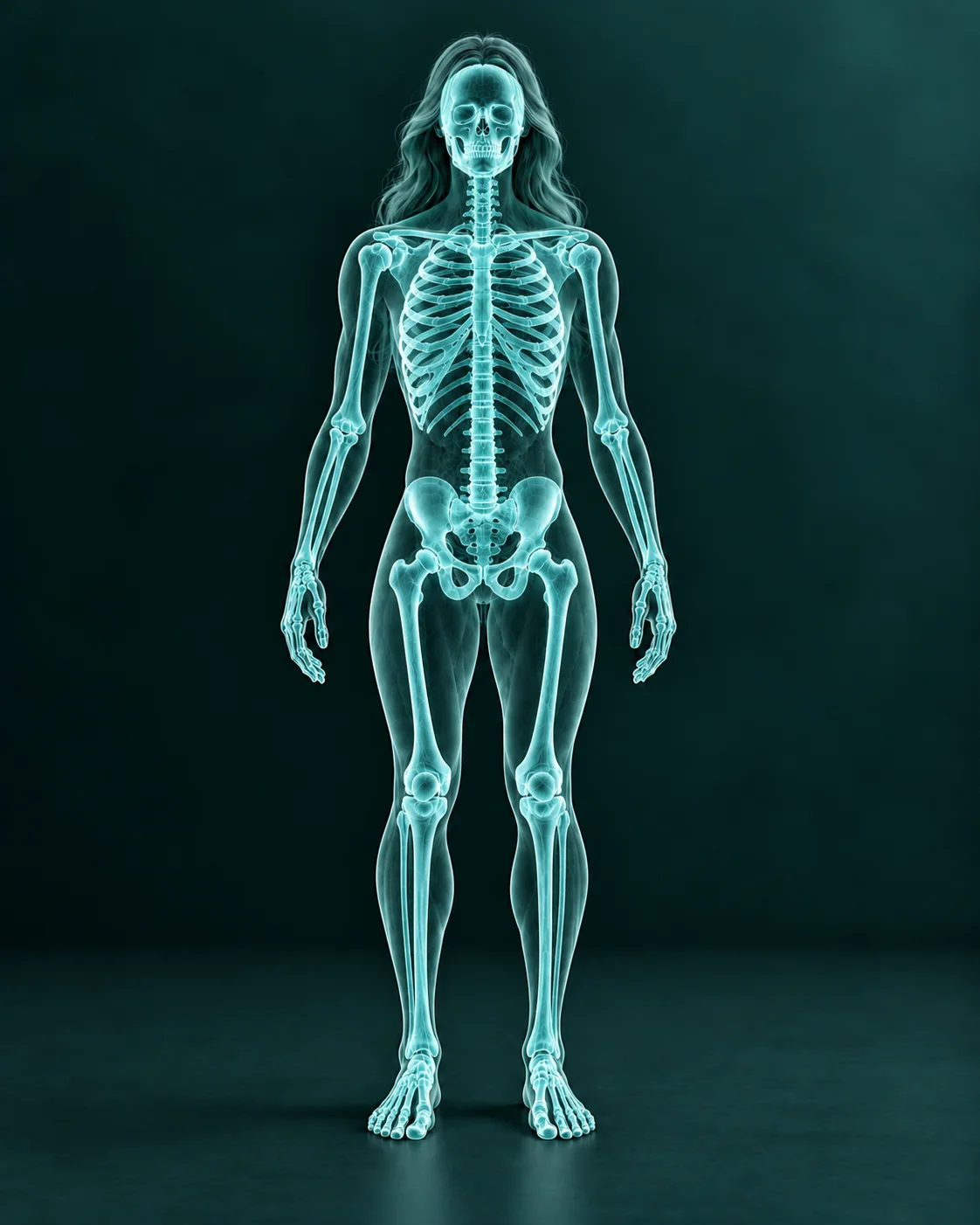
What it does in the body, and where.Thrombin appears the moment tissue is injured, and TP508 is a synthetic copy of one stretch of it that acts as a repair signal without any clotting activity.
- 01A piece of thrombin, not thrombinThe 23 residues come from mature prothrombin positions 508 to 530, inside thrombin's catalytic chain, and they include the enzyme's own catalytic serine. Cut out on its own the fragment has no catalytic machinery: it cannot clot fibrinogen and it cannot cut PAR-1, the receptor thrombin itself activates.
- 02Binding the integrinApplied to a wound or injected into a fracture, it binds alpha-v beta-3 integrin on endothelial cells, the receptor cilengitide was designed to block, and it carries an RGD grip motif at positions 10 to 12. No binding or potency figure has been published for any target, so how tightly it holds is unknown.
- 03Vessels, stem cells and inflammationSignaling reported downstream includes PI3 kinase and Akt in stem cells, nitric oxide release, and TLR-4-dependent shifts in cytokines. In cells and animals that combination sprouts new vessels, recruits progenitor cells and damps destructive inflammation. The mechanism is well supported in that setting and has never produced a reproducible effect in a properly sized human trial.
What else is it used for?
Each group carries its own evidence level.Approved means regulators have cleared it for that purpose. Investigational means it is in trials. Early research means it is being studied and is not established.
Wrist fracture, the small trial behind the marketing
Early research- Human trial90 patients, randomized against saline placebo, injected at the fracture: median time to cortical bridging 24 days at 10 micrograms, 31 days on placebo, 36 days at 100 micrograms, p=0.0067.
- No dataThe high dose did worse than placebo, so the dose response was inverted, and radiologist-assessed trabecular bridging favored 10 micrograms without reaching significance (p=0.13).
- Human trialAmong extra-articular fractures, the proportion healed by 4 weeks separated the groups: Fisher exact p=0.039 as assessed by the investigator and p=0.014 by an independent hand surgeon.
Wrist fracture, the two large trials
tested-and-failed- Human trial503 subjects at 27 US centers, one 10 microgram injection: no statistically significant difference from placebo on time to removal of all immobilization, announced March 15, 2006, with one secondary endpoint met.
- Human trialA post hoc subgroup of 157 osteopenic women favored treatment on the primary endpoint (p=0.033) and on three radiographic or clinical healing times (p=0.0028 to p=0.022); no actual times or effect sizes were released, and the company called the data supporting rather than pivotal.
- RegulatoryThe 274-patient phase 2b (NCT00131482) was terminated with the registry reason 'Treatment with Chrysalin did not demonstrate benefit compared to placebo' after an interim analysis of 240 evaluable subjects showed no benefit and no dose response.
- No dataNo peer-reviewed publication of the 503-patient phase 3 has ever appeared, so the only full account of it sits in a press release and an SEC filing.
Diabetic foot ulcers
Early research- Human trial60 subjects, randomized, double-blind and placebo-controlled: in the per-protocol population, 1 and 10 micrograms applied twice weekly gave 45% and 72% more subjects with complete healing than saline.
- Human trialFoot ulcers more than doubled complete healing, raised the mean closure rate by about 80% and cut median time to full closure by about 40%, each at p<0.05.
- No dataThe headline numbers sit in a per-protocol subgroup of about 35 patients, and the heel-ulcer result of 86% against 0% rests on 7 ulcers against 5 (p<0.03).
- No dataNo confirmatory ulcer trial was ever run: a gel formulation was being finalized in 2005, and the program stopped after the fracture failures.
Mechanism in cells and animals
Research only- Lab studyThe identified receptor is alpha-v beta-3 integrin on endothelial cells; no Kd, Ki, IC50 or EC50 has been published for any target, and the receptor on other cell types is undefined.
- Lab studyReported downstream signaling includes PI3 kinase and Akt in adipose-derived stem cells, TLR-4-dependent cytokine changes in monocyte-like cells, and nitric oxide release.
- Animal studyIn mice it reduced radiation damage to the gut by activating stem cells and preserving crypt integrity (Laboratory Investigation 2015); fracture, dermal wound and heart work is animal-only, and part of the heart work used a dimerized version rather than the single-chain peptide.
The current programs
Investigational- RegulatoryAn IND clearance for acute lung failure was announced on September 26, 2023, with a phase 1 safety and pharmacokinetic study planned by the end of that year; no dose, result or registry record has appeared since.
- RegulatoryThe radiation countermeasure program runs under the FDA Animal Rule on more than $21 million of BARDA funding, with a 2024 NIAID agreement covering cutaneous radiation injury.
- No dataNeither program has any published human efficacy data, and the company's pipeline page shows every indication at 0% progress.
The vial does not match the trials. Every human dose was 1 to 100 micrograms placed into a fracture site or onto an ulcer, while sellers ship 5 and 10 mg vials, so the familiar 'proven fracture and wound healing accelerator' line rests on microgram doses placed into the tissue itself, not on anything resembling what is in the vial. The 86% against 0% healing figure is real and it rests on 7 heel ulcers against 5, inside a per-protocol subgroup of about 35 patients in a 60-subject trial. The fracture figure that circulates, 24 against 31 days, comes from a 90-patient study whose 100 microgram arm did worse than placebo, at 36 days. TP508 is often described as a historical candidate supported by published randomized phase 1/2 research. That understates both ends of the story: it reached a 503-patient phase 3 that missed its primary endpoint and a 274-patient phase 2b stopped for futility, and the program is active today under Chrysalis BioTherapeutics with BARDA money and an IND cleared in September 2023, though with no published human efficacy data for those indications. Chrysalin and TP508 are one molecule, trade name against development code, and at least one trade report treated them as two compounds. It is also not a 'thrombin receptor activating peptide': that term means PAR-1 agonists such as SFLLRN, and this peptide is non-proteolytic. Two registry details worth knowing: the INN record carries CAS 497221-38-2 while vendor catalogs list 121341-81-9 for the same peptide, and ChEMBL records a maximum phase of 2 when a phase 3 ran and reported.
The published record
Papers and trials about TP508 (rusalatide)
24 papers tagged human · 7 not reviews or lab · 1 clinical trial publications
1 registered trials · none with posted results
Furthest stage reached: Phase 2, stopped early
Counted from Europe PMC indexing, not read by a person; a human tag can land on reviews, commentary or lab papers; clinical trial publications is the narrower count.
At a glance
Four things to know about TP508 (rusalatide)
Evidence
Investigational
Category
Healing and recovery
Common vial
5 mg
Half-life
Not established
How much, and do you cycle it?
The range, and whether you take breaks.1 to 100 mcg placed locally (trials), once at fracture surgery, or twice weekly on an ulcer. A single local dose at fracture surgery, or twice-weekly application to an ulcer Trial dose
Each fracture trial gave one injection into the break at the time of surgery; the ulcer trial applied it twice a week during wound care. No repeated systemic course has ever been studied in people.
Not establishedNo figure
No human pharmacokinetic data have been published: no half-life, no Tmax, no bioavailability, no clearance pathway. Every historical human dose was local, into a fracture site or onto an ulcer, where blood levels were not the question. A phase 1 safety and pharmacokinetic study of the injectable form was announced in September 2023 as planned to start by the end of that year, and no result has appeared. A 23-residue peptide with no lipid, PEG or disulfide would be expected to break down quickly, but that is inference rather than measurement.
You can compare this against the whole library to see where it sits.
How do I dose and price it?
Enter your vial and your dose. Pick a mix. We show the draw and the cost.The vial holds a fixed amount of drug. Adding more water does not make more drug, it just spreads it thinner, so you draw a bigger number on the syringe for the same dose.
Choose your mix
Measuring the water1 mL = one full 100-unit syringe.
TP508 (rusalatide) starts at $88.00 across 2 vendors.
2 listings, last read Oct 20, 2026. Shipping and card fees are not included.
How do you store it?
Before mixing, and after.Dry powder in the freezer or fridge. Once mixed, fridge, and use within about a month.
Unmixed lyophilized TP508 (rusalatide) keeps for a long time cold. Once you add water the clock starts: most reconstituted vials hold up for roughly 28 to 30 days at fridge temperature. Keep it out of light, and do not freeze it after mixing.
What are the side effects and cautions?
Known cautions and warnings for this compound.Solubility, computed: 43% charged residues, 30% hydrophobic. Water usually sufficient.
A first-pass rule from peptide manufacturers' guidance. It does not account for disulfide bridges, salt form or how the powder was dried, and it predicts what should be easy rather than what will happen in your vial.
Who should avoid it
- Not studied in pregnancy or breastfeeding: no human data exist
- Not studied in children: the trials enrolled adults
- Not studied as a systemic dose in people: every published human dose was placed locally, into a fracture site or onto an ulcer
- Not studied in people with cancer: it drives new blood vessels and stem cell proliferation in animals, and no human data address that
- Not studied beyond short courses: the longest human exposure was twice-weekly application to an ulcer
Stop and get help
- Signs of an allergic reaction after an injection
- A new lump, or a known tumor changing: the peptide is proangiogenic in animals and no human data cover this
Common effects
- Local wound reactions and adverse events equal between groups in the 60-subject diabetic foot ulcer trial, with no drug-related laboratory changes and no drug-related serious adverse events
- No differences in safety measures between groups in the 90-patient wrist fracture trial
- The 274-patient phase 2b met its safety goal, with no significant difference in adverse events against placebo
- No percentages have ever been published: the 503-patient phase 3 released no safety numbers
Where this page says nothing is established, that means nobody has studied it, not that a compound is safe.
Is TP508 (rusalatide) approved?
And where the numbers on this page come from.No. TP508 (rusalatide) is not approved anywhere and is currently in company-run clinical trials. There is no legal route to obtain it outside a trial.
- Approval statusInvestigational
- RouteInto a fracture site, or on the ulcer (in trials)
- Checked21 October 2026
- DoseFrom published clinical trials. Not approved by a regulator for this dose.
- Vial sizeFrom what vendors typically list; not a recommendation.
- SourcesFDA GSRS substance record, rusalatide (UNII 81248X8C37)FDA GSRS modifications record, rusalatideChEMBL molecule record CHEMBL2111105UniProt P00734, human prothrombinFife CE et al., Wound Repair and Regeneration 2007;15:23-34Ladd AL et al., American Association for Hand Surgery 2004 annual meetingFierceBiotech, OrthoLogic phase 3 failure (March 15, 2006)OrthoLogic, phase 3 Chrysalin trial results (February 16, 2007)ClinicalTrials.gov, Chrysalin phase 2b (NCT00131482)Capstone Therapeutics Corp., Form 10-K (SEC EDGAR, March 27, 2014)OrthoLogic, third-quarter 2005 resultsBioSpace, Chrysalis BioTherapeutics BARDA award (December 1, 2020)BusinessWire, Chrysalis BioTherapeutics IND clearance (September 26, 2023)Chrysalis BioTherapeutics, pipeline
What has happened recently
TP508 has never been approved by any regulator, anywhere, for any indication: no FDA application, no EMA marketing authorization, no approval in the UK, Japan, China or India, and no designation such as orphan drug or fast track has been found. Darrell Carney discovered it at the University of Texas Medical Branch at Galveston, and Chrysalis BioTechnology of Galveston held the Chrysalin assets through the 1990s. On August 5, 2004 OrthoLogic Corp. bought substantially all of that company's assets, including an exclusive worldwide license to Chrysalin for all medical indications, and expensed $25.8 million of in-process research. The phase 3 in wrist fracture reported failure on March 15, 2006 and the phase 2b was stopped that August; the company gave up running its own human trials, wrote off $2.1 million of Chrysalin patent costs, began doing business as Capstone Therapeutics on October 1, 2008 and was formally renamed Capstone Therapeutics Corp. on May 21, 2010. On January 20, 2012 Capstone announced it would end all Chrysalin development and return the patents to the university, effective March 1, 2012, keeping no rights. Chrysalis BioTherapeutics, Carney's company in Galveston, now holds a worldwide license from the University of Texas System and the medical branch; BARDA contract HHSO100201900016C added $10.4 million of options on December 1, 2020, taking total funding past $21 million, NIAID funded a cutaneous radiation injury agreement in 2024, and the FDA cleared an IND for acute lung failure, announced on September 26, 2023. The radiation program is being pursued under the FDA Animal Rule, and the company's own pipeline page shows every indication at 0% progress with possible approval named as early as 2027.
You can compare this against the whole library, or read how to check a seller.
What else is like TP508 (rusalatide)?
Others in Healing and recovery, side by side.If you're weighing TP508 (rusalatide), it's worth reading BPC-157, TB-500 / Thymosin Beta-4, and KPV in the same class.
A 23-residue copy of one stretch of thrombin, the clotting enzyme, with no clotting activity of its own. It sped wrist-fracture healing in a 90-patient trial, then failed a 503-patient phase 3 and a 274-patient dose-finding trial.
- Dose
- 1 to 100 mcg placed locally (trials)
- How often
- Once at fracture surgery, or twice weekly on an ulcer
A popular healing peptide for injuries, gut, and joint or tendon pain.
- Dose
- 0.25 up to 0.5 mg per dose (start low, increase slowly)
- How often
- 1-2x daily
A recovery peptide for healing muscle and tendon, often paired with BPC-157.
- Dose
- 2 up to 2.5 mg per injection (start low, increase slowly)
- How often
- Twice a week
A tiny anti-inflammatory peptide for gut and skin, with no tanning effect.
- Dose
- 0.2 up to 0.5 mg per day (start low, increase slowly)
- How often
- Daily, 4-8 wk courses
Guides for this compound
- How to Reconstitute a Peptide
Mix peptide powder with bacteriostatic water, step by step.
- How to Read an Insulin Syringe
Read the units, convert to millilitres, and draw the exact dose.
- mcg vs mg: The Peptide Dosing Mistake to Avoid
Your vial says mg and your protocol says mcg. Here is the conversion and how to check it.
- How to Read a Peptide COA
What the purity number does and does not tell you, and how to spot an edited report.
- How to Vet a Peptide Vendor
Independent COAs, HPLC purity, and the red flags that mean walk away.
Sources
- FDA GSRS substance record, rusalatide (UNII 81248X8C37)(2026)23-residue sequence AGYKPDEGKRGDACEGDSGGPFV, one chain, no disulfide; CAS 497221-38-2 and INN number 8803.
- FDA GSRS modifications record, rusalatide(2026)One modification: valinamide at residue 23, a C-terminal amide.
- ChEMBL molecule record CHEMBL2111105(2026)C97H147N29O35S, 2,311.48 Da, C-terminal amide in the HELM notation; the record lists maximum phase 2, understating the phase 3 that ran.
- UniProt P00734, human prothrombin(2026)The 23-mer occurs once in prothrombin, at precursor positions 551 to 573, mature residues 508 to 530, spanning thrombin's catalytic serine.
- Fife CE et al., Wound Repair and Regeneration 2007;15:23-34(2007)60-subject randomized placebo-controlled phase 1/2 in diabetic foot ulcers; per-protocol dose-dependent healing; heel ulcers healed in 86% (6 of 7) against 0% (0 of 5).
- Ladd AL et al., American Association for Hand Surgery 2004 annual meeting(2004)90 patients with a distal radius fracture: median time to cortical bridging 24 days at 10 mcg, 31 on placebo, 36 at 100 mcg, p=0.0067; no safety differences.
- FierceBiotech, OrthoLogic phase 3 failure (March 15, 2006)(2006)The phase 3 in unstable or displaced wrist fractures missed its primary endpoint and met one secondary endpoint.
- OrthoLogic, phase 3 Chrysalin trial results (February 16, 2007)(2007)503 subjects at 27 US centers, a single 1 mL injection of 10 mcg; post hoc subgroup of 157 osteopenic women positive on the primary endpoint (p=0.033); the company called it supporting rather than pivotal evidence.
- ClinicalTrials.gov, Chrysalin phase 2b (NCT00131482)(2007)Five arms at 1, 3, 10 and 30 mcg plus placebo, 274 enrolled, terminated: 'Treatment with Chrysalin did not demonstrate benefit compared to placebo.'
- Capstone Therapeutics Corp., Form 10-K (SEC EDGAR, March 27, 2014)(2014)August 5, 2004 acquisition and exclusive worldwide license; phase 3 showed 'no statistically significant difference'; phase 2b stopped after 240 evaluable subjects; patents returned to the university effective March 1, 2012.
- OrthoLogic, third-quarter 2005 results(2005)$25.8 million of in-process research expensed; the ulcer efficacy and dose response came from a 35-patient foot ulcer subgroup; cartilage repair was preclinical.
- BioSpace, Chrysalis BioTherapeutics BARDA award (December 1, 2020)(2020)$10.4 million option exercise under contract HHSO100201900016C, total above $21 million; licensed from the University of Texas Medical Branch; not FDA-approved and investigational only.
- BusinessWire, Chrysalis BioTherapeutics IND clearance (September 26, 2023)(2023)IND cleared for acute lung failure; phase 1 safety and pharmacokinetic study planned by the end of 2023 and ARDS patients in 2024; NIAID and BARDA funding.
- Chrysalis BioTherapeutics, pipeline(2026)Every pipeline indication shown at 0% progress, approval named as early as 2027, no registry identifiers and no FDA designations listed.
Beyond these, 51 records are indexed. Browse the records