
UBT251_Dosage, benefits & legal status
Also known as UBT-251, NN9559, NN-9559
A weekly triple agonist of the GLP-1, GIP and glucagon receptors from China's United Laboratories, licensed to Novo Nordisk. In a 24-week phase 2, weight fell 13.6% to 19.7% against 2.0% on placebo.
Common vial size is what vendors typically sell, not a recommendation. Enter your own vial in the calculator.
What is UBT251?
Plain language first. The technical label stays, but it never stands alone.Overview
UBT251 is a weekly injection that switches on three hormone receptors at once, GLP-1, GIP and glucagon, to cut appetite and raise energy use, the same approach as retatrutide. In a 24-week phase 2 in China of 205 adults without diabetes, average weight fell 13.6% to 19.7% across the dose groups against 2.0% on placebo. These figures count people as if they stayed on treatment (the efficacy estimand), every result so far comes from Chinese trials, and phase 3 began only in September 2026.
UBT251 is a long-acting synthetic peptide that activates the GLP-1, GIP and glucagon receptors and is injected under the skin once a week; its sequence, half-life extension and receptor potencies have not been disclosed, and no INN has been found. The United Bio-Technology (Hengqin), a subsidiary of the Hong Kong-listed United Laboratories, discovered it and runs the Chinese program, while Novo Nordisk licensed exclusive rights outside Greater China on March 24, 2025 and develops it as NN9559.
What it's used for
Nothing outside clinical trials, and no research-peptide sellers were found offering it. It is being tested as a weekly injection for obesity and type 2 diabetes, with phase 3 trials running in China since September 2026.
How does UBT251 work?
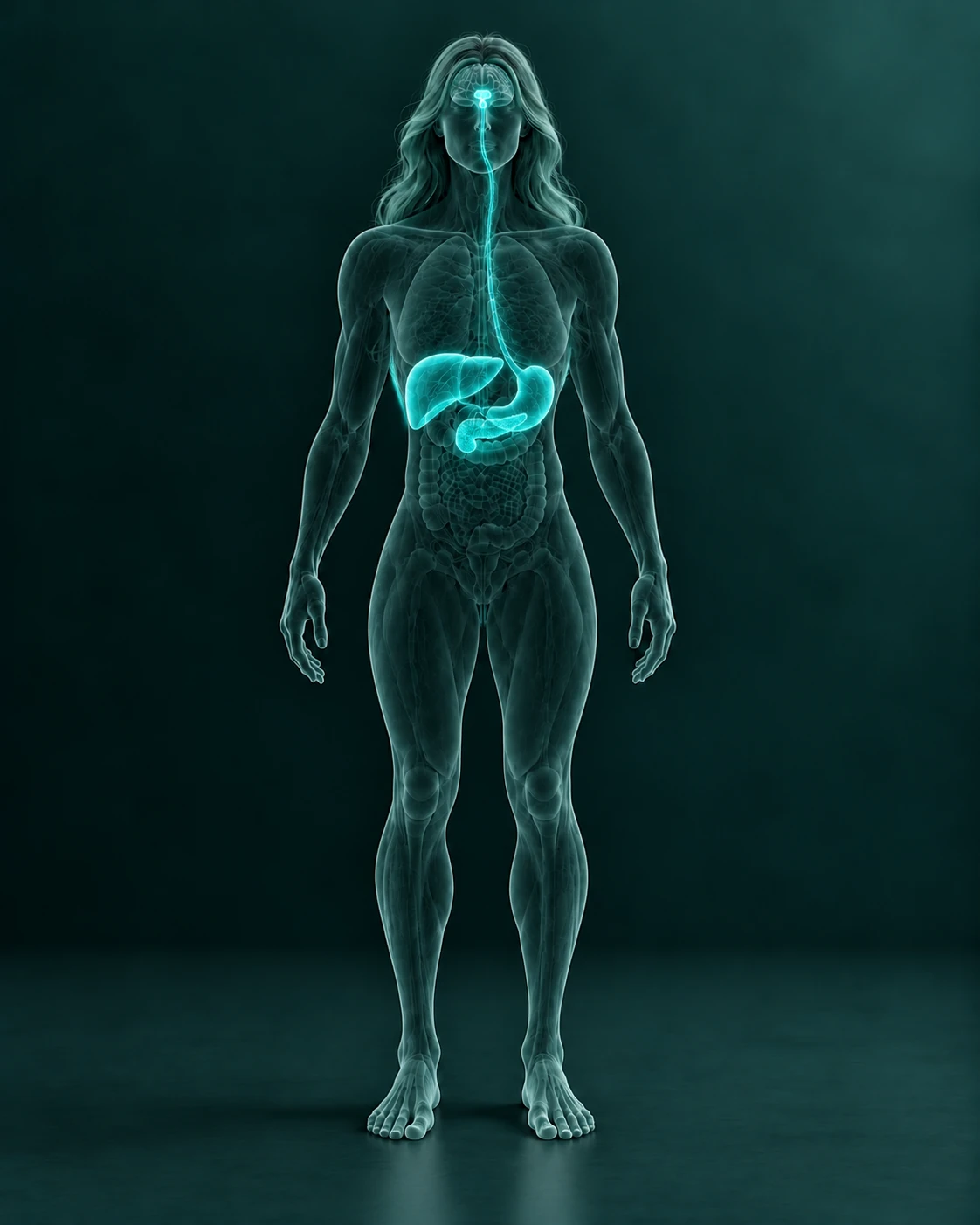
What it does in the body, and where.UBT251 is one molecule built to switch on three hormone receptors that steer appetite, blood sugar and energy use; the steps describe the drug class, since its balance across the three has not been published.
- 01GLP-1: eating lessActivating the GLP-1 receptor raises insulin release when blood sugar is high, slows stomach emptying and reduces appetite, the effects behind semaglutide.
- 02GIP: a bigger insulin responseActivating the GIP receptor adds to the insulin response after meals and, across this drug class, may make gut side effects easier to tolerate. These are class effects, not results measured for UBT251.
- 03Glucagon: burning moreActivating the glucagon receptor raises energy use and fat burning in the liver, the reason UBT251 is also in a fatty liver (MASH) trial. A half-life of about 6 days in healthy volunteers allows one injection a week. The company has released no potency data, saying only that it lowered blood sugar and weight in animal studies.
What else is it used for?
Each group carries its own evidence level.Approved means regulators have cleared it for that purpose. Investigational means it is in trials. Early research means it is being studied and is not established.
Weight loss in obesity (phase 2)
Investigational- Human trial205 adults without diabetes, 24 weeks: least-squares mean weight change -13.6% to -19.7% across the 2, 4 and 6 mg groups against -2.0% on placebo (p<0.001).
- Human trialPlacebo-adjusted differences ran from -11.5% to -17.7%; the best group lost 17.5 kg against 1.6 kg on placebo.
- No dataEfficacy estimand, per the companies, and all at Chinese sites. The trial was posted on ClinicalTrials.gov six months after it started, though it is also listed in China's trial registry (CTR20250288).
Type 2 diabetes (phase 2)
Investigational- Human trial211 people on diet alone or with metformin, starting HbA1c 8.12%: HbA1c fell by up to 2.16% against 1.77% on semaglutide 1 mg and 0.66% on placebo over 24 weeks.
- Human trialWeight fell by up to 9.8% against 4.8% on semaglutide and 1.4% on placebo.
- No dataCompany release only; results by dose and statistical tests were not given.
Phase 1b in obesity
Early research- human-early36 people in China over 12 weeks: the highest dose group (1, then 3, then 6 mg) lost 15.1% of body weight against a 1.5% gain on placebo.
- No dataCounted only people who finished the study.
Phase 1a in healthy volunteers
Early research- human-earlySingle doses of 1.0 to 4.5 mg: mean half-life 137 to 170 hours, with exposure rising in proportion to dose.
- human-earlyMaximum mean weight loss of 3.19 to 4.80 kg after one dose, greater than placebo; no serious adverse events or withdrawals.
Trials under way
Investigational- RegulatoryPhase 3 in China: obesity (600 people, 4 and 6 mg against placebo for 52 weeks) with the first participant dosed by September 4, 2026; type 2 diabetes in UNIGUIDE-1 (360, against placebo) and UNIGUIDE-2 (956, against semaglutide 1 mg) from September 7, 2026.
- RegulatoryNovo Nordisk's phase 2 in the US and Canada (NCT07395687, about 333 people) began on February 2, 2026; it also runs a phase 2 against semaglutide in type 2 diabetes.
The companies' own February 2026 release says UBT251 is being jointly developed, but the deal is an exclusive license, with Novo holding rights outside Greater China and United Bio-Technology running and sponsoring the Chinese trials. The 13.6% to 19.7% weight loss against 2.0% on placebo is quoted correctly, but it is a range across the dose groups, it uses the efficacy estimand, and which dose gave which figure has not been confirmed; the placebo-adjusted range is 11.5% to 17.7%. The phase 2 arms are sometimes reported as 1, 4 or 6 mg; they were 2, 4 and 6 mg, with two 4 mg step-up paths starting at 0.5 or 1.0 mg. Calling it a phase 2 drug undersells it: phase 3 trials in obesity and type 2 diabetes began dosing in China in September 2026. No INN could be found, so it is still known by its code. It is a different molecule from retatrutide and KAI-4729, although all three act on the same three receptors.
The published record
Papers and trials about UBT251
14 papers tagged human · 0 not reviews or lab · 0 clinical trial publications
14 registered trials · none with posted results
Furthest stage reached: Phase 3, under way
Counted from Europe PMC indexing, not read by a person; a human tag can land on reviews, commentary or lab papers; clinical trial publications is the narrower count.

At a glance
Four things to know about UBT251
Evidence
Investigational
Category
Weight loss and metabolic
Common vial
Varies
Half-life
About 5.7 to 7.1 days (137 to 170 hours)
How much, and do you cycle it?
The range, and whether you take breaks.2 to 6 mg per week (phase 2 trial), once weekly. Not cycled in the trials Trial dose
Given every week for the whole study, 24 weeks in the phase 2 trials and 52 weeks in the phase 3 obesity trial, with the dose stepped up in 4-week stages at the start. That is a ramp, not a cycle, and no trial has built in a planned break.
How long does it stay in the body?
The half-life, and where the figure comes from.About 5.7 to 7.1 days (137 to 170 hours)Trial protocol
Mean half-life across single doses of 1.0 to 4.5 mg under the skin, with exposure rising in proportion to dose, supporting once-weekly dosing. This comes from a company announcement, not a peer-reviewed paper. Time to peak, bioavailability, food effects and the clearance route have not been disclosed.
Source: The United Laboratories, phase 1a announcement (August 12, 2024), healthy volunteers
You can compare this against the whole library to see where it sits.
How do I dose and price it?
Enter your vial and your dose. Pick a mix. We show the draw and the cost.The vial holds a fixed amount of drug. Adding more water does not make more drug, it just spreads it thinner, so you draw a bigger number on the syringe for the same dose.
Choose your mix
Measuring the water1 mL = one full 100-unit syringe.
UBT251 starts at $99.99 across 1 vendor.
1 listing, last read Oct 18, 2026. Shipping and card fees are not included.
How do you store it?
Before mixing, and after.Dry powder in the freezer or fridge. Once mixed, fridge, and use within about a month.
Unmixed lyophilized UBT251 keeps for a long time cold. Once you add water the clock starts: most reconstituted vials hold up for roughly 28 to 30 days at fridge temperature. Keep it out of light, and do not freeze it after mixing.
What are the side effects and cautions?
Known cautions and warnings for this compound.Who should avoid it
- Not studied in pregnancy or breastfeeding: no pregnancy data exist for this investigational drug
- Not studied in children or teenagers: the phase 2 obesity trial enrolled adults only
- No results yet in kidney impairment: a phase 2 in people with obesity and chronic kidney disease (NCT07134335) is still recruiting
- Not studied with the contraceptive pill: Novo Nordisk's study of oral contraceptives and stomach emptying (NCT07710729) has no results yet
- Use outside a clinical trial: it is not sold or approved anywhere
- History of medullary thyroid cancer or MEN2: excluded from the phase 3 obesity trial, matching the boxed warning on approved GLP-1 drugs
Stop and get help
- Vomiting or diarrhea bad enough that you cannot keep fluids down: gut effects were the most common side effect in the trials that reported them
- Severe stomach pain that does not settle: tell the trial team, since inflammation of the pancreas is a known risk with this drug class and the phase 3 obesity trial excludes people who have had it
Common effects
- Stomach and bowel side effects were the most common in the phase 1b and phase 2 obesity trials, mostly mild to moderate
- In the 205-person phase 2 obesity trial these eased over time, and no one withdrew because of side effects
- Single doses of 1.0 to 4.5 mg in healthy volunteers caused mild to moderate loss of appetite and gut effects, with no serious adverse events and no withdrawals
- The company releases give no rates for nausea, vomiting, diarrhea or heart rate, and reported no clear dose trend in side effects
Where this page says nothing is established, that means nobody has studied it, not that a compound is safe.
Is UBT251 approved?
And where the numbers on this page come from.No. UBT251 is not approved anywhere and is currently in company-run clinical trials. There is no legal route to obtain it outside a trial.
- Approval statusInvestigational
- RouteUnder the skin (subcutaneous)
- Checked21 October 2026
- DoseFrom published clinical trials. Not approved by a regulator for this dose.
- Vial sizeFrom what vendors typically list; not a recommendation.
- SourcesZhou Z et al., Cell Metabolism 2026 (UBT251 phase 2 in overweight or obesity)Novo Nordisk and The United Laboratories, phase 2 obesity results (GlobeNewswire, February 24, 2026)The United Laboratories, phase 2 obesity announcement (February 24, 2026)Novo Nordisk, license agreement for UBT251 (March 24, 2025)Novo Nordisk, phase 2 type 2 diabetes results (March 25, 2026)The United Laboratories, phase 1a announcement (August 12, 2024)ClinicalTrials.gov, phase 2 obesity trial (NCT07177469)ClinicalTrials.gov, Novo Nordisk phase 2 in the US and Canada (NCT07395687)The United Laboratories, phase 3 obesity trial start (September 4, 2026)The United Laboratories, phase 3 type 2 diabetes trial start (September 2026)The United Laboratories, FDA IND clearance (September 26, 2023)The United Laboratories, sleep apnea trial approval (February 2026)The United Laboratories, upfront payment received (June 20, 2025)AdisInsight drug profile, UBT251
What has happened recently
Not approved anywhere, and no orphan, fast track or breakthrough designation has been found. It is developed by The United Bio-Technology (Hengqin), a wholly owned subsidiary of The United Laboratories International Holdings, as a Class 1 innovative drug (China's category for a new chemical drug), and its first clinical trial application was accepted by the NMPA on June 15, 2023. China's NMPA cleared trials in type 2 diabetes on August 29, 2023, overweight or obesity on September 1, 2023 and fatty liver disease on September 8, 2023, and the FDA cleared INDs 167739 and 167740 for type 2 diabetes and overweight or obesity on September 26, 2023. Kidney disease trials were cleared in China on January 20, 2025 and in the US (announced March 3, 2025), and obstructive sleep apnea with obesity in China on February 2, 2026. On March 24, 2025, Novo Nordisk licensed exclusive rights outside the Chinese mainland, Hong Kong, Macau and Taiwan for $200 million upfront, up to $1.8 billion in development and sales milestones and tiered royalties. Phase 3 trials in obesity and type 2 diabetes began dosing in China in September 2026. Novo Nordisk's program is at phase 2, including a trial in the US and Canada (NCT07395687) that started on February 2, 2026.
You can compare this against the whole library, or read how to check a seller.
What else is like UBT251?
Others in GLP-1 agonists, side by side.If you're weighing UBT251, it's worth reading VK2735, Zabopegdutide (DD01), and Zovaglutide (ZT-002) in the same class.
A weekly triple agonist of the GLP-1, GIP and glucagon receptors from China's United Laboratories, licensed to Novo Nordisk. In a 24-week phase 2, weight fell 13.6% to 19.7% against 2.0% on placebo.
- Dose
- 2 to 6 mg per week (phase 2 trial)
- How often
- Once weekly
An experimental weight-loss compound in the tirzepatide family, as a shot or pill.
- Dose
- 2.5 up to 15 mg per week (start low, increase slowly)
- How often
- Weekly
Nearly the same peptide as efinopegdutide, carried on a large PEG instead of an antibody fragment. In a 67-person phase 2, 76% on the drug cut liver fat by at least 30% in 12 weeks, against 12% on placebo.
- Dose
- 20 mg weekly for 2 weeks, then 40 mg weekly (phase 2 trial)
- How often
- Weekly
An experimental once-a-month weight-loss shot.
- Dose
- 80 up to 160 mg per month (trial doses)
- How often
- Monthly
Guides for this compound
- How to Reconstitute a Peptide
Mix peptide powder with bacteriostatic water, step by step.
- How to Read an Insulin Syringe
Read the units, convert to millilitres, and draw the exact dose.
- mcg vs mg: The Peptide Dosing Mistake to Avoid
Your vial says mg and your protocol says mcg. Here is the conversion and how to check it.
- How to Read a Peptide COA
What the purity number does and does not tell you, and how to spot an edited report.
- How to Vet a Peptide Vendor
Independent COAs, HPLC purity, and the red flags that mean walk away.
Sources
- Zhou Z et al., Cell Metabolism 2026 (UBT251 phase 2 in overweight or obesity)(2026)205 adults without diabetes, 24 weeks: least-squares mean weight change -13.6% to -19.7% across the UBT251 groups against -2.0% on placebo; placebo-adjusted -11.5% (95% CI -14.1 to -9.0) to -17.7% (95% CI -20.8 to -14.6); p<0.001.
- Novo Nordisk and The United Laboratories, phase 2 obesity results (GlobeNewswire, February 24, 2026)(2026)2, 4 and 6 mg groups; up to 19.7% (17.5 kg) against 2.0% (1.6 kg) on placebo, using the efficacy estimand; Novo's global trial described as a phase 1b/2a of about 330 people.
- The United Laboratories, phase 2 obesity announcement (February 24, 2026)(2026)Randomized 1:1:1:1 to 2, 4 or 6 mg or placebo; no patients withdrew because of adverse events.
- Novo Nordisk, license agreement for UBT251 (March 24, 2025)(2025)Exclusive rights outside Greater China; $200 million upfront and up to $1.8 billion in milestones; top phase 1b dose group lost 15.1% at 12 weeks among completers.
- Novo Nordisk, phase 2 type 2 diabetes results (March 25, 2026)(2026)211 people: HbA1c up to -2.16% against -1.77% on semaglutide 1 mg and -0.66% on placebo; weight up to -9.8% against -4.8% and -1.4%.
- The United Laboratories, phase 1a announcement (August 12, 2024)(2024)Mean half-life 137 to 170 hours after single doses of 1.0 to 4.5 mg; exposure in proportion to dose; maximum mean weight loss 3.19 to 4.80 kg; no serious adverse events.
- ClinicalTrials.gov, phase 2 obesity trial (NCT07177469)(2026)Four titration paths to 2, 4 or 6 mg; started March 14, 2025; completed with 205 enrolled; first posted September 17, 2025.
- ClinicalTrials.gov, Novo Nordisk phase 2 in the US and Canada (NCT07395687)(2026)NN9559-8568, overweight or obesity, about 333 people; started February 2, 2026; recruiting.
- The United Laboratories, phase 3 obesity trial start (September 4, 2026)(2026)First participant dosed in the 600-person phase 3 in obesity.
- The United Laboratories, phase 3 type 2 diabetes trial start (September 2026)(2026)UNIGUIDE-1 (360 people, against placebo) and UNIGUIDE-2 (956 people, against semaglutide) began dosing.
- The United Laboratories, FDA IND clearance (September 26, 2023)(2023)INDs 167739 and 167740 for type 2 diabetes and overweight or obesity.
- The United Laboratories, sleep apnea trial approval (February 2026)(2026)NMPA approval on February 2, 2026 for trials in moderate to severe obstructive sleep apnea with obesity (CXHL2501306).
- The United Laboratories, upfront payment received (June 20, 2025)(2025)$180 million received, net of Danish withholding tax.
- AdisInsight drug profile, UBT251(2026)Synonyms NN-9559 and UBT-251; no INN listed; not an orphan drug.
Beyond these, 16 records are indexed. Browse the records