
Sincalide (Kinevac)_Dosage, benefits & legal status
Also known as Kinevac, SQ 19844, SQ-19844, sincalide for injection
The last eight amino acids of cholecystokinin, the hormone that empties the gallbladder. FDA-approved as a diagnostic since 1976; it is not an appetite drug, and a pill acting on the same receptor failed to cause weight loss.
Common vial size is what vendors typically sell, not a recommendation. Enter your own vial in the calculator.
What is Sincalide (Kinevac)?
Plain language first. The technical label stays, but it never stands alone.Overview
If a doctor suspects the gallbladder is not emptying properly, a HIDA scan measures how much bile it squeezes out, and sincalide is the drug that makes it squeeze. In a 60-volunteer study, a slow 60-minute infusion gave the most consistent readings (variation 19% against 35% and 52% for faster infusions), and the lower limit of normal emptying was 38%. It is a hospital diagnostic, not an appetite or weight-loss drug: a pill acting on the same receptor did not reduce weight in a 24-week trial of 701 people.
Sincalide is the C-terminal octapeptide of cholecystokinin with its tyrosine sulfated and its phenylalanine amidated, identical to natural sulfated CCK-8. Given intravenously, it acts on cholecystokinin receptors (DrugBank lists CCK1 and CCK2) to contract the gallbladder within 5 to 15 minutes and, with secretin, to raise pancreatic secretion; the label also lists pyloric contraction, faster intestinal transit and slower gastric emptying. Kinevac (Bracco, NDA 017697) was approved on July 21, 1976, and MAIA's separate NDA 210850, approved November 22, 2022, is rated therapeutically equivalent.
What it's used for
An injection or infusion into a vein in the hospital to make the gallbladder contract during imaging or to collect bile, to stimulate the pancreas (with secretin) before fluid is drawn from the duodenum, and to speed barium through the small bowel on X-ray.
How does Sincalide (Kinevac) work?
What it does in the body, and where.Sincalide is the active end of cholecystokinin, a gut hormone, and it makes the gallbladder squeeze on cue so a scan or a tube can measure the result.
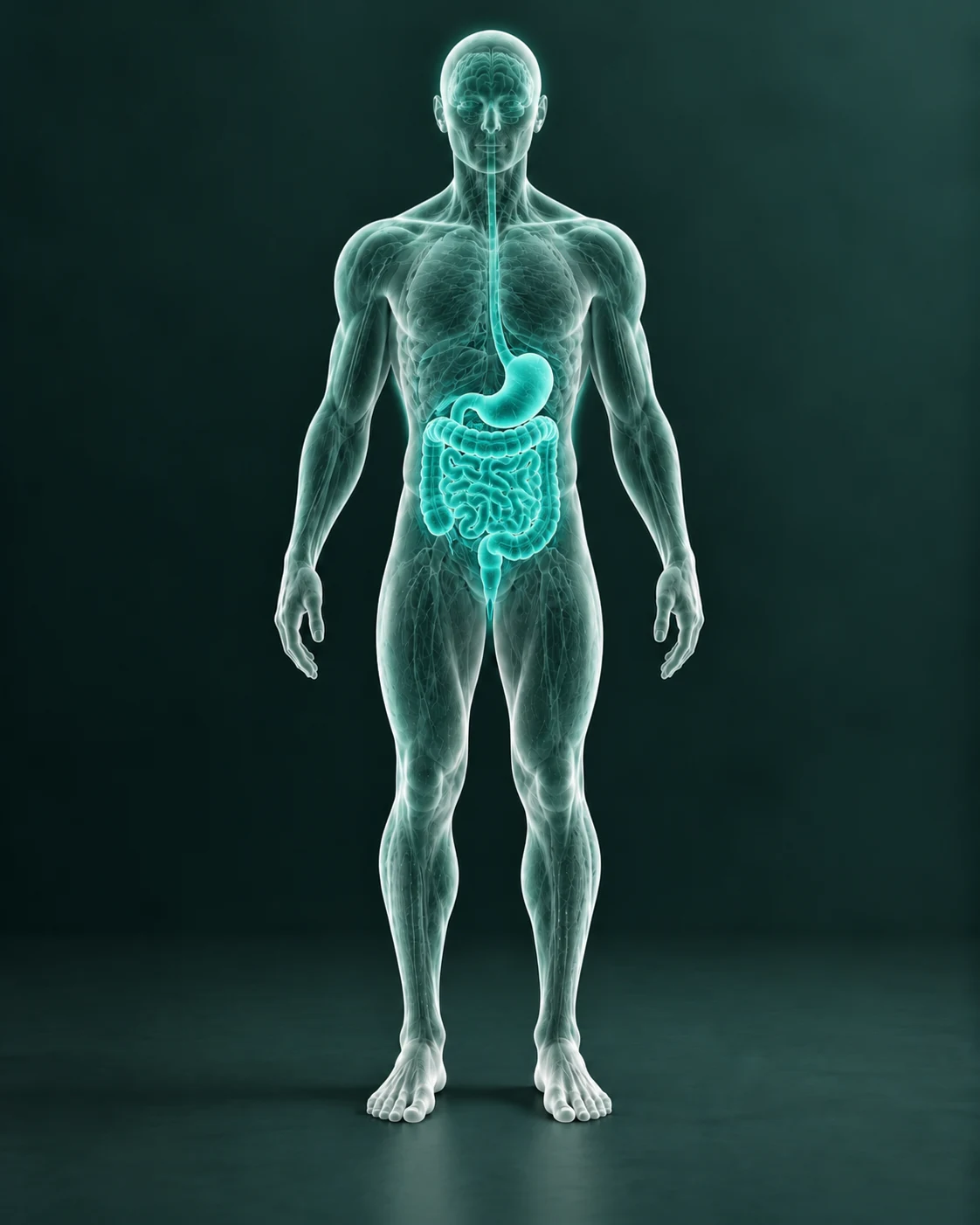
- 01Reaching the receptorsInjected or infused into a vein, it reaches cholecystokinin receptors on the smooth muscle of the gallbladder within minutes. It is the same molecule as the body's own sulfated CCK-8.
- 02Emptying the gallbladderThe gallbladder contracts most at 5 to 15 minutes, pushing bile into the duodenum; the label counts a gallbladder at least 40% smaller as a satisfactory response. It also contracts the pylorus, speeds the intestine and slows stomach emptying.
- 03Pancreas and clearanceGiven with secretin, it raises the volume, bicarbonate and enzyme output of pancreatic juice collected by a tube in the duodenum. It is cleared within minutes (about 1.3 minutes in dogs), so the effects fade quickly.
What else is it used for?
Each group carries its own evidence level.Approved means regulators have cleared it for that purpose. Investigational means it is in trials. Early research means it is being studied and is not established.
Gallbladder scans (HIDA)
Clinical use- Human trial60 healthy volunteers at 4 centers, each given 0.02 mcg/kg over 15, 30 and 60 minutes on separate days: the 60-minute infusion gave the most consistent ejection fraction (variation 19% against 35% and 52%, P < 0.0007).
- Human trialWith the 60-minute infusion, the lower limit of normal ejection fraction was 38%.
- No dataThe registry entry gives the dose as 0.02 mg/kg, a 1,000-fold typo for 0.02 mcg/kg; the 60-minute protocol is not in the label.
Appetite at a single meal
Early research- Human trialIn 8 healthy women given 4 mg (23 women across all doses), GSK's oral CCK1 agonist GI181771X cut a test meal from 421.98 to 293.79 g (difference 128.2 g, p = 0.007); 1 and 2 mg, tested in 4 women each, had no effect. These are registry-posted results.
- No dataThe trial was stopped early when the drug supply expired.
Weight loss
tested-and-failed- Human trial701 adults with a BMI of 30 or more (or 27 or more with risk factors) on a reduced-calorie diet, randomized to several doses of GI181771X or placebo for 24 weeks: it did not reduce body weight, waist size or cardiometabolic markers.
- Human trialMore stomach and bowel side effects than placebo; no gallbladder or pancreas abnormalities on ultrasound or MRI.
- No dataGI181771X is a different, oral drug acting on the same receptor; sincalide is an injected diagnostic with no weight-loss indication.
Shortages and a second maker
FDA-approved- RegulatoryKinevac was repeatedly on the FDA drug shortage list in the five years before 2018.
- RegulatoryMAIA's tentative approval in February 2018 was held up by patent litigation with Bracco; final approval followed on November 22, 2022.
Facts about sincalide are often taken from the wrong label. A widely linked DailyMed page is AnazaoHealth's 2012 label for an unapproved compounded 3 mcg vial, not Kinevac: approved products come in 5 mcg vials mixed with 5 mL of sterile water, not 3 mL of saline, and gallstones are now a warning rather than a contraindication (the contraindications are sulfite or sincalide allergy and intestinal obstruction). The registry entry for the main infusion study gives the dose as 0.02 mg/kg; the correct figure is 0.02 mcg/kg, 1,000 times smaller. MAIA's sincalide is often called a generic, but it is a separate NDA (210850) rated therapeutically equivalent and approved November 22, 2022; the Fresenius Kabi vial is Bracco's own product under another label. No approved US version is sulfite-free. The 60-minute infusion and the 38% normal cutoff come from a 2010 study, not the label. Human half-life figures quoted online have no label source; the only measured figure for this molecule is about 1.3 minutes in dogs. CCK-8 does shorten a single meal, as a 1981 study reported, but that has not translated into weight loss: an oral drug acting on the same receptor failed in 701 people. Kinevac's Canadian approval is sometimes listed as 2019, yet it was already sold there and in shortage in 2018.
The published record
Papers and trials about Sincalide (Kinevac)
100 papers tagged human · 79 not reviews or lab · 8 clinical trial publications
10 registered trials · 3 with posted results
Furthest stage reached: Approved in the US
Counted from Europe PMC indexing, not read by a person; a human tag can land on reviews, commentary or lab papers; clinical trial publications is the narrower count.

At a glance
Four things to know about Sincalide (Kinevac)
Evidence
FDA-approved
Category
Healing and recovery
Common vial
Varies
Half-life
Not established
How much, and do you cycle it?
The range, and whether you take breaks.0.02 mcg/kg over 30 to 60 seconds, with a second dose of 0.04 mcg/kg if needed (label), once per test. Single dose per test FDA label
Given once during a diagnostic test, with one repeat dose allowed in gallbladder and barium studies; not a course or ongoing treatment.
How long does it stay in the body?
The half-life, and where the figure comes from.Not establishedNo figure
None of the four US labels gives a half-life or any pharmacokinetic data. The only measured figure for this molecule is in dogs: about 1.3 minutes for synthetic CCK-8, against 4.4 minutes for the longer CCK-58. A 1982 human study found 2.4 minutes for a 16%-pure cholecystokinin extract, not CCK-8, and named the kidney as a major site of breakdown. On the label, the gallbladder contracts most 5 to 15 minutes after an injection. In one human study about half of infused CCK-8 was lost by sticking to syringes and tubing.
Source: No US label gives a half-life; the only figure is in dogs (Hoffmann P et al., Gastroenterology 1993)
You can compare this against the whole library to see where it sits.
How is it given?
Dosing context and source notes.Given in hospital from a prepared product, so there is nothing to mix.
Label range: 0.02 up to 0.04 mcg/kg per dose. Kinevac US prescribing information (DailyMed, Bracco, 2023)
Given into a vein in the hospital, by body weight, for one of three label uses. Gallbladder contraction: 0.02 mcg/kg injected over 30 to 60 seconds, with a second dose of 0.04 mcg/kg if contraction is not satisfactory after 15 minutes; or, as an alternative, 0.12 mcg/kg in 100 mL of saline infused at 2 mL a minute (50 minutes). Pancreatic test: secretin 0.25 units/kg over 60 minutes and, 30 minutes after it starts, sincalide 0.02 mcg/kg in 30 mL of saline over 30 minutes. Barium transit: 0.04 mcg/kg over 30 to 60 seconds once barium passes the proximal jejunum, repeated at 30 minutes if transit is unsatisfactory; or 0.12 mcg/kg in 100 mL of saline over 30 minutes. A 60-minute infusion of 0.02 mcg/kg, from a 2010 multicenter study, is common practice for gallbladder scans but is not in the label. Supplied as a 5 mcg freeze-dried powder vial, mixed with 5 mL of sterile water (1 mcg/mL); the mixed vial is used within 8 hours and a diluted infusion within 1 hour. No kidney or liver adjustment is given, and safety in children is not established. Hospital use only and dosed by body weight, so the calculator cannot produce a draw.
How do you store it?
Before mixing, and after.Given in a hospital or trial clinic, so the pharmacy stores it.
Sincalide (Kinevac) goes into a vein and is prepared by hospital, clinic or trial pharmacy staff, following the product label or the trial protocol. Some products like this are ready-made solutions and others are powders mixed just before use, often with hours rather than weeks of shelf life once prepared. It is not a medicine people store at home.
What are the side effects and cautions?
Known cautions and warnings for this compound.Solubility, computed: 50% charged residues, 50% hydrophobic. Water usually sufficient.
A first-pass rule from peptide manufacturers' guidance. It does not account for disulfide bridges, salt form or how the powder was dried, and it predicts what should be easy rather than what will happen in your vial.
Who should avoid it
- Allergy to sulfites or to sincalide
- Intestinal obstruction
- Pregnancy is a warning rather than a contraindication: it may cause preterm labor or miscarriage
- Small gallstones can be pushed into the bile ducts (a label warning)
Stop and get help
- Hives, throat tightness, trouble breathing or faintness during or within an hour of the dose (possible anaphylaxis); it is not restarted
- Severe or lasting abdominal pain after the test, possibly a stone lodged in a bile duct
Common effects
- Abdominal discomfort or pain, and nausea, in 20% or more; the label gives no percentage table and no placebo comparison
- Vomiting, flushing, dizziness, an urge to defecate, diarrhea and sneezing, generally brief
- Effects are worse with a quick injection, so the label recommends an infusion to reduce them
- Fainting-type (vasovagal) reactions, low or high blood pressure, slow heart rate, headache and seizures have also been reported
Where this page says nothing is established, that means nobody has studied it, not that a compound is safe.
Is Sincalide (Kinevac) approved?
And where the numbers on this page come from.Yes. Sincalide (Kinevac) is FDA approved and available on prescription in the United States. It is also approved in Canada.
- Approval statusFDA-approved
- RouteInto a vein (injection or infusion), in the hospital
- Checked18 October 2026
- Approved outside the USCanada: Kinevac is sold in Canada by Bracco Imaging Canada (DIN 02228602); a manufacturing disruption caused a shortage there from June 25 to September 3, 2018. No approval was found in the EU, UK, Japan, China or India.This does not change the United States position above.
- DoseFrom the drug label. The manufacturer tested this range and a regulator reviewed it.
- Vial sizeFrom what vendors typically list; not a recommendation.
- SourcesKinevac US prescribing information (DailyMed, Bracco)Drugs@FDA, NDA 017697 (Kinevac)Drugs@FDA, NDA 210850 (MAIA sincalide)DailyMed, Fresenius Kabi sincalideDailyMed, Fosun Pharma USA sincalideDailyMed, AnazaoHealth sincalide (unapproved, 2012)FDA GSRS substance record, sincalide (UNII M03GIQ7Z6P)MAIA patent US11318100, backgroundMAIA Pharmaceuticals, tentative approval of sincalide (February 28, 2018)Ziessman HA et al., Journal of Nuclear Medicine 2010;51:277-281 (NCT00685477)Jordan J et al., Clinical Pharmacology and Therapeutics 2008;83:281-287ClinicalTrials.gov, NCT00600743 (GI181771X and food intake)Hoffmann P et al., Gastroenterology 1993;105:1732-1736 (DrugBank abstract)Drug Shortages Canada, Kinevac
What has happened recently
The FDA approved Kinevac (developed as SQ 19844, now held by Bracco Diagnostics, NDA 017697) on July 21, 1976, as a new molecular entity under priority review; a new indication was added on August 25, 1986, and the current multi-ingredient formulation was approved in 2002, replacing a 5 mcg vial with sodium chloride that had to be stored at -20°C. Kinevac was on the FDA shortage list from June 2013 to December 2015 and again from March 1, 2017, and its shelf life at 25°C was cut from 24 to 15 months in January 2015. MAIA Pharmaceuticals announced tentative approval of its own sincalide (NDA 210850) on February 28, 2018, held up by patent litigation with Bracco, and received final approval on November 22, 2022, rated AP (therapeutically equivalent) to Kinevac; Fosun Pharma USA has sold it since January 2023. Fresenius Kabi, Kinevac's contract manufacturer, has sold a version under Bracco's NDA since April 2023. The current Kinevac label dates from October 2023. There are no ANDA generics, and a compounded 3 mcg product from AnazaoHealth was never FDA-approved.
You can compare this against the whole library, or read how to check a seller.
What else is like Sincalide (Kinevac)?
Others in Healing and recovery, side by side.If you're weighing Sincalide (Kinevac), it's worth reading ORJ-001 (NP-201), BPC-157, and TB-500 / Thymosin Beta-4 in the same class.
The last eight amino acids of cholecystokinin, the hormone that empties the gallbladder. FDA-approved as a diagnostic since 1976; it is not an appetite drug, and a pill acting on the same receptor failed to cause weight loss.
- Dose
- 0.02 mcg/kg over 30 to 60 seconds, with a second dose of 0.04 mcg/kg if needed (label)
- How often
- Once per test
A synthetic 19-amino-acid peptide meant to switch on beta-1 integrin and help the lining of the lungs repair itself. Its phase 2 in pulmonary fibrosis screened its first patient in October 2026.
- Dose
- 200 or 400 mg twice weekly (phase 2 trial)
- How often
- Twice weekly (phase 2 trial)
A popular healing peptide for injuries, gut, and joint or tendon pain.
- Dose
- 0.25 up to 0.5 mg per dose (start low, increase slowly)
- How often
- 1-2x daily
A recovery peptide for healing muscle and tendon, often paired with BPC-157.
- Dose
- 2 up to 2.5 mg per injection (start low, increase slowly)
- How often
- Twice a week
Guides for this compound
- How to Reconstitute a Peptide
Mix peptide powder with bacteriostatic water, step by step.
- How to Read an Insulin Syringe
Read the units, convert to millilitres, and draw the exact dose.
- mcg vs mg: The Peptide Dosing Mistake to Avoid
Your vial says mg and your protocol says mcg. Here is the conversion and how to check it.
Sources
- Kinevac US prescribing information (DailyMed, Bracco)(2023)Three diagnostic uses; doses in mcg/kg and infusion times; most common effects abdominal discomfort or pain and nausea (20% or more); 5 mcg vial containing sodium metabisulfite; no half-life.
- Drugs@FDA, NDA 017697 (Kinevac)(2023)Approved July 21, 1976; new molecular entity, priority review; new indication supplement August 25, 1986.
- Drugs@FDA, NDA 210850 (MAIA sincalide)(2022)Final approval November 22, 2022; rated AP (therapeutically equivalent) to Kinevac.
- DailyMed, Fresenius Kabi sincalide(2023)Marketed under Bracco's NDA 017697 from April 1, 2023.
- DailyMed, Fosun Pharma USA sincalide(2023)Marketed under MAIA's NDA 210850 from January 9, 2023.
- DailyMed, AnazaoHealth sincalide (unapproved, 2012)(2012)A compounded 3 mcg vial labeled as not found by FDA to be safe and effective; not the Kinevac label.
- FDA GSRS substance record, sincalide (UNII M03GIQ7Z6P)(2026)C49H62N10O16S3, MW 1143.3; sulfated tyrosine and C-terminal phenylalanine amide; CAS 25126-32-3; ATC V04CC03.
- MAIA patent US11318100, background(2022)1976 and 2002 formulations; shortage periods from June 2013 and March 2017; shelf life cut to 15 months in 2015.
- MAIA Pharmaceuticals, tentative approval of sincalide (February 28, 2018)(2018)Tentative approval under priority review, blocked by patent litigation; Kinevac repeatedly on the FDA shortage list.
- Ziessman HA et al., Journal of Nuclear Medicine 2010;51:277-281 (NCT00685477)(2010)60 healthy volunteers: a 60-minute infusion gave the least variable ejection fraction (19% against 35% and 52%); lower limit of normal 38%.
- Jordan J et al., Clinical Pharmacology and Therapeutics 2008;83:281-287(2008)701 overweight or obese adults over 24 weeks: the oral CCK1 agonist GI181771X did not reduce body weight.
- ClinicalTrials.gov, NCT00600743 (GI181771X and food intake)(2017)23 healthy women across arms (8 at 4 mg): 4 mg cut a test meal from 421.98 to 293.79 g (p = 0.007); 1 and 2 mg had no effect.
- Hoffmann P et al., Gastroenterology 1993;105:1732-1736 (DrugBank abstract)(1993)In dogs, synthetic CCK-8 half-life about 1.3 minutes against 4.4 minutes for CCK-58.
- Drug Shortages Canada, Kinevac(2018)Kinevac 5 mcg, Bracco Imaging Canada, DIN 02228602; shortage from June 25 to September 3, 2018.
Beyond these, 134 records are indexed. Browse the records