
Goserelin (Zoladex)_Dosage, benefits & legal status
Corrected November 15, 2026: Half-life and formulation
Also known as Zoladex
A GnRH agonist given as an implant under the skin rather than an injection.
What is Goserelin (Zoladex)?
Plain language first. The technical label stays, but it never stands alone.Overview
The same hormone shutdown as leuprolide, given as a small pellet under the skin of the belly that dissolves over one or three months.
Goserelin acetate, a synthetic GnRH agonist supplied as a biodegradable subcutaneous implant in 1-month and 3-month formulations. FDA-approved 1989. Indications include advanced prostate cancer, breast cancer in premenopausal women, and endometriosis, with additional clinical use for ovarian protection during chemotherapy.
What it's used for
A prescription drug for prostate cancer, breast cancer and endometriosis.
How does Goserelin (Zoladex) work?
What it does in the body, and where.Goserelin differs from leuprolide mainly in how it is delivered, which is not a trivial difference.
- 01Same desensitization mechanismContinuous GnRH receptor stimulation leads to pituitary downregulation and suppressed sex hormone production, after an initial flare.
- 02Delivered as a biodegradable implantA small cylinder is placed under the skin of the abdomen with a wide-bore needle and releases drug over one or three months. There is nothing to inject daily and nothing to remove.
- 03It carries a breast cancer indication that leuprolide does not lead withThe label's breast cancer indication is palliative treatment of advanced breast cancer in pre- and perimenopausal women, by suppressing ovarian estrogen production. That is a distinct clinical role within the same drug class, and the wording matters: it is palliative and it is for advanced disease.
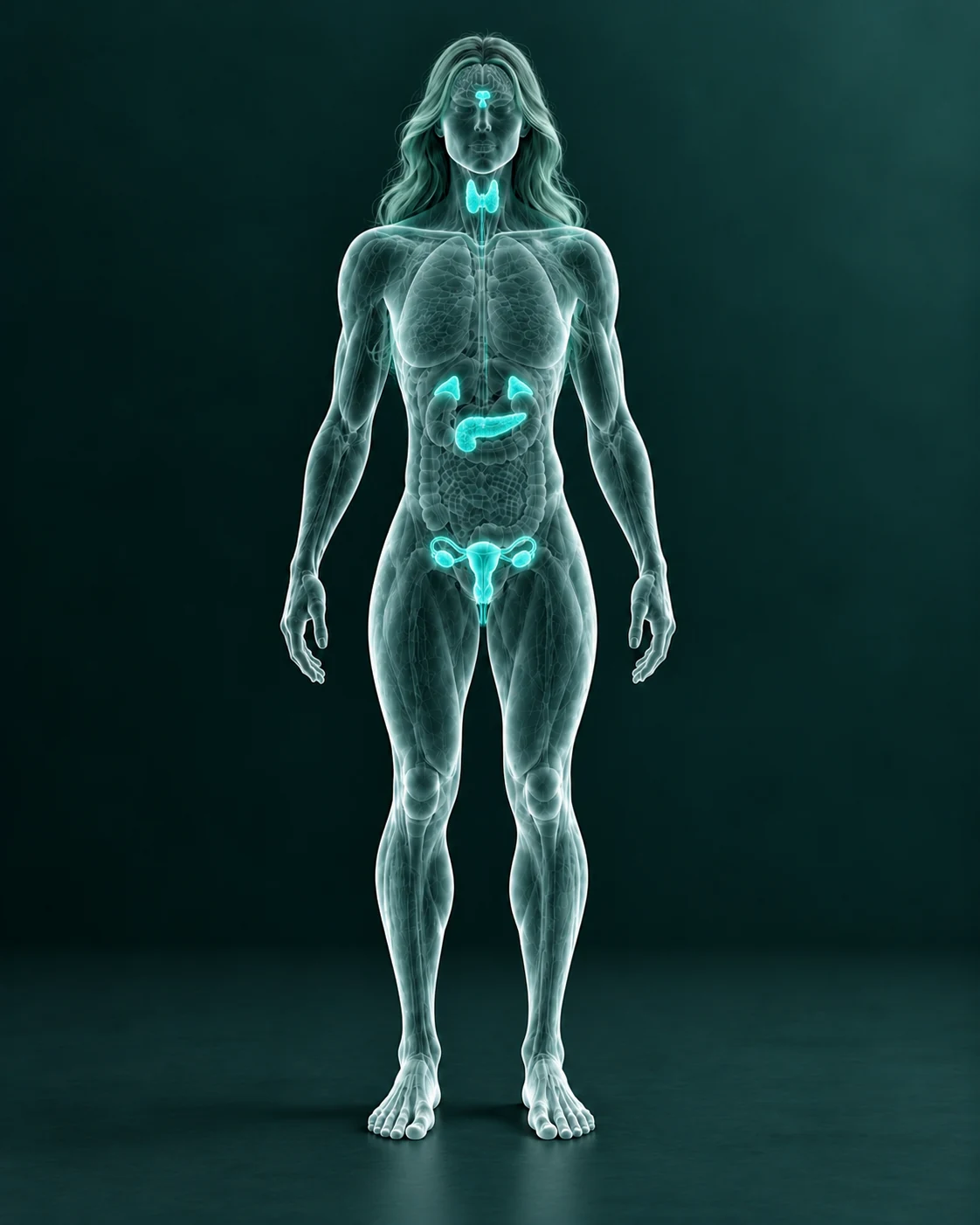
What else is it used for?
Each use below carries its own evidence level. Approved means regulators have cleared it for that purpose. Investigational means it is in trials. Early research means it is being studied and is not established.
- Advanced prostate cancerFDA-approved
- Palliative treatment of advanced breast cancer in pre- and perimenopausal womenFDA-approved
- Endometriosis and endometrial thinning before surgeryFDA-approved
- Protecting ovarian function during chemotherapyClinical use
The published record
Papers about Goserelin (Zoladex) · this compound only
Searched: Goserelin, Zoladex.
443 papers tagged human · 299 not reviews or lab · 154 clinical trial publications
How the compound was given: 66 applied to skin · 115 injected · 45 by mouth or rectal · 1 intranasal · 304 route not stated in the abstract
Read from each paper's indexing terms and abstract, by rule. A paper that mentions a cream studied a cream, not necessarily the product being sold.
417 registered trials matched · 22 with posted results
Furthest stage reached: Approved in the US
Counted from Europe PMC indexing, not read by a person; a human tag can land on reviews, commentary or lab papers; clinical trial publications is the narrower count. A preprint and its journal version count once. 481 papers and 100 trials held here.
At a glance
Four things to know about Goserelin (Zoladex)
Evidence
FDA-approved
Category
Sexual and hormonal
Common vial
Varies
Half-life
About 4 hours, from the solution formulation
How much, and do you cycle it?
The range, and whether you take breaks.Set by the label, monthly or 3-monthly implant. Set by the prescription FDA label
This is a prescription drug. Duration and schedule are set by the label and the prescriber, not by a cycling convention.
About 4 hours, from the solution formulationFDA label
This page used to report a sex difference in half-life. The label does not say that. Section 12.3 gives no elimination half-life at all for the 3.6 mg depot, only peak concentration, time to peak, area under the curve and clearance, and what differs by sex there is clearance: 110.5 mL/min in men against 163.9 mL/min in women, which the label calls significantly greater in women. The half-life figures, 4.2 hours with normal kidney function and 12.1 hours with impairment, sit in section 8.6 and belong to the solution formulation rather than the depot. For the depot the label says renal impairment does not call for a dose adjustment. None of these describe how long the implant keeps releasing drug, which is 28 days, slower for the first 8 and then continuous.
Source: Zoladex label section 8.6, solution formulation, revised September 2025. Section 12.3 reports clearance rather than half-life for the depot.
You can compare this against the whole library to see where it sits.
How is it given?
Dosing context and source notes.Supplied as an implant or depot, so there is nothing to mix or draw.
Label dose: 3.6 mg per dose. FDA Label (Zoladex)
Given as an implant placed under the skin of the anterior abdominal wall by a clinician: 3.6 mg every 28 days, or the 10.8 mg depot every 3 months. The label asks for the 28-day schedule to be kept, allowing a delay of only a few days.
How do you store it?
Before mixing, and after.Follow the storage on the product label.
Goserelin (Zoladex) is supplied as a finished product, so its label sets the storage. Pens, prefilled syringes, implants, tablets and ready-made solutions are used as supplied. Kits that include a powder are mixed just before the dose and usually used straight away, not kept for weeks. Many injectable products go in the fridge and must not be frozen, while others are kept at room temperature, so check the pack or ask the pharmacist.
What are the side effects and cautions?
Known cautions and warnings for this compound.Solubility, computed: 30% charged residues, 30% hydrophobic. Water usually sufficient.
A first-pass rule from peptide manufacturers' guidance. It does not account for disulfide bridges, salt form or how the powder was dried, and it predicts what should be easy rather than what will happen in your vial.
Who should avoid it
- Pregnancy, where it can cause harm to a developing baby
- Undiagnosed abnormal vaginal bleeding
- Known hypersensitivity to GnRH analogs
- Use outside a prescription, where no label governs the dose
Stop and get help
- Worsening bone pain or urinary difficulty in the first weeks, which can reflect the initial flare
- Signs of an allergic reaction, including facial or throat swelling or trouble breathing
- Severe pain, swelling or bleeding at the implant site
Common effects
- Hot flushes
- Reduced libido and sexual function
- Mood changes
- Bone density loss with long term use
- Bruising or pain where the implant is placed
Where this page says nothing is established, that means nobody has studied it, not that a compound is safe.
Is Goserelin (Zoladex) approved?
And where the numbers on this page come from.Yes. Goserelin (Zoladex) is FDA approved and available on prescription in the United States.
- Approval statusFDA-approved
- RouteAs an implant under the skin
- Checked15 November 2026
- DoseFrom the drug label. The manufacturer tested this range and a regulator reviewed it.
- Vial sizeFrom what vendors typically list; not a recommendation.
- Sources
What has happened recently
FDA-approved 1989 as a subcutaneous implant. The current label, revised September 2025, carries five indications: stage T2b to T4 prostate carcinoma in combination with flutamide, palliative treatment of advanced prostate carcinoma, endometriosis, endometrial thinning before ablation, and palliative treatment of advanced breast cancer in pre- and perimenopausal women. Prescription only.
You can compare this against the whole library, or read how to check a seller.
What else is like Goserelin (Zoladex)?
Others in Sexual and hormonal, side by side.If you're weighing Goserelin (Zoladex), it's worth reading Histrelin (Supprelin LA), Lanreotide (Somatuline Depot), and Lapemelanotide zapixetan (VMT01) in the same class.
A GnRH agonist given as an implant under the skin rather than an injection.
- Dose
- Set by the label
- How often
- Monthly or 3-monthly implant
A modified GnRH, nine amino acids long, released steadily from a small implant for a year. The implant has been FDA-approved for central precocious puberty since 2007, after a daily injection first approved in 1991; the adult prostate cancer version, Vantas, stopped being made in 2021.
- Dose
- One 50 mg implant every 12 months, releasing about 65 mcg a day (label)
- How often
- Once every 12 months
An approved monthly somatostatin shot that lowers growth hormone and slows some gut and pancreatic tumors.
- Dose
- 60 to 120 mg every 4 weeks (label)
- How often
- Every 4 weeks (6 to 8 weeks for some acromegaly patients)
An alpha-emitting melanoma drug whose own maker misspells its approved generic name.
- Dose
- 1.5 to 5.0 mCi per treatment in dose finding, up to three treatments
- How often
- Every 8 weeks, up to three times
Guides for this compound
- How to Reconstitute a Peptide
Mix peptide powder with bacteriostatic water, step by step.
- How to Read an Insulin Syringe
Read the units, convert to millilitres, and draw the exact dose.
- mcg vs mg: The Peptide Dosing Mistake to Avoid
Your vial says mg and your protocol says mcg. Here is the conversion and how to check it.
Sources
- Zoladex (goserelin acetate) implant prescribing information, FDA label, revised September 2025(2025)The label behind every figure on this page, and the correction to it. Five indications: stage T2b to T4 prostatic carcinoma with flutamide, palliative treatment of advanced prostatic carcinoma, endometriosis, endometrial thinning before ablation, and palliative treatment of advanced breast cancer in pre- and perimenopausal women. Dosing is 3.6 mg every 28 days into the anterior abdominal wall, with a 10.8 mg depot in the prostate regimen, and the label asks that the 28-day schedule be kept. Section 12.3 gives no elimination half-life for the depot; it reports systemic clearance of 110.5 mL/min in men against 163.9 mL/min in women, significantly greater in women. The 4.2 and 12.1 hour half-lives sit in section 8.6 and belong to the solution formulation, and for the depot the label says renal impairment needs no dose adjustment. Release from the depot is slower for the first 8 days, then continuous for the rest of the 28 days. Revised September 2025. Read at source.
Beyond these, 581 records are indexed for this compound. Browse the records