
Cerluten_Dosage, benefits & legal status
A bioregulator for brain and nerve support, with thin evidence.
Common vial size is what vendors typically sell, not a recommendation. Enter your own vial in the calculator.
What is Cerluten?
Plain language first. The technical label stays, but it never stands alone.Overview
It is marketed for brain and nervous-system support, but there is very little real human research behind it.
Cerluten is a peptide 'bioregulator' from the Russian Khavinson family, drawn from nerve tissue.
What it's used for
A bioregulator for brain and nervous-system support and healthy aging, taken in courses.
How does Cerluten work?
What it does in the body, and where.Cerluten differs from most of this family: it is not a defined short peptide but a crude extract from nerve tissue.
- 01It is a tissue extract, not a single peptideWhich means its composition is not fully characterized and can vary between batches.
- 02No citable human evidence, and no defined sequenceThere is nothing to verify, because the product is not a single molecule.

What else is it used for?
Each use below carries its own evidence level. Approved means regulators have cleared it for that purpose. Investigational means it is in trials. Early research means it is being studied and is not established.
- Brain and nervous system supportResearch only
The published record
0
Papers and trials about Cerluten
Searched: Cerluten.
Europe PMC was searched on 25 October 2026 for these terms and returned nothing.
Counted from Europe PMC indexing, not read by a person.
At a glance
Four things to know about Cerluten
How much, and do you cycle it?
The range, and whether you take breaks.Varies (course-based), courses. Courses of 10 to 20 days, repeated two or three times a year Community practice
The course structure is how the Khavinson protocols specify these and how they are sold. No trial has compared course dosing against continuous use, or established how long the gap between courses should be.
Nothing publishedNo figure
No half-life has ever been published for any of the Russian bioregulator peptides, in people or in animals. The research behind them, mostly from one group in St Petersburg, measures effects on tissue, gene activity and lifespan. None of it measures how long the peptide stays in the body.
You can compare this against the whole library to see where it sits.
How do I dose and price it?
Enter your vial and your dose. Pick a mix. We show the draw and the cost.The vial holds a fixed amount of drug. Adding more water does not make more drug, it just spreads it thinner, so you draw a bigger number on the syringe for the same dose.
Choose your mix
Measuring the water1 mL = one full 100-unit syringe.
How do you store it?
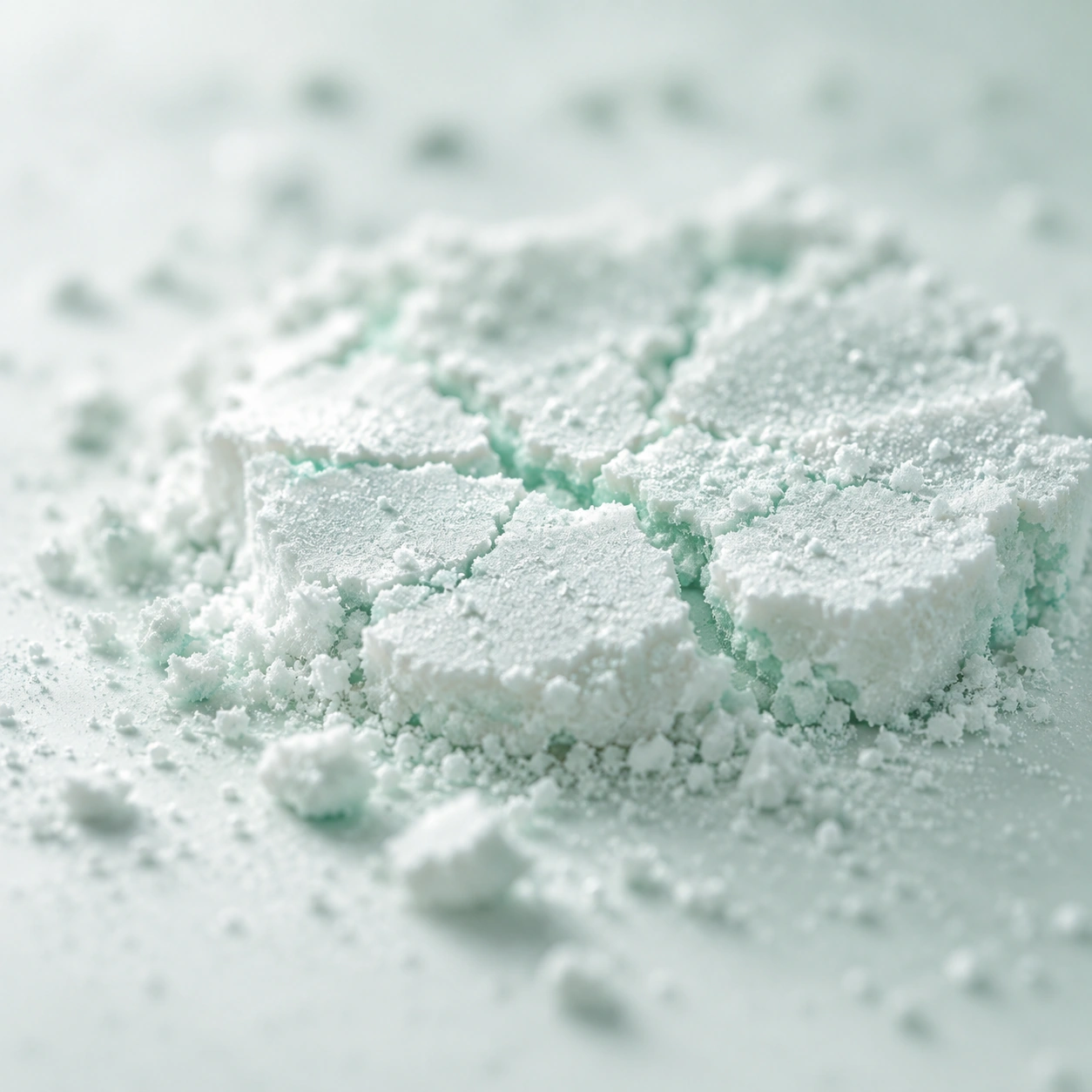
Before mixing, and after.Dry powder in the freezer or fridge. Once mixed, fridge, and use within about a month.
Unmixed lyophilized Cerluten keeps for a long time cold. Once you add water the clock starts: most reconstituted vials hold up for roughly 28 to 30 days at fridge temperature. Keep it out of light, and do not freeze it after mixing.
What are the side effects and cautions?
Known cautions and warnings for this compound.Who should avoid it
- Pregnancy or breastfeeding
- Active cancer, as a precaution with anything that promotes tissue or blood-vessel growth
- Any prescription medicine you take regularly, without checking for interactions first
- Anyone who wants established safety data, because none exists for this compound in humans
Stop and get help
- Spreading hives, swelling of the face or throat, or trouble breathing, which can happen with any injection and is a medical emergency
- Redness, heat, or pus at the injection site, which can signal infection
- Any severe or unexpected symptom
- Anything unusual, since there is no known safety profile to compare it against
Common effects
- Little human evidence.
- Redness, soreness, or a small bump at the injection site
- Beyond the above, unknown. There is no reliable human data on what this compound commonly causes
Where this page says nothing is established, that means nobody has studied it, not that a compound is safe.
Is Cerluten approved?
And where the numbers on this page come from.No. Cerluten is not approved for any use, anywhere. It is sold labeled for laboratory research only, and there is no legal route to buy it for human use.
- Approval statusResearch only
- RouteUnder the skin, or by mouth
- Checked22 July 2026
- DoseFrom community reports. No regulator or trial established this dose.
- Vial sizeFrom what vendors typically list; not a recommendation.
- SourcesNone traced yet.
What has happened recently
We have not yet written a full regulatory note for this compound. The status above is current as of the date shown.
You can compare this against the whole library, or read how to check a seller.
What else is like Cerluten?
Others in Healing and recovery, side by side.If you're weighing Cerluten, it's worth reading CN-105, Eptifibatide, and Glepaglutide (Zeydovio) in the same class.
A bioregulator for brain and nerve support, with thin evidence.
- Dose
- Varies (course-based)
- How often
- Courses
A five-amino-acid mimic of the part of apolipoprotein E that calms inflammation in the injured brain. Two small randomized trials, in brain bleeds and in surgery, found trends that were not significant.
- Dose
- 1.0 mg/kg every 6 hours, up to 13 doses over 72 hours (phase 2 trials)
- How often
- Every 6 hours for up to 3 days
A hospital antiplatelet drug that blocks the platelet fibrinogen receptor. FDA-approved since 1998; the Integrilin brand is gone, generics remain.
- Dose
- 180 mcg/kg bolus, then 2 mcg/kg/min (label)
- How often
- Continuous infusion for up to 72 to 96 hours
A GLP-2 with a six-lysine tail that is released slowly from a depot under the skin, so it can be given twice a week. Recommended for EU approval in September 2026; the FDA asked for another trial.
- Dose
- 10 mg twice weekly (phase 3 trial)
- How often
- Twice weekly
Guides for this compound
- How to Reconstitute a Peptide
Mix peptide powder with bacteriostatic water, step by step.
- How to Read an Insulin Syringe
Read the units, convert to millilitres, and draw the exact dose.
- mcg vs mg: The Peptide Dosing Mistake to Avoid
Your vial says mg and your protocol says mcg. Here is the conversion and how to check it.
- How to Read a Peptide COA
What the purity number does and does not tell you, and how to spot an edited report.
- How to Vet a Peptide Vendor
Independent COAs, HPLC purity, and the red flags that mean walk away.
Sources
No primary source has been traced for this compound yet. Treat everything on this page as unverified until one is. How we grade evidence