Peptide Decoding
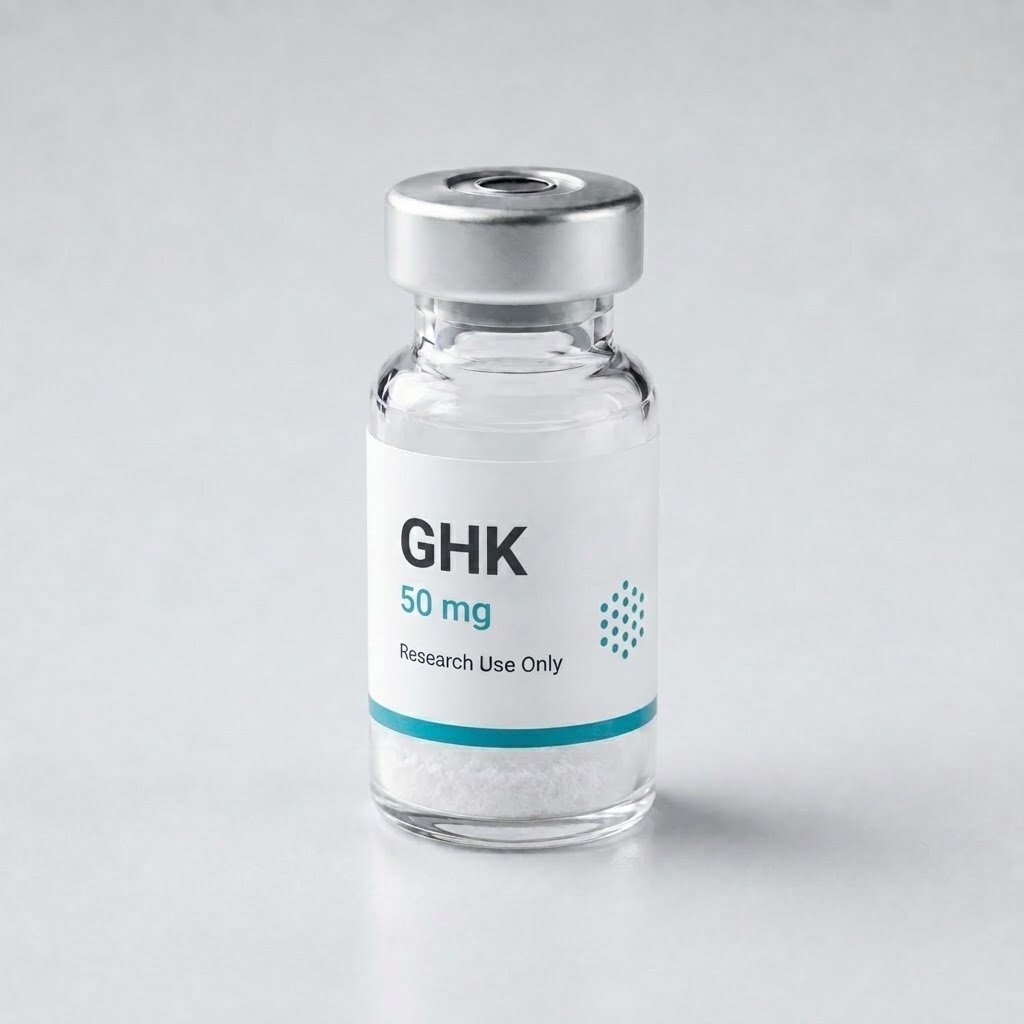
The supplied GHK and GHK-Cu research vial photograph
← All comparisons

GHK vs GHK-Cu

Same three amino acids. The copper is the only difference, and all the evidence sits on that side.

  • Copper peptides
  • Same sequence, one ion apart
  • Topical evidence
Published October 15, 2026
The short answer

Does the copper matter?

GHK and GHK-Cu are the same tripeptide, glycine-histidine-lysine. The difference between them is a single copper ion. Every human trial was run on the copper-bound form, and copper-free GHK has one published study, in cell culture. Vendors charge about the same per milligram for both.

At a glance · authored capture
GHK GHK-Cu
Sequence Gly-His-Lys Gly-His-Lys
Residues 3 3
What is different Nothing added One Cu(II) ion bound 4
Molecular weight About 340 Da About 402 to 404 Da
Copper by mass None About 15.8 percent
INCI name Tripeptide-1 12 Copper Tripeptide-1 12
Published studies on this exact form One, in cell culture 9 Fifty years of them 1245
Randomized human trials None, for anything Several small ones, 13 to 39 people 81920
Largest positive trial tested Not applicable A nano-carrier formulation, not plain GHK-Cu 19
Crosses intact human skin Never measured Almost none, measured once 16
Sold as a topical anywhere we track No, 0 of 14 listings 15 Yes, 24 of 246 listings 15
Vendors we track 11 118
Median price per mg $0.82 $0.80

Footnote: Price figures from the Peptide Decoding copper peptide price capture, 5 October 2026: 7,762 price records across 158 vendors. Both molecules are sold as powder in vials by the same shops.

Copper peptides

What are GHK and GHK-Cu?

One sequence, two products. 118 vendors sell one of them and 11 sell the other, for the same money per milligram.

Cosmetic peptide · Topical · Tripeptide-1

Three amino acids in a row, glycine then histidine then lysine, with nothing attached. The copper peptide literature calls this form apo-GHK. GHK was pulled out of human blood plasma by Pickart and Thaler in 1973 and sequenced by Schlesinger, Pickart and Thaler in 1977. 12 Sold under the INCI name Tripeptide-1, and in research vials usually labelled GHK Basic. In plain terms: the peptide on its own, without the metal that the original work found it was carrying.

Molecular weight About 340 Da
Copper content None
Studies on this form One, in cell culture
Vendors we track 11

Copper peptide · Topical and injected · Copper Tripeptide-1

The same three amino acids holding one copper ion. This is the copper peptide people mean when they say copper peptide, and the blue colour is the copper. Sold under the INCI name Copper Tripeptide-1 in cosmetics, and as a research chemical in vials for mixing. In plain terms: the version that every well-known study was actually run on.

Molecular weight About 402 to 404 Da
Copper content About 15.8 percent by mass
Studies on this form Five decades of them
Vendors we track 118

The sequence is identical. One is a peptide and the other is a peptide holding a metal, and that single ion is what the research was done on.

Supplied GHK research vial photograph
Copper-free · Tripeptide-1

GHK

The same glycine–histidine–lysine sequence, without the metal.

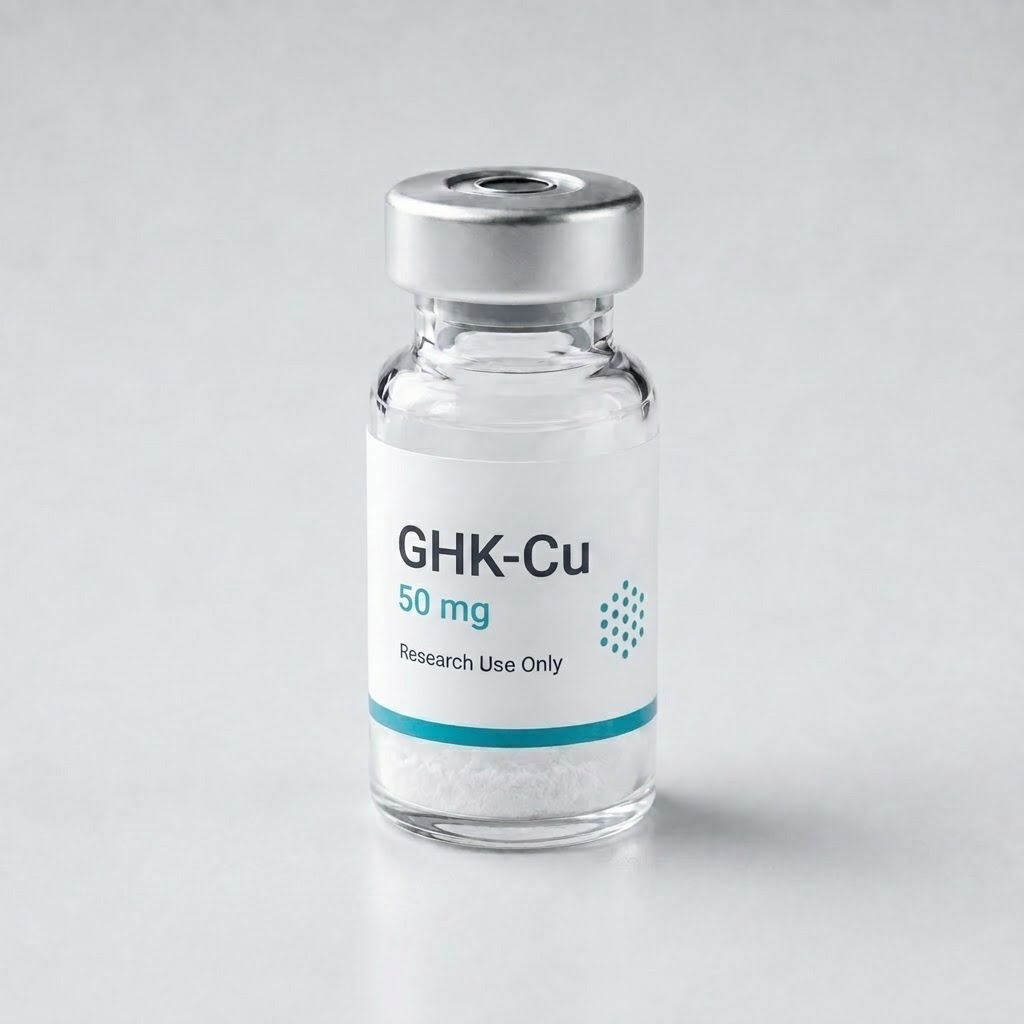
Supplied GHK-Cu research vial photograph
Copper-bound · Copper Tripeptide-1

GHK-Cu

The same glycine–histidine–lysine sequence, carrying a copper ion.

Copper peptides

What does the copper actually change?

GHK

GHK

GHK-Cu

GHKCu(II)

It is not a decoration. In the 1980 Nature paper the peptide was the vehicle and the copper was the cargo.

The history runs in three steps, and the order of them is the most important thing on this page.

1973. The activity is found. Pickart and Thaler report a tripeptide in human serum that keeps normal liver cells alive longer in culture and stimulates growth in neoplastic liver tissue. At this point nobody knows what it is. 1

1977. The molecule is named. Schlesinger, Pickart and Thaler publish the structure. The growth-modulating serum tripeptide is glycyl-histidyl-lysine. 2

1980. The copper turns out to be the point. Pickart and colleagues publish in Nature under a title that gives away the finding: the growth-modulating plasma tripeptide may function by facilitating copper uptake into cells. The paper reports that the tripeptide co-isolated with copper and some iron when it was purified from plasma, that its effects on hepatoma cells were strongest when copper and iron were supplied with it, and that it increases copper uptake into those cells. The copper-binding motif was noted to resemble the ones on albumin and alpha-fetoprotein, the proteins that move copper around the bloodstream. 3

Read those three in sequence and the position is clear. The peptide was discovered copper-free only in the sense that nobody had looked yet. When somebody did look, the copper came out of the plasma attached to it, and the activity tracked the copper.

The structure was then solved. Freedman, Pickart, Weinstein, Mims and Peisach published the solution structure of the GHK-copper(II) complex in 1982, describing nitrogen coordination of the copper. 4 By 1987 the molecule was being written up for a methods series as the human plasma copper-binding growth factor, which is how the field described it at the time. 7 The collagen result that cosmetic marketing still leans on, from Maquart, Pickart and colleagues in 1988, was run on the copper complex, and the paper says so in its title. 5

Caption: the sequence does not change. One ion does.

  • Same sequence, different molecule. Adding a metal ion to a peptide is not like adding a label. The copper changes the shape, the charge and the chemistry.
  • The copper was there from the start. The 1980 Nature paper reports that copper co-purified with the peptide out of human plasma.
  • Fifteen point eight percent. That is how much of a GHK-Cu vial is copper by mass, and section 10 does the arithmetic on what that means for a vial.
Copper peptides

How do GHK and GHK-Cu compare, side by side?

GHK GHK-Cu
Full name Glycyl-L-histidyl-L-lysine Glycyl-L-histidyl-L-lysine copper(II)
Sequence Gly-His-Lys Gly-His-Lys
Residues 3 3
Molecular weight About 340 Da About 402 to 404 Da
Copper None One Cu(II) ion, about 15.8 percent by mass
Colour White powder Blue, from the copper
INCI name Tripeptide-1 12 Copper Tripeptide-1 12
Also sold as GHK Basic, copper-free GHK, apo-GHK Copper peptide, GHK copper
Discovered 1973, as the active fraction 1, sequenced 1977 2 1980, when the copper was identified as the functional part 3
Studies on this exact form One, in vitro only 9 Five decades, from 1980 onward 345
Randomized human trials None we could find At least three, 13 to 39 people, mixed results 81920
Who funded the positive one Not applicable The company whose product was tested 19
Skin permeation Never measured, in any skin Measured once; almost none crossed intact human skin 16
Water or fat loving Water loving Water loving, log P about negative 4.5 16
Collagen result Not demonstrated for this form alone Demonstrated in fibroblast culture, 1988 5
Cosmetic safety assessment Covered, concentrations 0.00002 to 0.001 percent reported 12 Covered, concentration not reported by industry 12
Copper-specific toxicity data Not applicable None in the safety assessment 12
FDA compounding status Not listed Removed from both 503A categories, April 2026 13
Vendors we track 11 118
Listings 14 246
Of those, blends 1 50
Classified as Topical cosmetic ingredient, no injected dose Topical, plus injection as research-only
Delivery forms sold Vial only, 14 of 14 15 Vial, capsule, spray, nasal spray, topical, tablet, solution, dissolving strip
Per mg, single vials $0.59 to $1.02, median $0.82 $0.25 to $10.00, median $0.80
Copper peptides

What does the copper peptide evidence actually show?

53 years of work, one randomized human trial, 13 people completed it, and it came out mostly negative.

1973 · GHK Pickart and Thaler isolate a tripeptide from human serum that prolongs survival of normal liver cells and stimulates growth in neoplastic liver. Cell culture. The molecule is not yet identified. 1

1977 · GHK Schlesinger, Pickart and Thaler sequence it. The growth-modulating serum tripeptide is glycyl-histidyl-lysine. 2

1980 · GHK-Cu Pickart and colleagues report in Nature that the peptide co-isolated with copper, that the cell effects were strongest when copper was supplied with it, and that it increases copper uptake into cells. The proposal is that the peptide is a copper transporter. Cell culture, with chemistry. 3

1982 · GHK-Cu Freedman and colleagues solve the solution structure of the copper complex. 4

1988 · GHK-Cu Maquart, Pickart and colleagues report stimulation of collagen synthesis in fibroblast cultures by the tripeptide-copper complex. Cell culture. Maquart and Pickart's 1988 fibroblast culture result is the origin of the collagen claim made for copper peptides today. 5

2006 · GHK-Cu · a randomized trial on resurfaced skin Miller, Wagner, Baack and Eisbach randomize patients having circumoral CO2 laser resurfacing to a post-treatment regimen with or without GHK-Cu. Thirteen patients complete. Erythema is assessed by software and by blinded evaluators. Wrinkles and overall skin appearance are assessed at 12 weeks. The result: no statistically significant difference between groups on erythema, by either method. All patients improved on wrinkles and skin quality, with no difference between groups. The only significant finding is on the patient questionnaire, where the GHK-Cu group reported greater improvement in overall skin quality, p equals 0.04. Miller and colleagues conclude that topical GHK-Cu offered no significant reduction in post-treatment erythema. 8

2016 · GHK-Cu · the largest positive human trial, with a catch Badenhorst and colleagues run a randomized, double-blind, split-face trial in 40 women aged 40 to 65, 39 analysed, twice daily for 8 weeks, measuring one wrinkle per person with 3D stripe projection. Against a vehicle without the active, wrinkle volume falls 55.8 percent and depth 32.8 percent. Against Strivectin SD it improves volume by 31.6 percent. The catch is in the test article: GHK-Cu delivered in a proprietary lipid nano-carrier, compared against the same serum without the carrier. The study was funded by Snowberry New Zealand, whose product it was, and run at a cosmetic research institute with a co-author from it. Human trial. 19

2012 · GHK · the one copper-free study Choi and colleagues at Seoul National University test copper-free GHK in cultured human keratinocytes and fibroblasts and in reconstructed three-dimensional skin equivalents. They report dose-dependent proliferation, stronger integrin staining along the basement membrane, and more p63 and PCNA positive cells. Their conclusion is that copper-free GHK showed effects similar to copper-GHK. Three things qualify that, and the authors raise the first one themselves. There was no head to head comparison, so "similar" is a comparison against their own earlier paper. They note that trace copper in the keratinocyte growth medium may bind the GHK and contribute to the effects. And the peptide was supplied by Beadtech Inc., a company one of the co-authors is affiliated with. In vitro only, no animal or human work. 9

2015 and 2018 · reviews Two review papers by the peptide's discoverer collect the field. The 2015 review states that GHK can up- and downregulate at least 4,000 human genes. That is the figure the whole supplement and skincare market now repeats. Our guide on the three GHK-Cu products traces where that number actually comes from. 10 The 2018 review is titled for the copper complex, discusses the bare peptide throughout its abstract, and is indexed under the substance glycyl-histidyl-lysine. 11 That slippage between the two names, inside one paper by the field's founder, is a fair part of why buyers are confused.

2018 · both · cosmetic safety assessment The Cosmetic Ingredient Review Expert Panel assesses Tripeptide-1, Copper Tripeptide-1 and related ingredients and concludes they are safe under present practices of use and concentration. The conclusion rests on typical use concentrations under 10 parts per million. Industry reported Tripeptide-1 leave-on use at 0.00002 to 0.001 percent. For Copper Tripeptide-1, 18 uses were reported with no concentration given. The panel found no copper-specific toxicity data, and no reproductive, developmental or carcinogenicity data for any ingredient in the group. 12

2025 and 2026 · GHK-Cu · the rest of the human record A split-face study of acne scarring compares a dermaroller alone against a dermaroller with 0.5 to 1 percent GHK-Cu serum. There is an early advantage on scar scores and no significant difference by week 16, with a note on hyperpigmentation risk. A separate uncontrolled case series treats four men with androgenetic alopecia using minoxidil, dutasteride and a copper peptide delivered by tattooing device, reporting 26.5 percent area regrowth. Both come to us through the 2026 systematic review rather than from the papers themselves. 20

2026 · GHK-Cu · an independent systematic review of the field Najafi and colleagues review the GHK-Cu literature from 2005 to 2026 and find only three human studies that evaluated GHK-Cu directly. They describe the human evidence as thin and fragmented, note that most of it is small cosmetic-cream work, and call for properly designed trials. This is the first assessment of this compound's evidence base we could find that was not written by someone selling it or by its discoverer. 20

2015 · GHK-Cu · the permeation measurement Li and colleagues measure GHK-Cu across dermatomed human cadaver skin and find almost no peptide and almost no copper crosses intact skin, with concentration increases making no difference. With microneedle pretreatment at 22.2 newtons, 134 nanomoles of peptide and 705 nanomoles of copper cross over nine hours, copper moving at roughly five times the molar rate of the peptide. Intact rat skin, by contrast, does permeate. Laboratory study. 16

2021 · GHK-Cu · the copper carrier question Bossak-Ahmad, Bal, Frączyk and Drew publish in Inorganic Chemistry on ternary copper complexes of human serum albumin and GHK. They find that two ternary albumin-copper-GHK complexes form, with GHK binding through histidine side chains on albumin, conditional binding constants of 2900 and 1700 per molar at pH 7.4. They suggest these complexes may help move the exchangeable copper pool in blood and may help carry GHK in its functional form. 6

2026 · GHK-Cu · the compounding position changes GHK-Cu comes off the FDA's 503A Category 2 list for injectable routes, and off Category 1 for non-injectable routes, in both cases because the nominations were withdrawn. Removal from Category 2 is not permission to compound. Removal from Category 1 takes a substance out of the interim enforcement discretion policy. 13

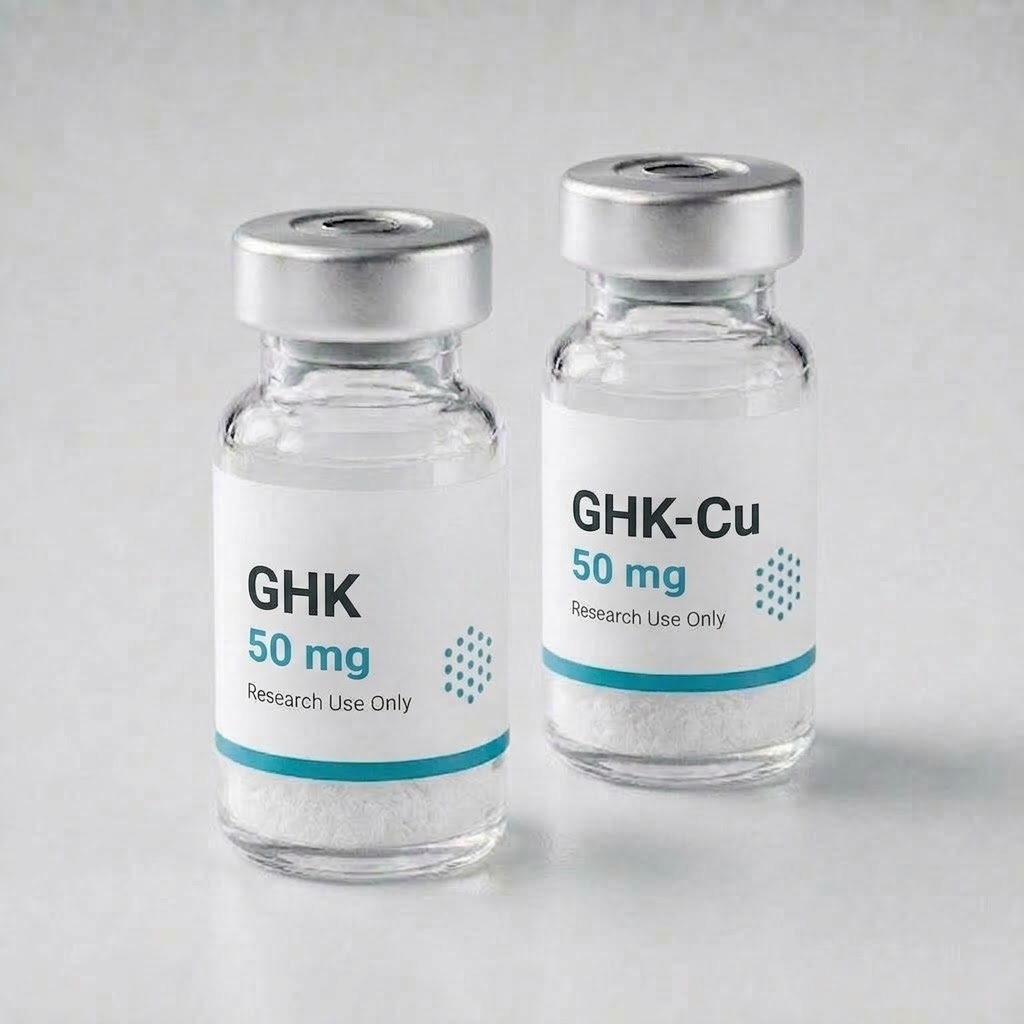
The supplied side-by-side GHK and GHK-Cu vial photograph
The same peptide sequence. One product carries copper.
Copper peptides

What is the difference between GHK and GHK-Cu?

The evidence is not evenly split, and it is not close. Every result anybody cites for this tripeptide, from the 1980 copper uptake paper through the 1988 collagen work to the single randomized human trial in 2006, was run on the copper complex. The copper-free form has one published study, in cell culture, with no side-by-side comparison and a copper-containing growth medium the authors flagged themselves. 3589

The human trials exist, they are small, and the biggest positive one did not test the molecule on its own. A 2026 systematic review of the field found only three human studies in twenty years that evaluated GHK-Cu directly, and called the evidence thin and fragmented. 20 The largest positive result, 39 women over 8 weeks, tested GHK-Cu inside a proprietary lipid nano-carrier against the same serum without it, and was funded by the company selling the product. 19 A split-face acne-scar study in 2025 showed an early advantage that was gone by week 16. 20 The 2006 laser-resurfacing trial found no difference on any objective measure in 13 completers. 8 Nothing in that record is a trial of plain GHK-Cu powder.

The topical premise has been measured once, and it failed. Almost no peptide and almost no copper crossed intact human cadaver skin, and raising the concentration did not help. The one randomized trial applied GHK-Cu to laser-resurfaced skin, which is close to the best case for getting it in, and still found nothing on any objective measure. 816

The copper-free form is not a copper chelator in the way vendors imply. The argument for buying it is that GHK will pick up copper from your body. The chemistry paper that looked at this found GHK forms a three-way complex with albumin and copper rather than stripping copper off albumin, and the authors' own reading is that the complex may be what carries GHK in its functional form. Not that the peptide works without copper. 6

One ion is 15.8 percent of the product. A 50 mg GHK-Cu vial contains roughly 7.9 mg of elemental copper. The adult tolerable upper intake level for copper is 10 mg per day. A copper-free vial contains none. Section 09 works through what that does and does not mean. 14

The price does not reflect any of this. At the same vendor and the same size, the copper-free version is usually a little cheaper, sometimes identical, and occasionally more expensive. Across our whole dataset the median per milligram is $0.82 copper-free and $0.80 with copper. Whatever you are paying for, it is not the copper.

Copper peptides

Does either one get into skin?

Measured once, in human skin. Almost nothing crossed, and raising the concentration did not help.

Every topical claim on either product assumes the molecule gets past the outer layer of skin. Li and colleagues measured that across dermatomed human cadaver skin and found almost no peptide and almost no copper crossed intact skin, with concentration increases making no difference. GHK-Cu has a log P of about negative 4.5, meaning it is strongly water-loving, and passive diffusion through skin favours fat-loving molecules. 16

That corrects a claim that circulates widely, including in some of our own earlier wording: GHK-Cu is not blocked by being too large. At about 402 daltons it is well under the 500-dalton rule of thumb. The barrier is charge and water solubility.

Two further details from the same study. With microneedle pretreatment at 22.2 newtons, copper crossed at roughly five times the molar rate of the peptide, so breaching the barrier delivers mostly copper rather than the intact complex. Intact rat skin permeated freely where human skin did not, so rodent penetration figures for GHK-Cu overstate the human case. 16

A second measurement agrees. Hostynek and colleagues reported a permeability coefficient of about 3 x 10 to the minus 7 centimetres per hour for 0.68 percent aqueous GHK-Cu across ex vivo human epidermis, with 0.6 to 2.8 percent retained in the skin. Two independent measurements, five years apart, both find that this molecule does not meaningfully cross intact human skin. 21

Which is why the one strongly positive trial is the one it is. Badenhorst 2016 tested GHK-Cu inside a lipid nano-carrier against the same serum without the carrier, and the carrier side won. A delivery system beating no delivery system is consistent with everything above. It is not evidence that the molecule works when the barrier is intact. 19

Copper-free GHK has never been measured, in any skin. It is the same size and also water-loving, so the same barrier applies, but nobody has run the experiment.

How this bears on the 2006 trial. Miller and colleagues applied GHK-Cu to skin freshly resurfaced with a CO2 laser, which is close to the easiest possible route in, and still found no significant difference on erythema or on objective assessment of wrinkles and skin quality. 8 Poor penetration does not account for that result.

Our guide on how topical peptides get through skin covers the barrier itself, and why GHK-Cu burns when injected covers what happens to the copper once a formulation is broken.

Copper peptides

Is copper-free GHK still useful, or is it just cheaper?

1 published study exists on the copper-free form, and its own authors flagged the copper in their growth medium.

Here is the strongest case for the copper-free version, stated properly before it is tested.

GHK binds copper with real affinity. Nobody disputes that, and it was the basis of the 1980 proposal that the peptide is a copper transporter in plasma. 3 So the argument runs: apply copper-free GHK to skin, which already contains copper, and the peptide will acquire copper locally and become the active complex on arrival. On that reading the copper-free product is a precursor rather than a different drug, and the distinction between the two vials is marketing.

What the chemistry says about that. The 2021 Inorganic Chemistry paper is the direct test of the blood version of this idea. It found that GHK, copper and albumin form stable three-way complexes rather than GHK taking copper off albumin, with conditional binding constants of 2900 and 1700 per molar at two histidine sites. Bossak-Ahmad and colleagues read that result the opposite way from the vendor argument: the ternary complex may be what carries GHK in its functional form, meaning the copper-bound form. 6

What the one copper-free study says about it. Choi and colleagues reported activity from copper-free GHK in cell culture, then noted in their discussion that trace copper in the keratinocyte growth medium may bind the GHK and contribute to what they measured. They say further study is needed to clarify how the copper-free and copper-bound forms relate. Choi and colleagues' own caveat, that medium copper may have bound the GHK, is the most useful sentence in the only published study of copper-free GHK. 9

Where that leaves it. The question of whether copper-free GHK acquires enough copper in skin to matter has not been settled in either direction. What exists is one in vitro paper whose authors could not rule out that they had been testing the copper complex all along. A reader choosing between two vials is choosing without evidence on this point.

One thing does favour the copper-free form, and efficacy is not it. It carries no copper. For anyone uneasy about the metal, the copper-free version removes it and keeps whatever the peptide does alone. What it does alone is poorly characterised. So the trade on offer here is less copper for less evidence, and that is not the trade most buyers think they are making.

Copper peptides

Which one are you actually buying?

118 vendors sell the copper form. Eleven sell the other. Ten of those eleven sell both.

Every figure in this section comes from the Peptide Decoding copper peptide price capture of 5 October 2026, covering 7,762 price records across 158 vendors. 15 Figures drift within days as stores change prices.

The split. GHK-Cu: 246 listings across 118 vendors. GHK copper-free: 14 listings across 11 vendors. That is a seventeen to one gap in listings and an eleven to one gap in sellers.

They are not confused about which is which. Ten of the eleven vendors carrying copper-free GHK also carry GHK-Cu, as separate products, in the same catalogue. Six of them label the copper-free one "GHK Basic", a house term rather than an INCI name or a chemical one. One vendor, a single store in our set, carries copper-free GHK without also carrying GHK-Cu. This is unlike the TB-500 and thymosin beta-4 situation, where vendor naming does not track the molecules. Here the market has two distinct SKUs and knows it.

Head to head, same vendor, same size. Where a store sells both at a matched size, this is what we see.

Vendor Size GHK GHK-Cu Difference
Biotech Peptides 50 mg $51 $64 Copper form costs $13 more
Biotech Peptides 200 mg $165 $186 Copper form costs $21 more
Core Peptides 50 mg $49 $58 Copper form costs $9 more
Core Peptides 200 mg $157 $197 Copper form costs $40 more
Limitless Life Nootropics 100 mg $78.99 $78.99 Identical
Atomik Labz Unstated $55 $55 Identical
Prime Lab Peptides 50 mg equivalent $55 $55 Identical
Skye Peptides 100 mg vs unstated $59 $49 Copper-free costs more

What that table says. On the four matched rows where the copper form costs more, the premium is 13 to 25 percent. On three rows it is zero. On one the copper-free version is the more expensive of the two. Across the whole set, the median single-vial price is $0.82 per mg copper-free and $0.80 per mg with copper. Across our 5 October 2026 capture, the median single-vial price is $0.82 per milligram for copper-free GHK and $0.80 per milligram for GHK-Cu, so the copper the evidence depends on adds nothing to what buyers pay. 15

On paper, copper-free GHK is a topical ingredient. In this market it is not sold that way at all. Tripeptide-1 is registered and assessed as a cosmetic ingredient, and our own compound page classifies it as a topical cosmetic peptide with no injected dose. Every one of the 14 listings we track is a vial of powder, at 50, 100 or 200 mg, from a research peptide seller, priced per milligram beside injectable compounds. Zero are creams, serums or sprays. One is blended with KPV, which nobody applies to their face. 15

That is a wider gap than the same problem on GHK-Cu, where 222 of 246 listings are vials but 24 are not, so at least some sellers offer the format the regulatory classification describes. For copper-free GHK the figure is 14 out of 14. A buyer reading that it is a topical ingredient and then shopping for it will be offered nothing but injection-format vials.

The forms diverge sharply. All 14 copper-free listings are vials of powder. GHK-Cu is sold in eight forms: vials, capsules, sprays, nasal sprays, topical powders and serums, tablets, solutions and dissolving strips. Fifty of the 246 GHK-Cu listings are blends, mostly the GLOW and KLOW mixes with BPC-157, TB-500 and KPV. Only one of the 14 copper-free listings is a blend.

The capsules are worth a line of their own. GHK-Cu capsules are typically 2 mg. At the prices we see, that works out between $35 and $72.50 per milligram, against a median of $0.80 per milligram for the same compound in a vial. One oral listing at 250 micrograms comes out at $247 per milligram. Whatever an oral copper peptide does, the price per milligram is between forty and three hundred times the vial price.

Current market · separate from authored capture

What do the current listings show?

Capture: 2026-10-15

GHK

Listings
11
Sellers
8
Vial listings
10
Other listings
1
Blends
1
Median per mg, single vials
$0.79

GHK-Cu

Listings
258
Sellers
128
Vial listings
228
Other listings
30
Blends
41
Median per mg, single vials
$0.78
Copper peptides

What has nobody answered about copper peptides?

Seven gaps. In 53 years nobody has put these two side by side in a single experiment.

Nobody has compared them in the same experiment. Not in people, not in animals, not in a dish. The one copper-free paper draws its comparison against the same group's earlier copper paper, and says so. No experiment anywhere has put GHK and GHK-Cu side by side under the same conditions. 9

Nobody has shown copper-free GHK acquires copper in skin. The argument that it becomes active on arrival is plausible chemistry and has never been demonstrated in skin, at any concentration, in any species.

Nobody has tested either one in human skin for gene expression. The 4,000 gene figure traces to a reanalysis of public microarray data from two cancer cell lines, PC3 and MCF7, with the copper status unspecified. 1017 No equivalent experiment has been run in human skin cells, with or without copper. That experiment is the one that would bear on what these products are sold for.

Nobody has measured whether copper-free GHK crosses skin. GHK-Cu has been measured once, in human cadaver skin, and almost none crossed. 16 The copper-free form has never been measured in any skin.

Nobody independent has run a positive trial of GHK-Cu. The strongest positive human result was funded by the company whose product was tested, at a cosmetic testing institute with a co-author from it. 19 That does not make the result false. It does mean the best evidence for this compound has never been reproduced by anyone without a stake in it.

Nobody has tested injected copper-free GHK at all. Not in people, not in animals, for any outcome. It is the only format the 14 sellers we track offer it in. 15

Nobody has tested injected GHK-Cu for cosmetic purposes in a controlled human trial. The 2006 trial was topical, applied after laser resurfacing. 8 Most of the 246 listings we track are vials intended for mixing and injecting, and that use has no controlled human evidence at all.

Nobody has published copper-specific toxicity data for the cosmetic ingredient. The CIR assessment covering Copper Tripeptide-1 contains its manufacturing description and its use frequency, and no copper-specific toxicity data. The toxicology, irritation, sensitization and genotoxicity data in that assessment are for palmitoyl derivatives, not for Tripeptide-1 or Copper Tripeptide-1 directly. No reproductive, developmental or carcinogenicity data were found or submitted for any ingredient in the group. 12

Copper peptides

What are the side effects, and what are you buying?

Roughly a sixth of one of these is a trace mineral with a daily upper intake limit of 10 mg. The arithmetic is short.

01 · Measured · What has actually been reported (teal) Each of these comes from a published document.

  • No significant reduction in post-laser erythema from topical GHK-Cu, by software analysis or blinded evaluators, in 13 completers 8
  • No significant difference in wrinkles or objective skin quality between GHK-Cu and control in the same trial 8
  • Significantly better patient-reported overall skin quality in the GHK-Cu group, p equals 0.04 8
  • Cosmetic safety assessment concluded safe under present practices, resting on use concentrations under 10 parts per million 12
  • Copper absorption from the gut falls from about 75 percent at 400 mcg a day to about 12 percent at 7.5 mg a day 14

02 · Unknown · Nobody has looked (red) Nobody has run these. That is different from a clean result.

  • GHK against GHK-Cu, head to head, in any model 9
  • Whether copper-free GHK acquires copper in human skin
  • Copper-specific toxicity data for Copper Tripeptide-1 as a cosmetic ingredient 12
  • Reproductive, developmental or carcinogenicity data for either ingredient 12
  • Injected GHK-Cu for cosmetic purposes in a controlled human trial
  • Any human trial of copper-free GHK, for anything
  • Injected copper-free GHK, in any species, for any outcome

03 · Supply · What is in the vial and what it costs (amber) This is what our own data and the arithmetic say.

  • A 50 mg GHK-Cu vial contains about 7.9 mg of elemental copper. The adult upper intake level for copper is 10 mg a day 14
  • GHK-Cu capsules run $35 to $72.50 per mg against a vial median of $0.80 per mg
  • Almost no peptide and almost no copper crossed intact human skin in the one permeation study 16
  • In mice given vitamin C and copper by mouth, neither alone caused damage and the combination caused kidney injury 18

The copper arithmetic, stated as arithmetic. GHK-Cu is about 15.8 percent copper by mass. That means a 50 mg vial holds roughly 7.9 mg of elemental copper, a 100 mg vial roughly 15.8 mg, and the one gram bulk powders we see in our data roughly 158 mg. The adult tolerable upper intake level for copper is 10 mg per day, and the figure is set on the basis of liver damage. The recommended daily allowance is 900 micrograms. 14

That arithmetic describes what is in the container. It says nothing about how much of a vial anybody uses, over what period, or by what route, and this page does not give dosing. Two points from the dietary reference material bear on it. The first is that the gut actively throttles copper absorption as intake rises, from around 75 percent at low intakes to around 12 percent at 7.5 mg a day, with most copper leaving in bile. Injection bypasses that mechanism entirely, and the 10 mg figure was derived with it in place. The second is that people with Wilson's disease, caused by ATP7B mutations, cannot clear copper normally and are at high risk of copper toxicity. Anyone in that position has a specific reason to raise a copper-containing product with a doctor. 14

The concentration arithmetic, for the topical side. The cosmetic safety assessment that these ingredients are cleared under rests on use concentrations under 10 parts per million, with industry reporting Tripeptide-1 leave-on use between 0.2 and 10 parts per million. One milligram of powder in one millilitre of water is 1,000 parts per million, which is 100 times the top of that range. A vial sold as powder states no concentration, because whoever mixes it decides. The safety assessment covers the concentrations industry reported, and it does not extend to whatever a buyer mixes. 12

On topical GHK-Cu generally. Irritation and redness are reported in some users, and copper peptides can leave a temporary blue or green tint on the skin. Neither molecule has a documented pattern of serious topical reactions.

On combining copper with vitamin C. The skincare advice about layering these is formulation reasoning, not evidence; no topical study has tested it. What does exist is one animal study on swallowing them together. Mice given vitamin C and copper by oral gavage showed systemic protein oxidation, raised blood urea nitrogen, creatinine and urinary protein, and tubular and glomerular kidney damage. Neither substance alone produced those effects, and an antioxidant prevented them. The authors' stated conclusion is that the two should not be used together as health supplements. That is a mouse study at mouse doses with no human or topical equivalent, so it is not a finding about serums. The pairing it describes, an oral copper product taken alongside vitamin C, is common enough to name. 18

One thing the copper-free form has going for it. There is no copper in it. On the specific question of copper load, it is the lower-risk product. It is also the one with almost no evidence behind it. Those two facts sit together and neither cancels the other.

What that leaves unsaid, and should not. Almost every safety figure on this page is a copper figure, so almost none of it is a safety statement about the copper-free form. People do inject copper-free GHK, which is the only format it is sold in. No trial has tested injecting it in people, no dose has been established, no human pharmacokinetic measurement exists, and its skin permeation has never been measured either. That is not a clean record. It is an empty one, and an empty record is the harder of the two to reason about, because there is nothing in it to be reassured by.

Where this page says nothing is established, that means nobody has studied it, not that something is safe.

Copper peptides

Are they banned in sport?

Neither is named on the 2026 list. The catch-all is the live question, and it reads differently here than for most peptides.

This reflects the 2026 Prohibited List, in force from 1 January 2026. WADA publishes a new list each September, so check the current version if you are reading this later in the year.

Neither GHK nor GHK-Cu is named anywhere on the 2026 list. That leaves section S0, the catch-all, which applies to a substance only when both of two things are true: it appears nowhere else on the list, and no governmental regulatory health authority has approved it for human therapeutic use.

For both molecules, condition one holds. Neither appears elsewhere.

Condition two is where this differs from compounds like Semax, which has a Russian health ministry approval that takes it out of S0. Being an approved cosmetic ingredient is not an approval for human therapeutic use, and neither GHK nor GHK-Cu has a therapeutic approval anywhere that we could find. On a plain reading, S0 does catch both, which means both would be prohibited at all times.

Two caveats. A substance can be prohibited for having a similar structure or similar biological effect to something listed, independently of S0. And copper is an essential dietary mineral, not a prohibited substance, so the copper is not what would be at issue.

This is our reading of the wording, not a ruling. If you are tested, the only answer that counts is a written opinion from your own anti-doping authority.

Copper peptides

Are they FDA approved?

Neither is a drug. One of them has a compounding history worth understanding, and it changed in April 2026.

Neither is an approved drug, anywhere. Both exist in the cosmetic ingredient system instead, a different regime with a different standard. Tripeptide-1 and Copper Tripeptide-1 are both listed INCI names, both were assessed by the Cosmetic Ingredient Review Expert Panel in 2018, and both were concluded safe under present practices of use and concentration. That is a cosmetic safety finding at concentrations around 10 parts per million or less. It is not a finding of efficacy, and it is not an approval to inject anything. 12

The compounding position changed in April 2026, and not in the direction people assume. Two separate things happened to GHK-Cu at once, both because nominations were withdrawn rather than because the FDA reached a view on the compound.

Injectable GHK-Cu came off Category 2, the list of substances the FDA had flagged as possibly presenting significant safety risks. That sounds like good news and is not permission. Removal from Category 2 does not make a substance eligible for compounding under section 503A.

Non-injectable GHK-Cu came off Category 1. Category 1 is the list covered by the FDA's interim enforcement discretion policy, which is what allowed compounding pharmacies to work with it in practice. Coming off Category 1 removes that cover.

So the net position for GHK-Cu as a compounded preparation is weaker than it was before April 2026, not stronger, and anyone who read "removed from the do not compound list" as a clearance has it backwards. 13

Copper-free GHK was never on either list. It has no FDA compounding status to change, because nobody nominated it.

What none of this touches. Copper Tripeptide-1 in a cosmetic serum on a shop shelf is unaffected by any of the above. That is the cosmetic regime, and it continues as before. The compounding story is about pharmacies preparing it as a drug, and the research-chemical vials are in neither system.

Questions and answers

Common questions

Common questions

What is the difference between GHK and GHK-Cu?

One copper ion. Nothing else.

Which is better, GHK or GHK-Cu?

On evidence, GHK-Cu, because essentially all of it was run on the copper-bound form. On copper load, the copper-free one, because it carries none. On price, neither, since they cost about the same per milligram. Nobody has compared them in a single experiment, so there is no result to point at.

Is GHK-Cu worth it?

Depends what you expect and what you are buying. The best human result is a 39-person 8-week trial showing a 55.8 percent reduction in wrinkle volume against a vehicle, but it tested GHK-Cu inside a lipid nano-carrier and was funded by the company whose product it was. 19 Plain GHK-Cu barely crosses intact skin. 1621 A 2026 systematic review calls the human evidence thin and fragmented. 20

Are GHK and GHK-Cu the same thing?

Same peptide, different molecule. The copper is 15.8 percent of GHK-Cu's mass and changes its shape, charge and chemistry.

Which one has the research behind it?

GHK-Cu, by a wide margin. The 1980 copper uptake paper, the 1982 structure, the 1988 collagen work and every human trial were run on the copper complex. Copper-free GHK has never been in a human trial for anything. 34581920

Is there any research on copper-free GHK?

One published study, in 2012, in cultured human skin cells and three-dimensional skin equivalents. It reported effects. It did not compare copper-free GHK against GHK-Cu, and the authors noted that trace copper in the growth medium may have bound the peptide and contributed to what they measured. 9

Does copper-free GHK pick up copper from my body?

Unknown. GHK does bind copper with real affinity, which is why the idea is plausible. The one study that examined this in blood found GHK forms a three-way complex with albumin and copper rather than taking copper from albumin, and the authors read their result as the complex carrying GHK in its functional form. Nobody has shown it happens in skin. 6

Where does the "4,000 genes" figure come from?

Not from a gene count. It is 31.2 percent of 13,424 genes, reported in a 2014 paper that reanalysed public microarray data from two cancer cell lines, and rounded into "at least 4,000" by a later review. Neither cell line is a skin cell, and the copper status is not stated. Our guide on the three GHK-Cu products sets out the full chain. 1017

Is it true that GHK declines with age?

The figure quoted for it, 200 nanograms per millilitre at 20 falling to 80 by 60, has no primary measurement behind it that we could find. Our guide on copper peptides after menopause covers that claim and the audience it is aimed at. 10

Does GHK-Cu actually get into skin?

Measured once, in human cadaver skin, and almost no peptide and almost no copper crossed intact skin. Raising the concentration did not change it. With microneedle pretreatment at 22.2 newtons, 134 nanomoles of peptide and 705 nanomoles of copper crossed over nine hours, and copper crossed at roughly five times the molar rate of the peptide. Copper-free GHK has never been measured. 16

Can I use copper peptides with vitamin C?

No topical study has tested the combination, so the layering advice circulating online is formulation reasoning rather than evidence. There is one relevant animal study, about swallowing them rather than applying them: in mice given vitamin C and copper by mouth, neither alone did damage, but the combination produced systemic protein oxidation and kidney injury, and the authors concluded the two should not be used together as supplements. That is a mouse study at mouse doses, and it has no topical or human equivalent. It is worth knowing if you are taking an oral copper product. 18

Is the copper form more expensive?

Barely, and not reliably. Our median is $0.80 per mg with copper against $0.82 without, and at matched vendor and size the premium runs 13 to 25 percent on some rows, zero on others, and negative at one store.

Why would anyone buy the copper-free version then?

Two reasons that hold up. It carries no copper load, which matters if that is your concern or if you have a condition affecting copper handling. And some formulators prefer to control copper separately. A third reason that does not hold up is the belief that it carries the same evidence base. It does not.

Did the GHK-Cu skin trials work?

Mixed, and the biggest positive one did not test the molecule alone. The 2006 laser-resurfacing trial, 13 completers, found no difference in erythema or in objective wrinkle and skin-quality assessment, and was significant only on a patient questionnaire at p equals 0.04. 8 The 2016 trial, 39 women over 8 weeks, found a 55.8 percent reduction in wrinkle volume against vehicle, but its test article was GHK-Cu inside a proprietary lipid nano-carrier and its funder sold the product. 19 A 2025 split-face acne-scar study lost significance by week 16. 20

How much copper is in a vial?

About 15.8 percent of the mass. A 50 mg vial holds roughly 7.9 mg of elemental copper and a 100 mg vial roughly 15.8 mg. The adult tolerable upper intake level for copper is 10 mg a day, set on the basis of liver damage, and the recommended allowance is 900 micrograms. That is what is in the container, not a statement about use. 14

Do people inject copper-free GHK?

It is the only format we see it sold in: all 14 listings are vials of powder. No trial has tested injecting it in people, no dose has been established, and no human pharmacokinetic measurement exists. 15

Is injecting GHK-Cu legal?

It is not an approved drug for any route. Injectable GHK-Cu came off the FDA's Category 2 list in April 2026 because the nomination was withdrawn, which is not permission to compound it. What is sold in vials is a research chemical. 13

Is GHK topical only?

That is how it is classified and not how it is sold. Tripeptide-1 is a cosmetic ingredient and our compound page lists no injected dose, but all 14 copper-free GHK listings we track are vials of powder at 50 to 200 mg from research peptide sellers, and none is a cream, serum or spray. 15

Can I get GHK-Cu in a cosmetic instead?

Yes. Copper Tripeptide-1 is a listed cosmetic ingredient, assessed as safe at the concentrations industry reported, under 10 parts per million. 12

Are capsules a reasonable way to take it?

No published trial supports oral use of either molecule. On price, GHK-Cu capsules run between $35 and $72.50 per milligram in our data, against a vial median of $0.80 per milligram, and one oral listing comes out at $247 per milligram.

Are either banned in sport?

Neither is named on the 2026 Prohibited List, but a plain reading of the S0 catch-all appears to cover both. That is our reading, not a ruling.

Sources

  1. Pickart L, Thaler MM. Tripeptide in human serum which prolongs survival of normal liver cells and stimulates growth in neoplastic liver. Nature New Biology. 1973;243:85-87. Cell culture study. The original isolation of the active serum fraction, before the molecule was identified. Citation details corroborated through Semantic Scholar and reference listings rather than the publisher page.
  2. Schlesinger DH, Pickart L, Thaler MM. Growth-modulating serum tripeptide is glycyl-histidyl-lysine. Experientia. 1977. PMID 858356. Structural identification of the tripeptide.
  3. Pickart L, Freedman JH, Loker WJ, Peisach J, Perkins CM, Stenkamp RE, Weinstein B. Growth-modulating plasma tripeptide may function by facilitating copper uptake into cells. Nature. 1980. PMID 7453802. Cell culture and chemistry. Reports that the tripeptide co-isolated with copper and some iron from plasma, that effects on hepatoma cells were strongest when copper and iron were supplied with it, that it readily forms complexes with copper(II), and that it increases copper uptake into hepatoma cells. Notes the copper-binding motif resembles those on albumin and alpha-fetoprotein. Volume and pages not in hand.
  4. Freedman JH, Pickart L, Weinstein B, Mims WB, Peisach J. Structure of the glycyl-L-histidyl-L-lysine-copper(II) complex in solution. Biochemistry. 1982. PMID 6291585. Solution structure of the copper complex, consistent with nitrogen coordination of the copper. Volume and pages not in hand.
  5. Maquart FX, Pickart L, et al. Stimulation of collagen synthesis in fibroblast cultures by the tripeptide-copper complex glycyl-L-histidyl-L-lysine-Cu2+. FEBS Lett. 1988. PMID 3169264. Cell culture study. The origin of the collagen claim. Run on the copper complex, as the title states. Volume and pages not in hand.
  6. Bossak-Ahmad K, Bal W, Frączyk T, Drew SC. Ternary Cu2+ complexes of human serum albumin and glycyl-L-histidyl-L-lysine. Inorg Chem. 2021;60(22):16927. PMID 34730942. DOI 10.1021/acs.inorgchem.1c03084. Chemistry. Two ternary Cu(GHK)-albumin complexes form, with GHK binding through histidine imino nitrogen. Conditional binding constant 2900 per molar at His3 and 1700 per molar at a second site, likely His128 or His510, at pH 7.4. The authors propose these complexes may help transport the exchangeable copper pool in blood and may help carry GHK in its functional form, presented as a possibility rather than a demonstrated mechanism. End page not in hand.
  7. Pickart L, Lovejoy S. Biological activity of human plasma copper-binding growth factor glycyl-L-histidyl-L-lysine. Methods Enzymol. 1987. PMID 3670089. Methods chapter. Cited for how the field described the molecule a decade after the sequence was published, as a copper-binding growth factor rather than as a peptide. Volume and pages not in hand.
  8. Miller TR, Wagner JD, Baack BR, Eisbach KJ. Effects of topical copper tripeptide complex on CO2 laser-resurfaced skin. Arch Facial Plast Surg. 2006;8(4):252-259. DOI 10.1001/archfaci.8.4.252. Human randomized trial, the only one we could find for either molecule. Patients undergoing circumoral CO2 laser resurfacing randomized to a post-treatment regimen with or without GHK-Cu. Thirteen completers. Erythema assessed by computer software and by blinded evaluators, with no statistically significant difference between groups by either method. Wrinkles and overall skin appearance assessed at 12 weeks, with all patients improving significantly and no between-group difference. Patient questionnaire showed significantly greater improvement in overall skin quality in the GHK-Cu group, p equals 0.04. Authors conclude GHK-Cu offered no significant reduction or resolution of post-treatment erythema. Enrolled total and per-group numbers are not in the abstract; full text is behind a paywall.
  9. Choi HR, Kang YA, Ryoo SJ, Shin JW, Na JI, Huh CH, Park KC. Stem cell recovering effect of copper-free GHK in skin. J Pept Sci. 2012;18:685-690. DOI 10.1002/psc.2455. In vitro only. Cultured normal human keratinocytes and fibroblasts and reconstructed three-dimensional skin equivalents. Dose-dependent proliferation; long-term culture reached 6.30 x 10^8 cells against 5.46 x 10^8 in controls. Stronger linear alpha-6 and beta-1 integrin staining along the basement membrane, increased p63 and PCNA positive cells. No significant change in epidermal thickness. No head to head comparison with GHK-Cu; the "similar effects" conclusion rests on the same group's earlier copper-GHK paper. The authors note trace copper in the keratinocyte growth medium may bind GHK and contribute to the effects, and state further study is needed to clarify the relationship between the two forms. Peptide supplied by Beadtech Inc., with which one co-author is affiliated. Funded by the Korea Healthcare Technology R&D Project, Ministry of Health and Welfare, grants A100179 and A103017. The concentration units are printed as mM in the text and are likely micromolar.
  10. Pickart L, Vasquez-Soltero JM, Margolina A. GHK peptide as a natural modulator of multiple cellular pathways in skin regeneration. Biomed Res Int. 2015;2015:648108. DOI 10.1155/2015/648108. Review, by the peptide's discoverer. The abstract states GHK can up- and downregulate at least 4,000 human genes and names no source dataset. This is the origin of the most widely repeated figure in this category.
  11. Pickart L, Margolina A. Regenerative and protective actions of the GHK-Cu peptide in the light of the new gene data. Int J Mol Sci. 2018;19(7):1987. DOI 10.3390/ijms19071987. PMID 29986520. Review. The title names the copper complex, the abstract discusses the bare peptide throughout, and the indexed MeSH substance is glycyl-histidyl-lysine. The abstract gives no specific gene count.
  12. Johnson W Jr, Bergfeld WF, Belsito DV, Hill RA, Klaassen CD, Liebler DC, Marks JG Jr, Shank RC, Slaga TJ, Snyder PW, Gill LJ, Heldreth B. Safety assessment of Tripeptide-1, Hexapeptide-12, their metal salts and fatty acyl derivatives, and Palmitoyl Tetrapeptide-7 as used in cosmetics. Int J Toxicol. 2018;37(3_suppl):90S-102S. DOI 10.1177/1091581818807863. Cosmetic Ingredient Review Expert Panel assessment, sponsored by the Cosmetic Ingredient Review and supported by the Personal Care Products Council. Covers Tripeptide-1, Copper Tripeptide-1, Bis(Tripeptide-1) Copper Acetate and Manganese Tripeptide-1. Concluded safe under present practices of use and concentration, with no numeric limit set, resting on typical use concentrations under 10 parts per million. Industry survey reported Tripeptide-1 at 0.00002 to 0.001 percent leave-on and one rinse-off use at 0.00003 percent; Copper Tripeptide-1 at 18 uses with concentration not reported. No copper-specific toxicity data. Toxicology, irritation, sensitization and genotoxicity data in the report are for palmitoyl derivatives rather than for Tripeptide-1 or Copper Tripeptide-1 directly. No reproductive, developmental or carcinogenicity data found or submitted for any ingredient in the group.
  13. US Food and Drug Administration 503A bulk drug substances category changes, April 2026. Reported in Frier Levitt, FDA peptide update, 16 April 2026. Secondary source. Twelve peptides removed from Category 2 within seven calendar days of an FDA notice dated 15 April 2026, including GHK-Cu for injectable routes. GHK-Cu for non-injectable routes removed from Category 1. Both removals followed withdrawal of the nominations by the nominators. Removal from Category 2 does not make a substance eligible for compounding under section 503A, and only reclassification into Category 1 would bring it under the interim enforcement discretion policy. This entry was read through a law firm's summary; the FDA page itself could not be retrieved for this draft. Verify against the FDA 503A nominations page before publishing.
  14. National Institutes of Health Office of Dietary Supplements. Copper fact sheet for health professionals. Updated 18 October 2022. Adult recommended dietary allowance 900 micrograms per day; tolerable upper intake level 10,000 micrograms per day for adults including pregnancy and lactation, based on levels associated with liver damage, and not applicable to people receiving supplemental copper under medical supervision. Copper absorption efficiency falls from about 75 percent at 400 micrograms per day to about 12 percent at 7.5 milligrams per day, with most copper excreted in bile. People with Wilson's disease, caused by ATP7B mutations, are at high risk of copper toxicity.
  15. Peptide Decoding copper peptide price capture, 5 October 2026. 7,762 price records across 158 vendors. Our own data. GHK-Cu: 246 listings, 118 vendors, 205 with a stated size, 50 blend listings. GHK copper-free: 14 listings, 11 vendors, 9 with a stated size, 1 blend listing. Single-vial per-milligram medians $0.80 for GHK-Cu across 146 qualifying rows and $0.82 for GHK across 9. Ten of eleven GHK vendors also stock GHK-Cu. Six label the copper-free product "GHK Basic".
  16. Li H, Low YSJ, Chong HP, Zin MT, Lee CY, Li B, Leolukman M, Kang L. Microneedle-mediated delivery of copper peptide through skin. Pharm Res. 2015;32:2678-2689. DOI 10.1007/s11095-015-1652-z. Laboratory permeation study. Dermatomed human cadaver skin (thigh, 92-year-old female), rat abdominal skin, swine in vivo for irritation, plus HaCaT keratinocytes and human dermal fibroblasts for cytotoxicity. Almost no peptide or copper permeated intact human skin, and raising the concentration did not change it; the authors attribute this to GHK-Cu's log P of about negative 4.5. With microneedle pretreatment at 22.2 N, 134 plus or minus 12 nmol of peptide and 705 plus or minus 84 nmol of copper permeated human skin over 9 hours, with a steady copper flux of 48.1 nmol/h/cm2; microneedle penetration reached about 30 percent of the array in human skin against almost 100 percent in rat skin at the same force. Copper and peptide did permeate intact rat skin. Penetration depth rose linearly with force.
  17. Pickart L, Vasquez-Soltero JM, Margolina A. GHK and DNA: resetting the human genome to health. Biomed Res Int. 2014;2014:151479. DOI 10.1155/2014/151479. Published as a Research Article. A reanalysis, not a new experiment: gene expression signatures were retrieved from the Broad Institute's Connectivity Map on 5 March 2013 (GeneChip HT Human Genome U133A arrays) and analysed with GenePattern. Three GHK signatures were available, two from the PC3 cell line and one from MCF7, both human cancer lines. Reports that GHK changed expression of about 31.2 percent of genes at a 50 percent cutoff, across 22,277 probe sets representing 13,424 genes. The number 4,000 does not appear in the paper; 31.2 percent of 13,424 is 4,189. Concentration is not stated for those signatures, and the paper does not specify whether the compound was copper-bound. Author affiliation printed as Skin Biology, Research and Development Department, Bellevue, Washington. No conflict of interest declared.
  18. Jiang R, Sui Y, Hong J, Niimi M, Yan Q, Shi Z, Yao J. The combined administration of vitamin C and copper induces a systemic oxidative stress and kidney injury. Biomolecules. 2023;13(1):143. DOI 10.3390/biom13010143. Animal and cell study, no humans. C57BL/6J mice, 14 to 19 weeks, given ascorbic acid and copper sulfate by oral gavage once daily, mostly 100 mg/kg vitamin C and 1 mg/kg copper, mostly over 5 to 6 days. The combination raised protein oxidation in serum, colon, bladder and kidney, raised blood urea nitrogen, creatinine and urinary protein, and caused tubular and glomerular damage. Neither substance alone produced these effects. N-acetylcysteine prevented the kidney effects. In cultured rat renal tubular NRK-52E cells the combination caused cell death and hydrogen peroxide production. The authors conclude the two should not be used together as health-promoting supplements. Oral, not topical, and not a study of GHK-Cu.
  19. Badenhorst T, Svirskis D, Merrilees M, Bolke L, Wu Z. Effects of GHK-Cu on MMP and TIMP expression, collagen and elastin production, and facial wrinkle parameters. J Aging Sci. 2016;4(3):1000166. DOI 10.4172/2329-8847.1000166. Human randomized, double-blind, split-face trial plus cell culture. 40 female volunteers aged 40 to 65 enrolled, 39 analysed in two groups, twice-daily application for 8 weeks, one wrinkle per subject measured near the outer eye corner by PRIMOS 3D stripe projection over a 30 by 40 mm area. The test article was NRFS, GHK-Cu in a lipid nano-carrier serum. Group 1 compared it against Strivectin SD; group 2 against the same serum vehicle without GHK-Cu or nano-carrier. Against vehicle at 8 weeks: wrinkle volume improved 55.8 percent, p below 0.0001, and depth 32.8 percent, p equals 0.0123. Against Strivectin SD: volume 31.6 percent, p equals 0.0044; depth 23.4 percent, p equals 0.0577, not significant. One participant withdrew with minor skin reactions. Funded by Snowberry New Zealand Ltd with Callaghan Innovation grant ENDU1101; Snowberry supplied the test and control products and sells NRFS. The trial was run at Dermatest GmbH, a cosmetic research institute, and a co-author is affiliated with it. The journal is published by Walsh Medical Media. The authors state the results "prove" the nano-carrier drove the effect, which is stronger than a two-group split-face design supports. The 55.8 and 32.8 percent figures on our own GHK-Cu compound page trace here, and our commonlyMisquoted field currently says they could not be verified, which is now wrong.
  20. Najafi N, Maatouk H, Vardanyan KG, Vartanian KB, Agrawal DK. A systematic review of the mechanisms and therapeutic applications of GHK-Cu (glycyl-L-histidyl-L-lysine-copper complex) in topical microneedle delivery: a case for expanded clinical trials. Arch Intern Med Res. 2026;9(3):269-293. DOI 10.26502/aimr.0255. Published 29 August 2026. Systematic review, described by its own authors as a structured narrative review, not pre-registered with PROSPERO and with no meta-analysis performed. Covering 2005 to 2026, it identifies only three human studies that evaluated GHK-Cu directly, and describes the human evidence as thin and fragmented, mostly small cosmetic-cream studies. Khanna 2025: split-face acne scarring, dermaroller alone against dermaroller plus 0.5 to 1 percent GHK-Cu serum, early advantage on Goodman and Baron scores, no significant difference by week 16, hyperpigmentation risk noted. Kuceki 2025: uncontrolled case series, 4 men with androgenetic alopecia, minoxidil plus dutasteride plus copper peptide by tattooing device over 5 monthly sessions, 26.5 percent area regrowth on blinded assessment. Bhargava and Trivedi 2019, in the text but not the table: case series, acne scars, 50.3 against 26.3 percent Goodman and Baron reduction. States there is no published full-text randomized controlled trial of topical GHK-Cu delivered by microneedle array. The Khanna, Kuceki and Bhargava entries on this page are read through this review and not from the primary papers, which have not been retrieved. The review refers to an n equals 13 trial as "Huh and Koch 2006" and calls it the only registered RCT in its window for surgical indications; the sample size and indication match Miller 2006 and the attribution needs checking.
  21. Hostynek JJ, et al. Human skin penetration of copper and copper tripeptide, reported via Najafi 2026. Permeability coefficient of about 3 x 10 to the minus 7 cm/h for 0.68 percent aqueous GHK-Cu across ex vivo human epidermis, with 0.6 to 2.8 percent retention. Read through the 2026 systematic review, not from the primary paper. Full citation, year and journal need confirming before publishing, and the year 2010 given on this page comes from the review's text rather than a verified record.