Our pickAmeano Peptides
A COA index exists at /coa listing per-product certificates including Cartalax, ARA-290, AMP-3P, Oxytocin, Kisspeptin, VIP and several blends. The site messaging is inconsistent: the COA page prese…


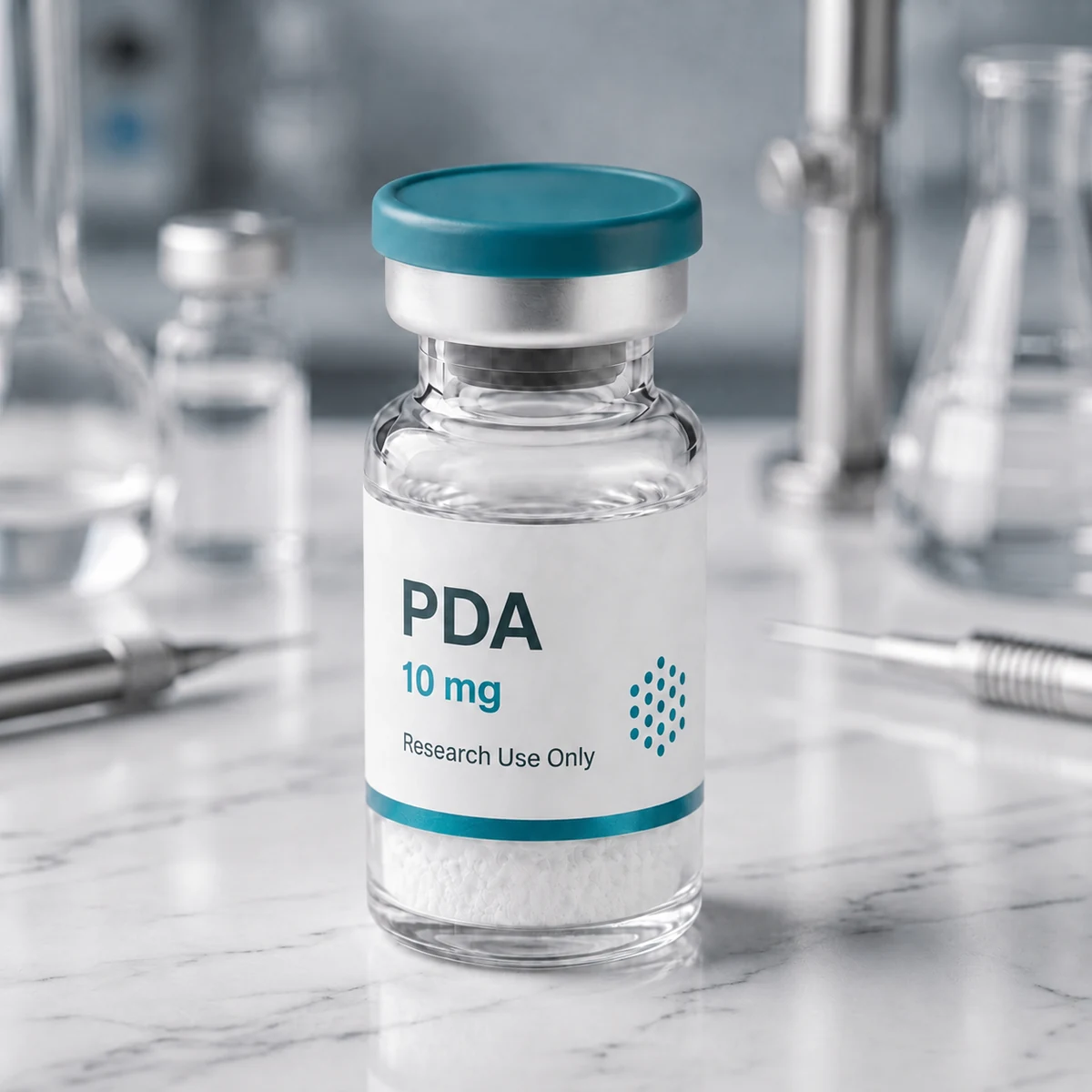
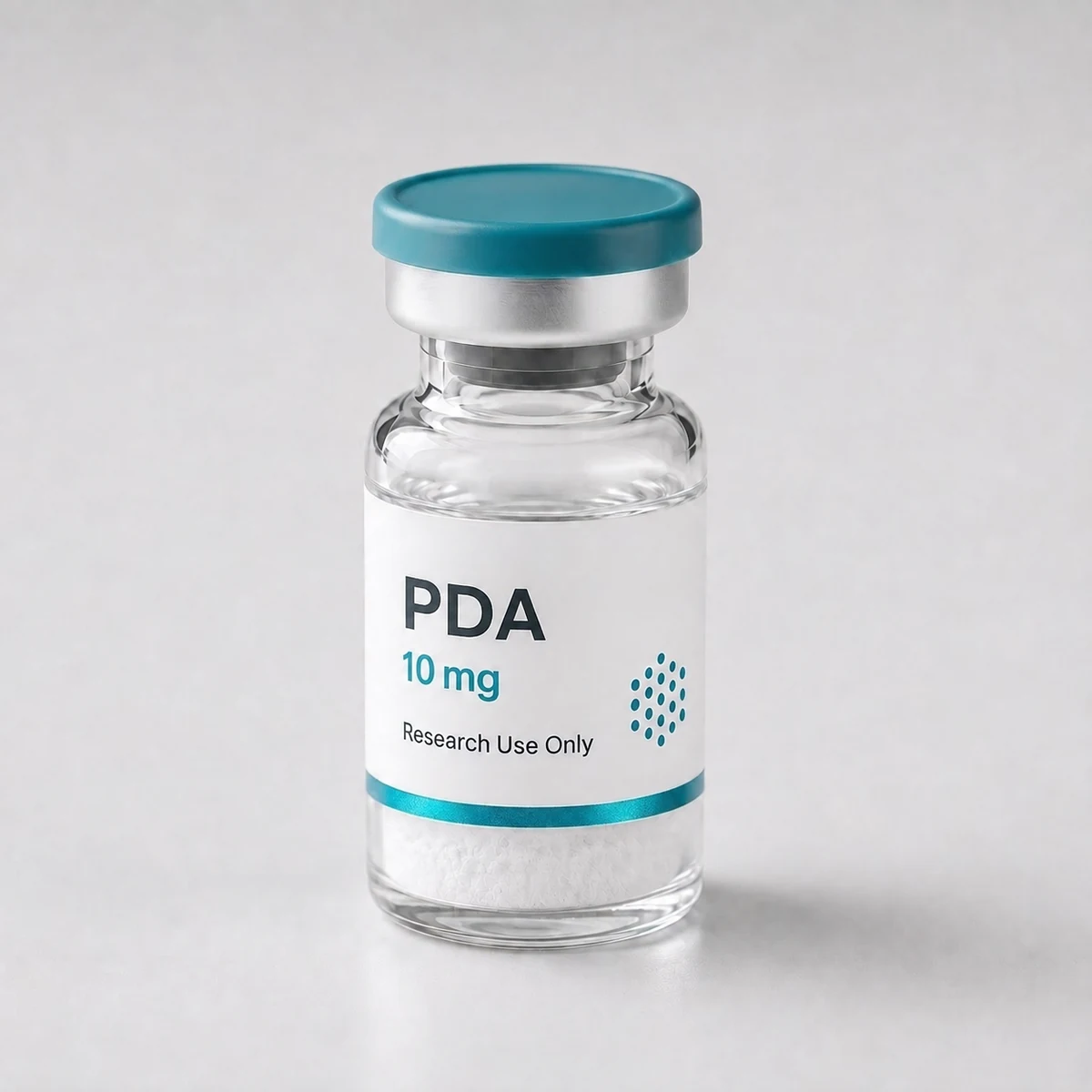
6 vendors list PDA (Pentadeca Arginate). The most-sold size is 10 mg, priced from $34.30 to $44.00 a vial across 3 vendors with an exact in-stock price. The median is $44.00. Last read Oct 10, 2026.
A newer, more stable cousin of BPC-157 for faster healing.
Card one came out on top. It is also a partner, so we earn a commission there. We don't partner with any store selling PDA (Pentadeca Arginate) at 10 mg, so cards two and three are the next two stores in the sort. We earn nothing from any of them.
Our pickA COA index exists at /coa listing per-product certificates including Cartalax, ARA-290, AMP-3P, Oxytocin, Kisspeptin, VIP and several blends. The site messaging is inconsistent: the COA page prese…
Runner-up
Runner-upEvery figure here is reconstructible from the full table below. Links noted "We earn from this link" carry a sponsored tag; a commission never changes a card's position, and a partner that wins the rule stays in first place. Prices exclude shipping and were read on the dates shown.
| Vendor | Size | Price | Per mg | Availability | Checked | Link |
|---|---|---|---|---|---|---|
| Ion Peptide PDA – 10mg | 10 mg | $34.30$49.00Starting price, larger sizes cost more | $3.43 | in stock | Oct 10, 2026 | View |
| Ameano Peptides PDA | 10 mg | $44.00 | $4.40 | in stock | Oct 10, 2026 | View° |
| EZ Peptides PDA 10mg | 10 mg | $44.00 | $4.40 | in stock | Oct 10, 2026 | View |
| Nexaph PDA 10mg (Pentadeca-Arginate) 10 vials/kit | 100 mg | $134.00$158.00Price covers a pack, not one vial | in stock | Oct 10, 2026 | View |
We earn from these links. It never changes a price or a position here.
Cheapest first, laid out like the table above. Every listing is a blend that contains PDA (Pentadeca Arginate), so prices are not comparable with the single-compound table above; per mg uses the total peptide in the vial.
Priced per bottle. The size shown is what the listing states, usually one capsule or tablet, so a price per milligram would not compare with a vial.
Does not name a testing lab on this product's page.
Coverage record →Names its testing lab: not named; lot-specific third-party COAs per the store.
Coverage record →Does not name a testing lab on this product's page.
Coverage record →Names its testing lab: publishes a public Janoshik testing trail per the community record.
Coverage record →Does not name a testing lab on this product's page.
Coverage record →Every per mg number here divides the price by the milligrams printed on the vial. Testing labs regularly find vials that weigh less than the label says.
Shipping is often flat, so it hurts small orders most. Several vendors add a card fee and discount for crypto. Two offers a dollar apart can swap places at checkout.
A bigger vial costs less per mg and expires on the same schedule. Once mixed, most people work to about 28 days in the fridge, so the saving only counts if you finish it.
Ignoring the few freak listings at each extreme, the dear end of the PDA (Pentadeca Arginate) market costs 1.3 times what the cheap end does, per milligram.
Half these listings charge more than this per mg and half charge less. It moves with sales, which is why every row carries a date.
Enough coverage to show a real range. Anything under three vendors stays off the hub.


Vendors on this page sell PDA (Pentadeca Arginate) labeled for laboratory research only. That label is the legal reason they are allowed to sell it at all.
Full PDA (Pentadeca Arginate) record →There is no pharmacist behind it, no dispensing record, and nobody on the hook for what is inside. The lab report is the whole quality system, which is why it sits next to the price here.
Research use only is a claim the seller has to keep making. A vendor that adds dosing instructions, health claims, or personal-use wording has stepped outside the framework it relies on, and that says something about the seller.
What customs and carriers do varies by state and by shipper. This describes how these products are sold and is not legal advice.

Freeze-dried powder keeps for a long time in the freezer and for months in the fridge. Once liquid goes in, most people work to about 28 days in the fridge, away from light.

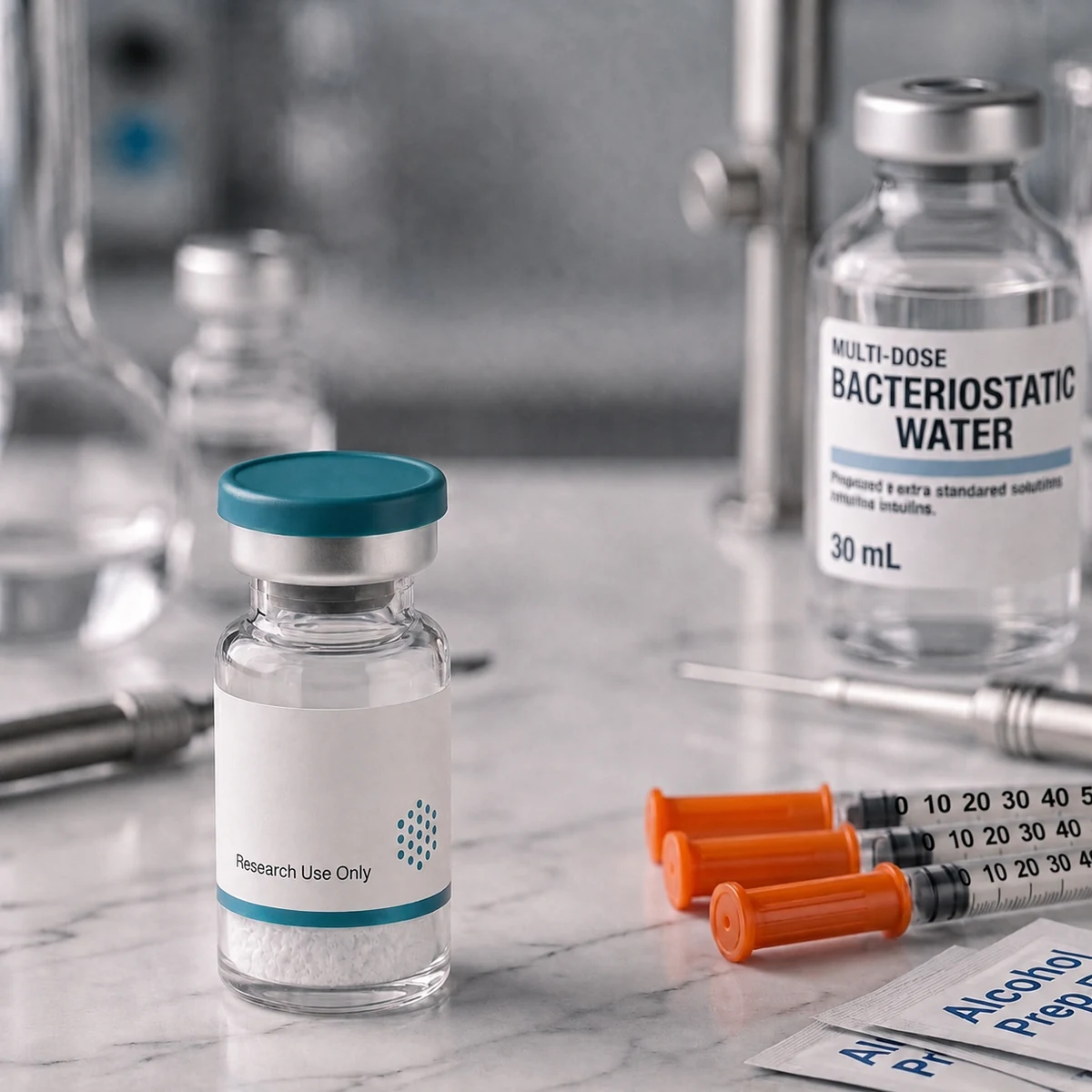
What arrives is powder in a sealed vial. Water goes down the inside wall rather than onto the powder, and the vial is swirled instead of shaken. Neither the water nor the syringes are in the prices above.

A larger PDA (Pentadeca Arginate) vial costs less per mg and expires on the same schedule once mixed. The saving is real only when the vial runs out inside that window.
Nothing on this page tells you what to take. Full walkthroughs live in the guides.
Rows sort on one number. There is no combined score and no weighting, so no vendor can be pushed up the table by a rating you cannot check.
Vendors that publish nothing stay in the table, marked. Taking them out would make the market look tidier than we found it.
Prices are read off public catalog pages and saved with the date. If a check runs late the row says so instead of showing an old price as current.
Commissioned links are marked on the row and listed on the disclosure page. They never move a listing up or down the table.
Prices on this site are read from vendor websites on the dates shown. A starting tag means the vendor publishes only a from price for that product. A wall means the vendor hides prices behind a login, and we publish that fact rather than hide the gap.
We report prices and never rate or score an offer. There is no value grade, no ranking of vendors by our opinion. A row carries its size, its price, its price per milligram, and any plain fact about the listing worth knowing.
When a vendor's site disappears, its rows stay in the tables as a dated record, drop out of every count, price range and ranking, and lose their links. Ninety days after a vendor's site disappears, its rows leave these tables and remain in our records.
Some vendors pay this site a commission when you buy through our links. Every one of those links is marked, and every vendor with that arrangement is labeled on the vendor page. Commissions never change the prices we show, the order of any table, a vendor's badge, or anything in the audit record. The data is collected the same way for every vendor, paid or not.
We accept no payment for coverage, placement, or ratings. Warning letters come from fda.gov. If a paying vendor earns a bad mark, the mark stays.

The most-sold size, 10 mg, runs $34.30 to $44.00 a vial across 3 vendors, with a median of $44.00. Across 6 vendors it typically runs $3.43 to $4.40 per milligram, with the cheapest sticker price at $34.30. Prices exclude shipping, card fees, and bacteriostatic water.
Vial size, sale cycles, payment method discounts, and how much testing evidence a seller publishes all move the number. A cheap milligram is only cheap if the vial holds what the label claims, which no price column can tell you.
Sorting never reads whether a vendor pays us. Any commissioned link is marked on the row and listed on the disclosure page, and it never changes where a listing lands in the table.
PDA (Pentadeca Arginate) is sold labeled for laboratory research only. That label is the legal basis vendors rely on, and it means nobody stands behind the vial the way a pharmacy would.
Every price is read off a public catalog page and stored with its date; this compound was last read Oct 10, 2026. Nothing is overwritten, so a stale row says so rather than pretending to be current.