Our pickTrueLab Peptides
Store saysYes: a certificate image per product with its lot number.


Price transparency
The most-sold size is 20 mg. The 3 stores with one in stock charge $55.00 to $65.00, and the middle price is $64.00.
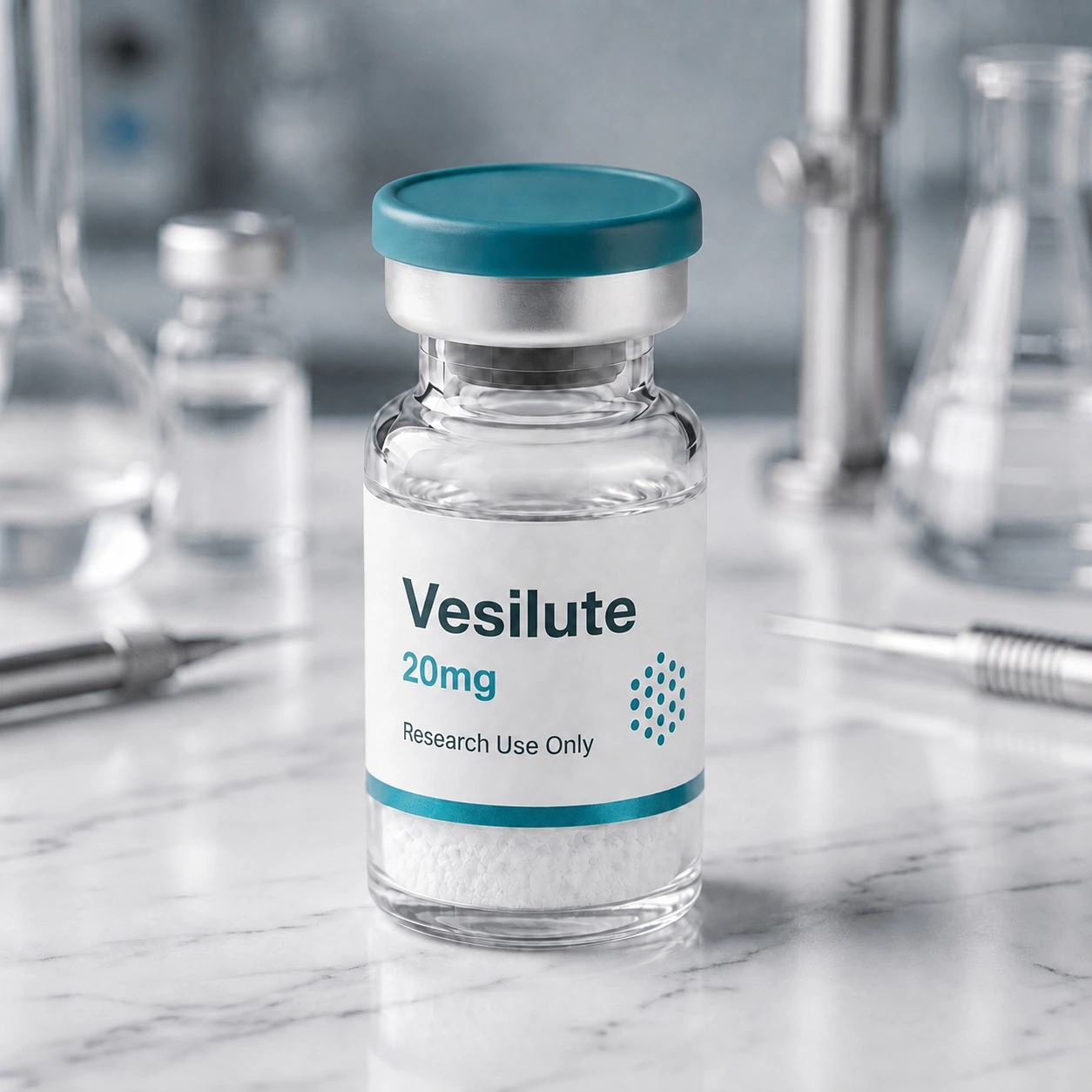
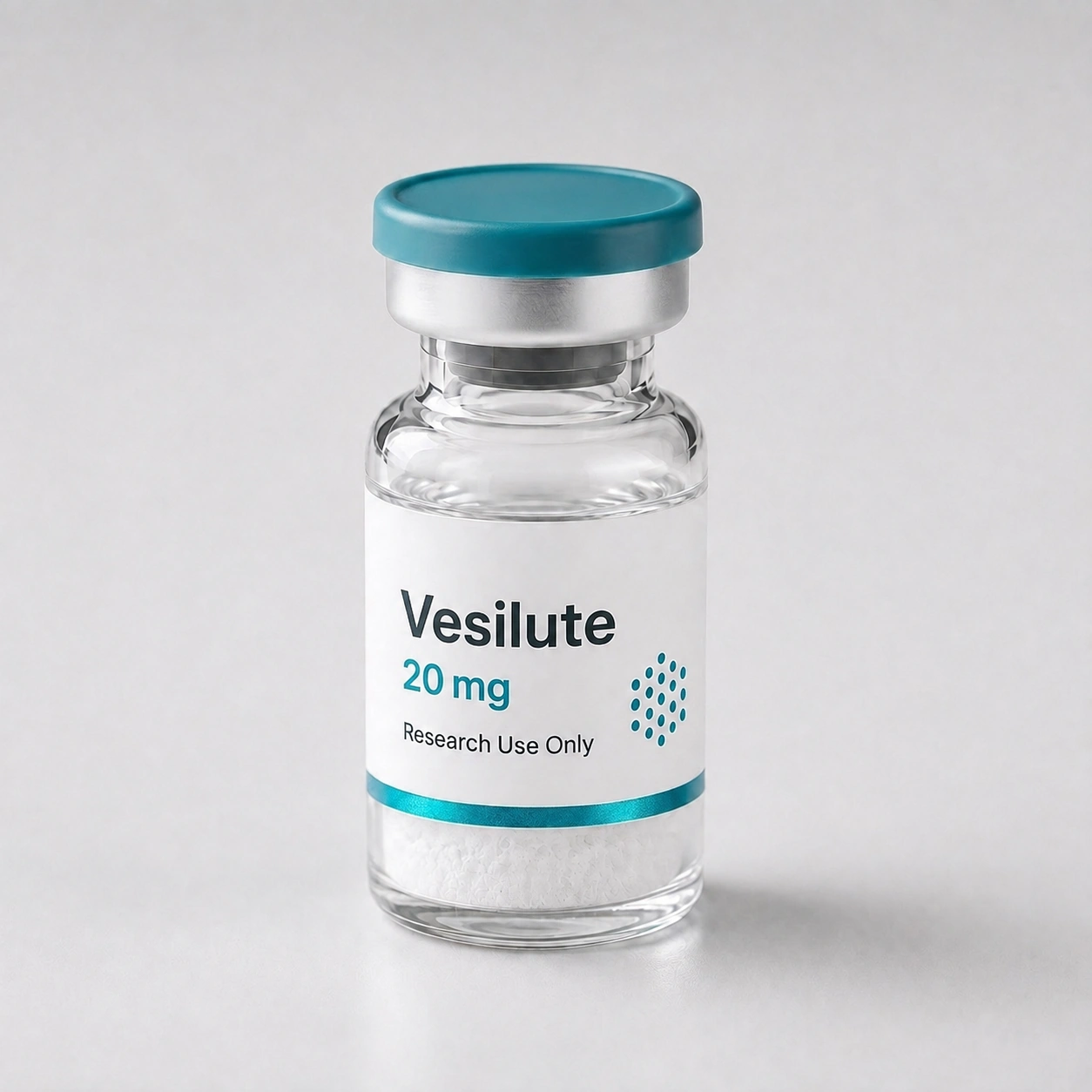
A lab-made 2 amino acid peptide aimed at the bladder.
The Vesilute market today
6 catalogs read · listings older than 30 days left out of the figures
01
Card one is our pick. Every card is labeled.
Card one came out on top. We earn nothing from it. One of the other two cards is a store we partner with, and we earn a commission from it. The other is the next store in the sort, and we earn nothing from it.
Our pickStore saysYes: a certificate image per product with its lot number.
PartnerStore saysYes: several hundred certificates, with the lot or batch printed on the document.
Runner-upStore saysYes: 92 entries, each carrying its batch number as text in its own column.
Every figure here is reconstructible from the full table below. Links noted "We earn from this link" carry a sponsored tag; a commission never changes a card's position, and a partner that wins the rule stays in first place. Prices exclude shipping and were read on the dates shown.
02
Vials come in different sizes, so price per mg is the only column that compares like with like.
This listing has not been read again in the last 30 days. It stays listed, sorted last, and is left out of every figure on this page until the store is read again.
We earn from these links. It never changes a price or a position here.
03
What each site was showing when we read it, and how it prices against the rest.
Names its testing lab: Freedom Diagnostics.
Coverage record →Names its testing lab: Vanguard Laboratory.
Coverage record →Does not name a testing lab.
Coverage record →Names its testing lab: Vanguard Laboratory and MZ BioLabs.
Coverage record →Names its testing lab: SafeCert Labs, AV Analytics and BioRegen.
Coverage record →Does not name a testing lab.
Coverage record →04
A cheap milligram is only cheap if the vial holds it.
Every per mg number here divides the price by the milligrams printed on the vial. Testing labs regularly find vials that weigh less than the label says.
Shipping is often flat, so it hurts small orders most. Several vendors add a card fee and discount for crypto. Two offers a dollar apart can swap places at checkout.
A bigger vial costs less per mg and expires on the same schedule. Once mixed, most people work to about 28 days in the fridge, so the saving only counts if you finish it.
05
At the 20 mg vial, the size most stores list.
Ignoring the few freak listings at each extreme, the dear end of the Vesilute market costs 1.2 times what the cheap end does, per milligram.
Half the stores charge more than this per mg at this size and half charge less. It moves with sales, which is why every row carries a date.
Stores with an exact, in-stock price at this size. Under three and we publish no median.

06
The market median at the most-listed size, capture by capture.
Market median at 20 mg: $3.10 per mg on Aug 28, 2026, $3.20 on Nov 27, 2026, 3 stores comparable today.
| Date | Median per mg | Low per mg | Stores |
|---|---|---|---|
| Nov 27, 2026 | $3.20 | $2.75 | 3 |
| Nov 23, 2026 | $3.20 | $2.75 | 3 |
| Nov 22, 2026 | $3.20 | $2.75 | 3 |
| Nov 21, 2026 | $3.20 | $2.75 | 3 |
| Nov 15, 2026 | $3.10 | $2.75 | 4 |
| Nov 13, 2026 | $3.10 | $2.75 | 4 |
| Nov 12, 2026 | $3.10 | $2.75 | 4 |
| Nov 11, 2026 | $3.20 | $2.75 | 5 |
Research peptide prices fell 1.4% in October 2026. See the October 2026 price report →
07
Regulatory status changes what a price means.

Not approved anywhere outside the country where it originates, and no regulator has evaluated it. What is published comes from the institute that developed it. It is sold labeled for laboratory research only.
Full Vesilute record →There is no pharmacist behind it, no dispensing record, and nobody on the hook for what is inside. The lab report is the whole quality system, which is why it sits next to the price here.
Research use only is a claim the seller has to keep making. A vendor that adds dosing instructions, health claims, or personal-use wording has stepped outside the framework it relies on, and that says something about the seller.
What customs and carriers do varies by state and by shipper. This describes how these products are sold and is not legal advice.
08
What actually shows up, and the vial math that decides which size is the better buy.

Freeze-dried powder keeps for a long time in the freezer and for months in the fridge. Once liquid goes in, most people work to about 28 days in the fridge, away from light.

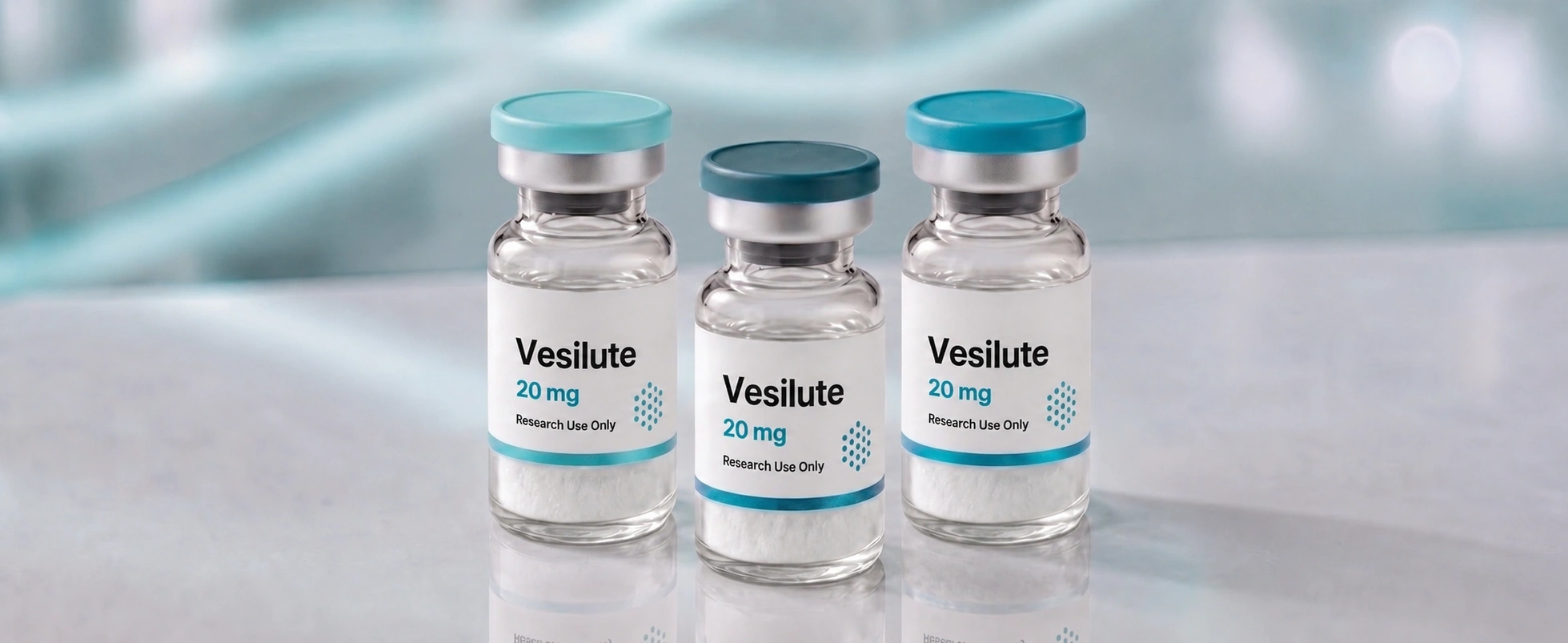
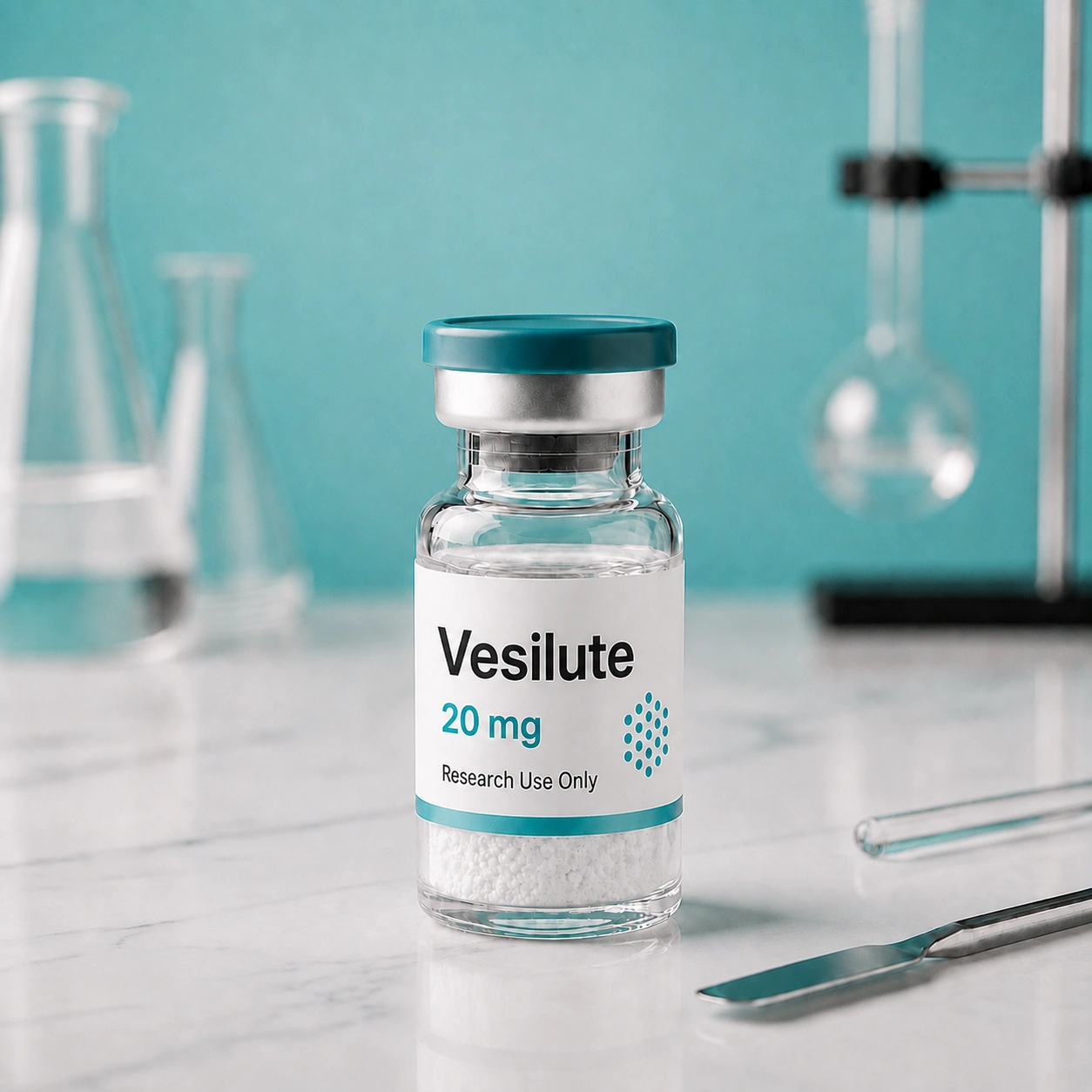
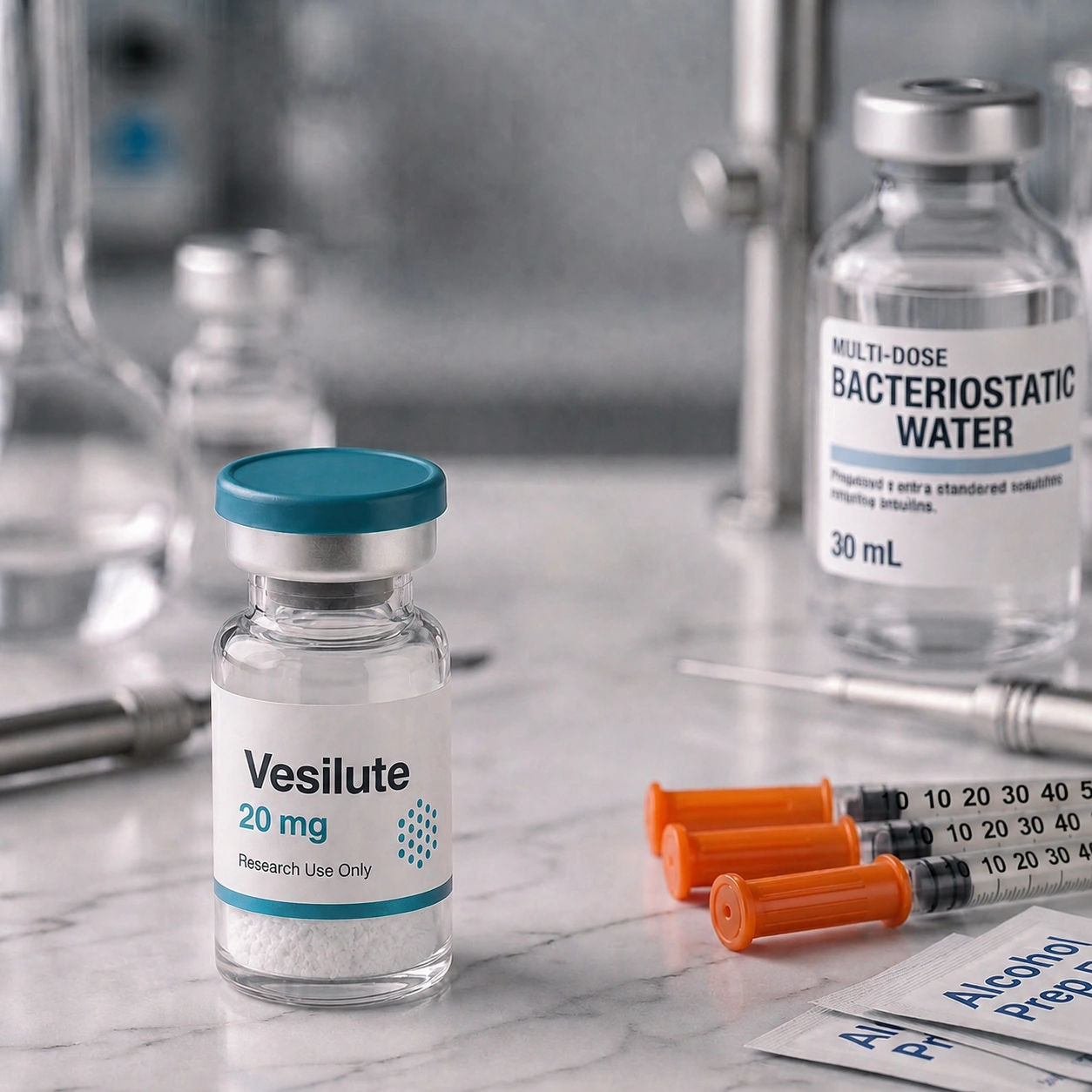
What arrives is powder in a sealed vial. Water goes down the inside wall rather than onto the powder, and the vial is swirled instead of shaken. Neither the water nor the syringes are in the prices above.

A larger Vesilute vial costs less per mg and expires on the same schedule once mixed. The saving is real only when the vial runs out inside that window.
Nothing on this page tells you what to take. Full walkthroughs live in the guides.
09
What decides the order of the rows, and who gets to be in them.
Rows sort on one number. There is no combined score and no weighting, so no vendor can be pushed up the table by a rating you cannot check.
Vendors that publish nothing stay in the table, marked. Taking them out would make the market look tidier than we found it.
Prices are read off public catalog pages and saved with the date. A listing not read in 30 days moves to its own box under the table and is left out of the figures until it is read again.
Commissioned links are marked on the row and listed on the disclosure page. They never move a listing up or down the table.
Prices on this site are read from vendor websites on the dates shown. A starting tag means the vendor publishes only a from price for that product. A wall means the seller hides the price behind an account, and we publish that fact rather than hide the gap.
We report prices and never rate or score an offer. There is no value grade, no ranking of vendors by our opinion. A row carries its size, its price, its price per milligram, and any plain fact about the listing worth knowing. Where a page shows picks, they are ordered by a fixed rule, published testing evidence first and then price per milligram, and the rule is the same for every vendor.
When a vendor's site disappears, its rows stay in the tables as a dated record, drop out of every count, price range and ranking, and lose their links. Ninety days after a vendor's site disappears, its rows leave these tables and remain in our records.
Some vendors pay this site a commission when you buy through our links. Every one of those links is marked, and every vendor with that arrangement is labeled on the vendor page. Commissions never change the prices we show, the order of any table, a vendor's badge, or anything in the audit record. The data is collected the same way for every vendor, paid or not.
We accept no payment for coverage, placement, or ratings. Warning letters come from fda.gov. If a paying vendor earns a bad mark, the mark stays.

10
Cost, sizes, and how this table works.
The most-sold size, 20 mg, runs $55.00 to $65.00 a vial across 3 vendors, with a median of $64.00. Across 5 vendors it typically runs $2.75 to $4.10 per milligram, with the cheapest sticker price at $40.99. Prices exclude shipping, card fees, and bacteriostatic water.
Vial size, sale cycles, payment method discounts, and how much testing evidence a seller publishes all move the number. A cheap milligram is only cheap if the vial holds what the label claims, which no price column can tell you.
Sorting never reads whether a vendor pays us. Any commissioned link is marked on the row and listed on the disclosure page, and it never changes where a listing lands in the table.
Not approved anywhere outside the country where it originates, and no regulator has evaluated it. What is published comes from the institute that developed it. It is sold labeled for laboratory research only.
Every price is read off a public catalog page and stored with its date; this compound was last read Nov 22, 2026. Nothing is overwritten, so a stale row says so rather than pretending to be current.
11
Same catalog sweep, same read dates.