
Peptide Decoding
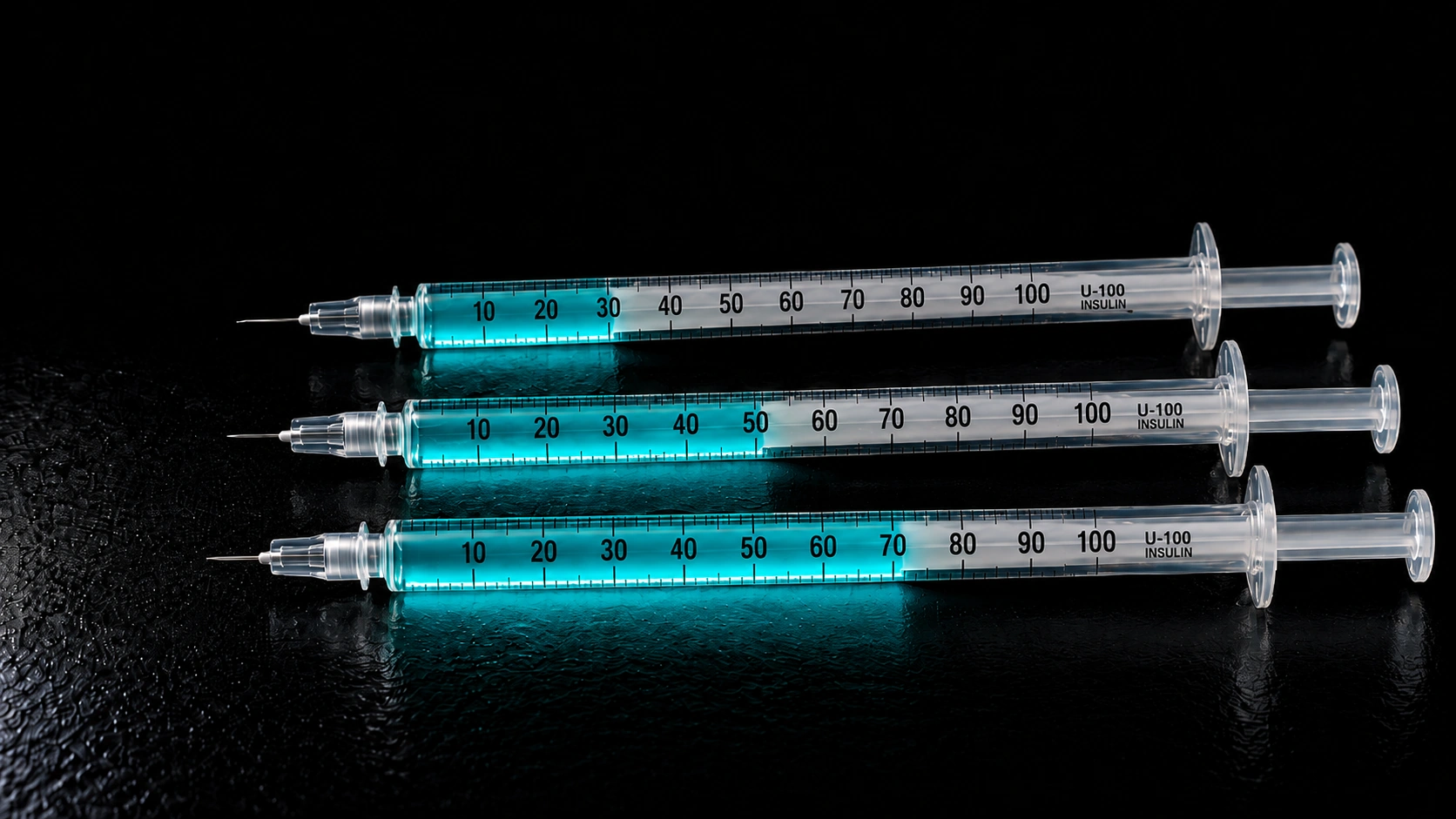
Three U-100 insulin syringes with teal liquid on a dark surface
Step 03 / Calculate a dose

Peptide calculator

Pick a compound. We'll show the reconstitution math, syringe draw, cost per dose, and how long a vial lasts.

Calculating for

Regeno blend (BPC-157 / TB-500 / Cartalax)

Only injectable compounds are listed; oral, nasal and topical compounds don't need mixing.

The configuration sold is an even 10 mg of each in a 30 mg vial, which makes it simpler than Coremend, where TB-500 sits at two and a half times the others. Regeno is one vendor's product name. Other sellers offer the same three peptides under their own names, and at least one adds KPV as a fourth, so read your own label rather than assuming this ratio.

Which vial do you have?

Pick your vial to see concentrations and a draw.

Same dose, different draw. Pick whichever is easiest to measure.

mL waterCustom amount. Enter any volume, e.g. 10 mL.—units draw
Pick which vial you have above. A blend holds 3 separate compounds, so the draw depends on how many milligrams of each are in your vial.

Multi-vendor comparison is a Pro feature.

Daily is 7. Twice weekly is 2.

Decoded

Your plan for Regeno blend (BPC-157 / TB-500 / Cartalax)

Dose
—
Syringe draw
—units
Doses per vial
—
Cost per dose
$0.00
Monthly cost
$0.00
Current supply lasts
0months
Reorder by
—

Check why another calculator may disagree before comparing answers.

Want the dose people cite instead of the math? See the dosage chart.

This is one of the free tools on the site. See all tools.

Common questions

What does this calculator do?

It turns three numbers you enter, the milligrams in the vial, the water you add, and the dose you want, into the concentration, the syringe draw in units, and the cost per dose. It does arithmetic. It does not recommend a dose.

Worked example?

A 5 mg vial with 2 mL of water is 2.5 mg per mL. A 250 mcg dose is 0.1 mL, which is 10 units on a 100-unit insulin syringe.

Does adding more water give me more drug?

No. The vial holds a fixed amount. More water spreads it thinner, so the same dose is a larger draw on the syringe.

What syringe does it assume?

A U-100 insulin syringe, where 100 units is 1 mL. If your syringe is different, use the mL figure instead of the units figure.

Where does the "reference range" come from?

From the drug label, a published trial, or community practice, and it is labeled with which. It is the range a source used, not a recommendation. Talk to a licensed clinician before using any substance.