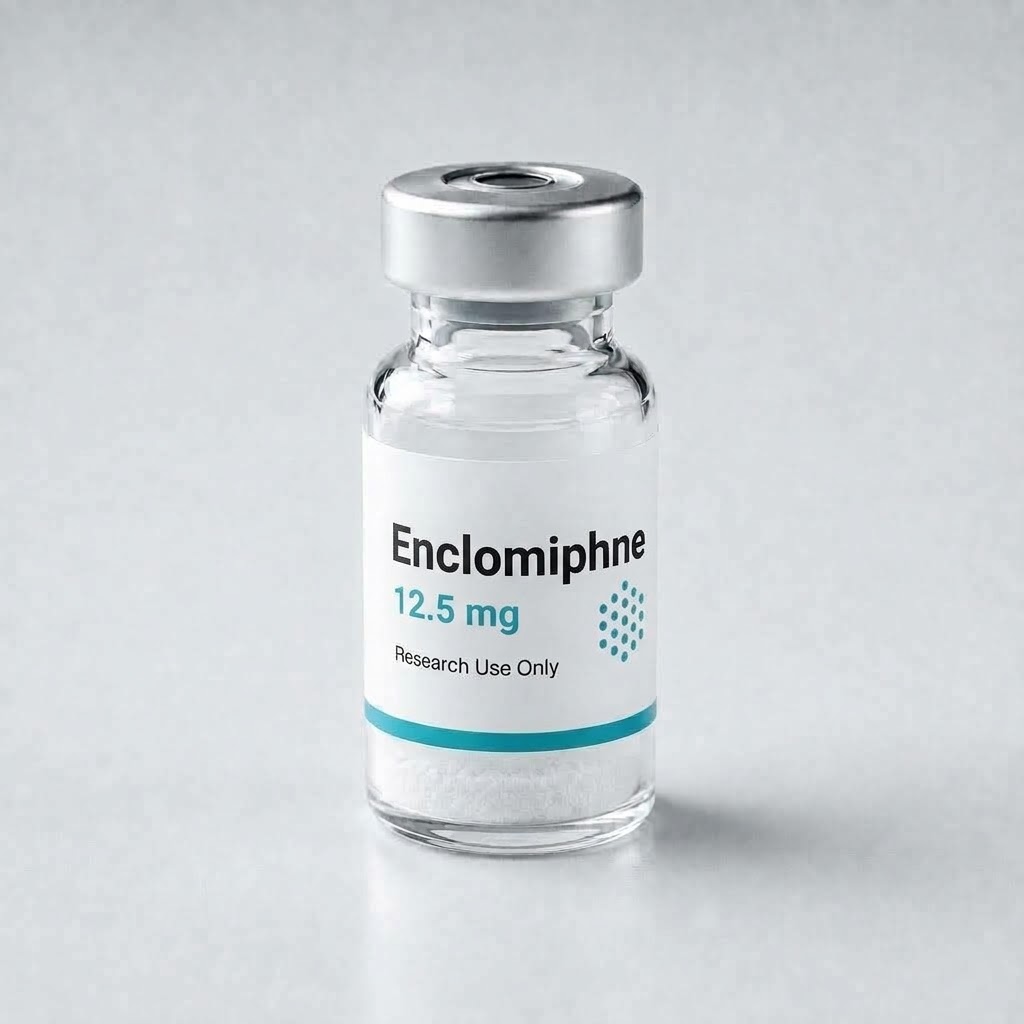
Oral · Rejected in 2015
Enclomiphene
Small molecule SERM. Blocks estrogen feedback at the hypothalamus, releasing the brake on the whole relay. The only one of the four taken by mouth, and the only one that is not a peptide or a hormone.

Three of these act on the same hormone relay at three different points, and HCG skips the relay entirely by acting on the testes. Enclomiphene has the strongest trial evidence of the four, and the FDA declined to approve it in December 2015 after cancelling the advisory committee meeting scheduled to review it. None of the four is testosterone.
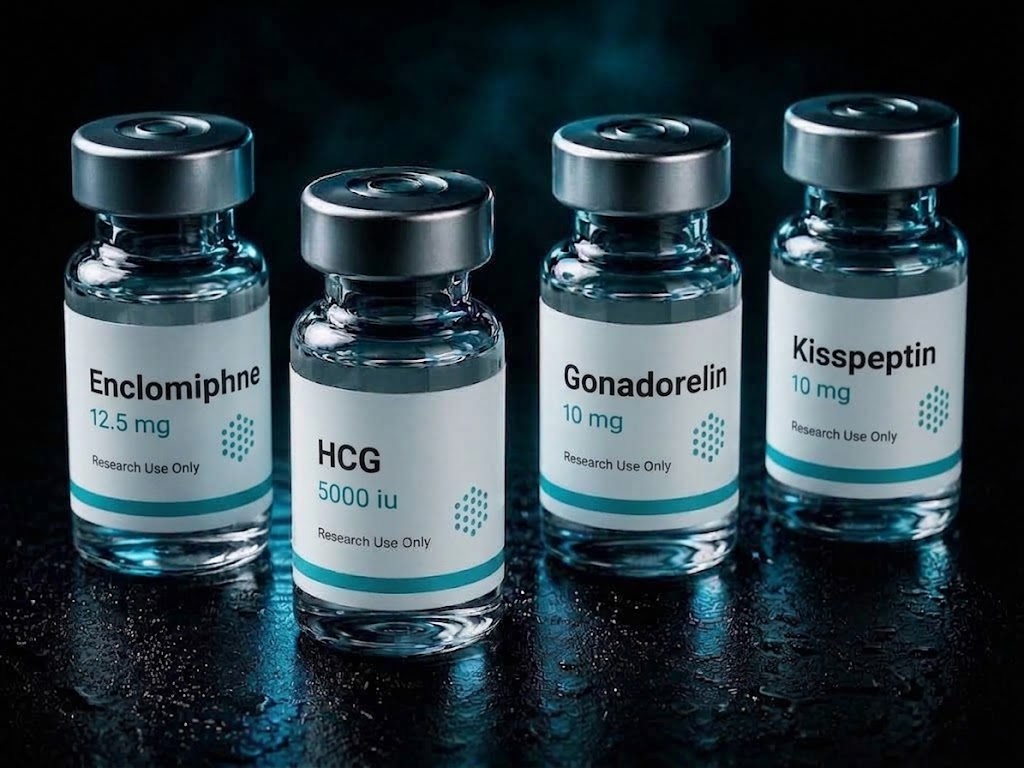
Three act on the same relay at three different points. The fourth skips it. The one with the most evidence is the one nobody approved.
| Attribute | Enclomiphene | HCG | Gonadorelin | Kisspeptin |
|---|---|---|---|---|
| What it is | Small molecule, not a peptide | Glycoprotein hormone | Peptide, synthetic GnRH | Peptide |
| Route | Oral tablet | Injected | Injected | Injected |
| Where it acts | Hypothalamus, releasing the brake | The testes, bypassing the chain | The pituitary | The top of the chain |
| FDA approved | No. Rejected December 2015 [8] | Yes, for specific uses | Approvals discontinued | No |
| Human trial evidence | Phase 2 and Phase 3 [1][8] | Yes, narrow setting [5] | Thin for this use | Thin for this use |
| Prohibited in sport | Yes, S4 [9] | Yes, in males [9] | Yes [9] | Check current list [9] |
Scroll the table sideways to see all four
The one with the most evidence is the one nobody approved.
Small molecule SERM. Blocks estrogen feedback at the hypothalamus, releasing the brake on the whole relay. The only one of the four taken by mouth, and the only one that is not a peptide or a hormone.
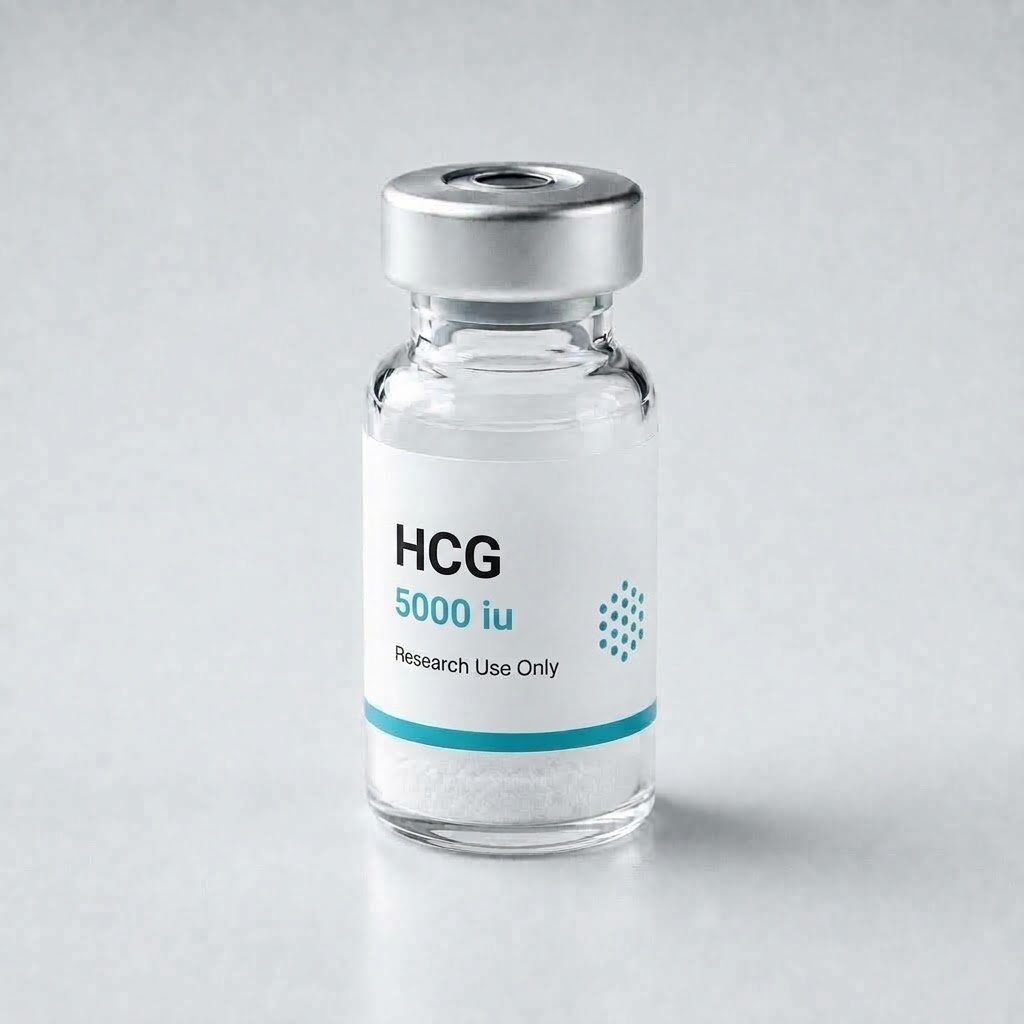
Glycoprotein hormone that mimics LH at the testes, bypassing the hypothalamus and pituitary entirely. The one that works when the chain above is broken.
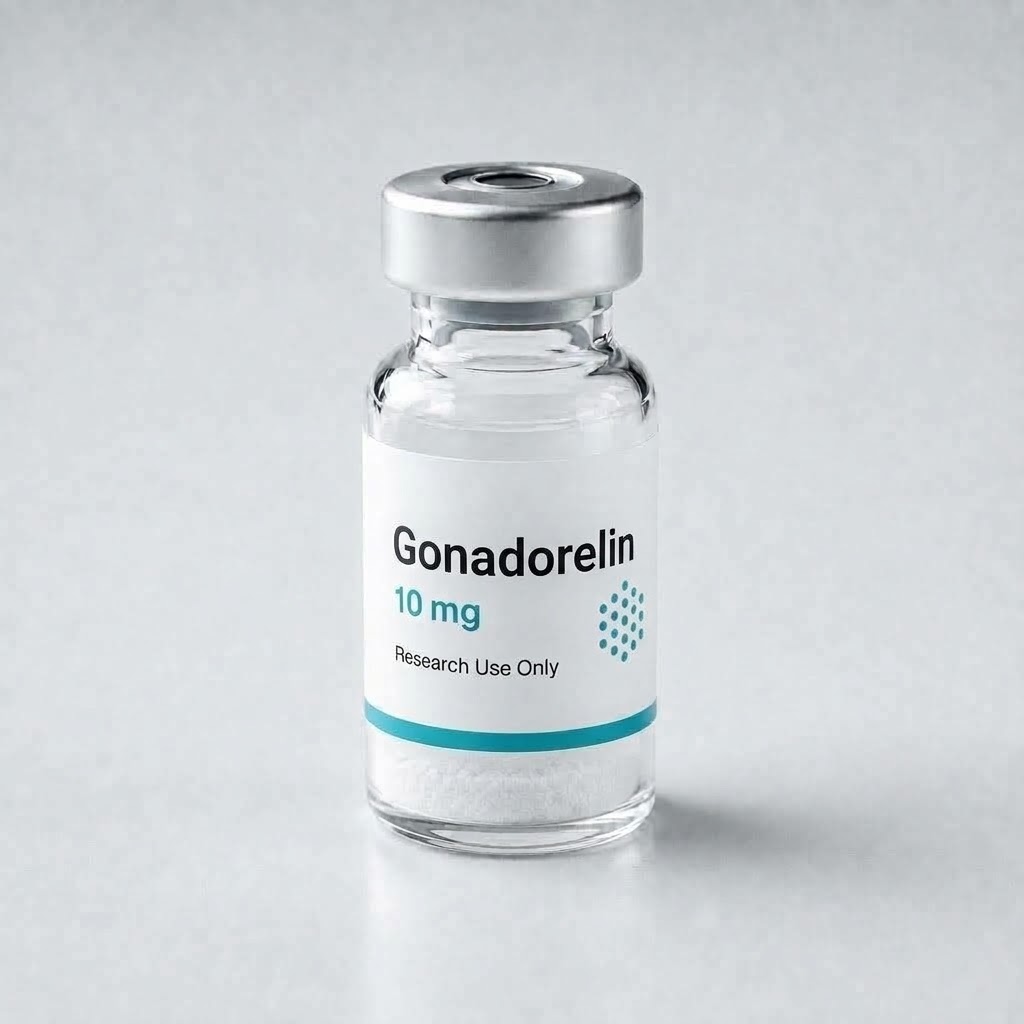
Synthetic GnRH. Tells the pituitary to release LH and FSH directly, one step below kisspeptin on the chain.
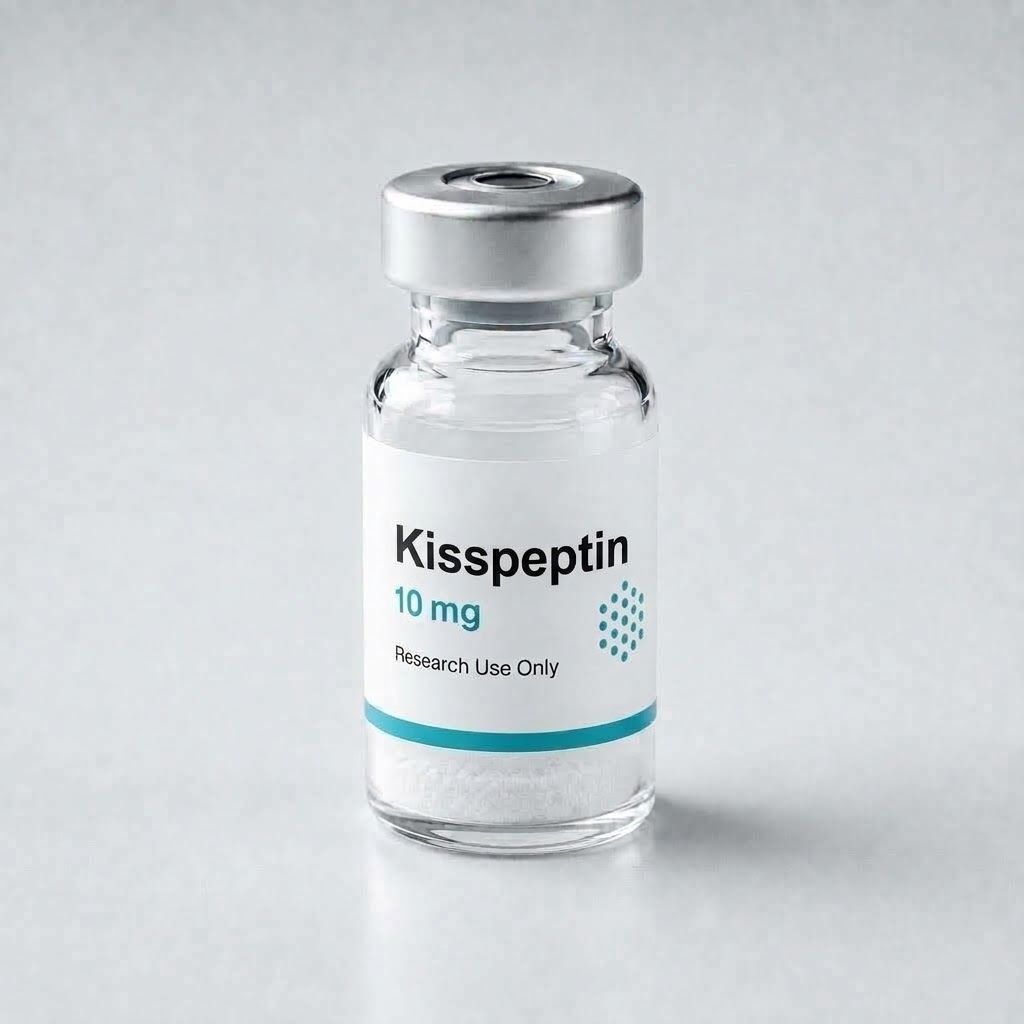
Sits above the hypothalamus and starts the sequence by triggering GnRH release in pulses.
Four compounds, sold side by side, usually described as four ways to do the same thing. They are not alternatives to each other in the way the listings imply.
Three of them act on one chain, at three different points. The fourth skips the chain entirely. Where a compound sits on that chain is most of what separates them.
Worth saying at the top: none of these is testosterone. They are all ways of asking your own body to make more of it, and that is a different proposition with a different ceiling.
LH acts on Leydig cells to produce testosterone. HCG mimics LH, which is why it works when the relay above is broken. [3]
FSH acts on Sertoli cells, which support sperm production. A compound that raises LH alone does little for this side. [3]
Three of these push the chain at different points. One skips it.
How the relay runs. Your body makes testosterone through a relay. Kisspeptin neurons sit at the top and drive pulsatile release of GnRH from the hypothalamus. GnRH travels to the anterior pituitary and prompts it to release LH and FSH. Each step depends on the one before it. [3]
The bottom of the chain splits in two. LH acts on Leydig cells in the testes to produce testosterone. FSH acts on Sertoli cells, which support sperm production. So a compound that raises LH alone raises testosterone without doing much for the sperm side. [3] That distinction runs through the rest of this page, and it is why testicular volume and testosterone show up as separate results rather than two versions of the same one.
Enclomiphene works on the chain sideways. It blocks estrogen feedback at the hypothalamus, the brake that tells your body to stop making LH and FSH. Take the brake off and the whole relay runs harder on its own. [3] It is also the only one of the four that is not a peptide: a selective estrogen receptor modulator, a small molecule, taken by mouth rather than injected.
For years this was not a four-way question. HCG was the standard answer for maintaining testicular function and fertility, and the others were footnotes.
FDA restrictions in 2023 limited HCG availability, and the alternatives moved into the gap. [4] Most of the comparison content written since then is a response to that shortage rather than to new evidence.
A compound being widely recommended in 2026 is therefore partly a fact about supply rather than about evidence.
| Compound | What it is | Route | How it acts | Lowest in-stock |
|---|---|---|---|---|
| Kisspeptin | Peptide | Injected | Top of the chain, triggers GnRH | $19.00 |
| Gonadorelin | Peptide, GnRH | Injected | Second step, triggers LH and FSH | $17.00 |
| HCG | Glycoprotein hormone | Injected | Bypasses the chain, mimics LH | $28.99 |
| Enclomiphene | Small molecule, SERM | Oral | Releases the brake at the top | $79.95 |
Scroll the table sideways to see every column
Prices are the cheapest in-stock single-compound listing we track for each, recomputed every time this page is served. [7] Vial sizes and concentrations differ, so these are what a buyer faces at checkout rather than a like-for-like comparison.
Enclomiphene has the strongest published case. A meta-analysis of randomised trials found SERM therapy raised total testosterone by 273.76 ng/dL against placebo, along with significant rises in LH and FSH. [1] Strikingly, it found no significant difference in total testosterone between SERM therapy and testosterone gel. [1]
Enclomiphene also separates cleanly from clomiphene, its more common namesake. In a retrospective study, enclomiphene raised testosterone by a median 166 ng/dL, not statistically different from clomiphene. The difference was estradiol: enclomiphene lowered it by 5.92 pg/mL while clomiphene raised it by 17.50. [2] Adverse effects were significantly less frequent on enclomiphene, including decreased libido, reduced energy and mood changes. [2]
HCG has real evidence in a narrower setting. In adolescents with hypogonadotropic hypogonadism, final testicular volume was 8.25 mL on HCG against 3.4 mL on testosterone. [5] The two groups did not differ in testosterone levels, penile length or growth velocity. That is a result about fertility and testicular preservation, not about testosterone. Gonadorelin and kisspeptin have the thinnest human record of the four for this specific use.
Unusually for this category, most of the above rests on peer-reviewed human trials rather than on mechanism. The percentages quoted for gonadorelin and kisspeptin come from clinical practice summaries rather than published trials, and are treated with caution further down.
Gonadorelin is marketed as Factrel and later as a pulsatile pump product for inducing ovulation. Both were eventually discontinued in the United States, so the compound sold today has an approval history and no current approval behind it.
Repros Therapeutics runs a Phase 2 and Phase 3 programme on enclomiphene as Androxal, at 12.5 to 25 milligrams daily, in men with secondary hypogonadism. The trials compared it head to head against a topical testosterone gel.
Enclomiphene raised testosterone into the normal range and preserved sperm counts, while the gel suppressed LH and FSH and reduced sperm count. No other unapproved compound covered here has a human evidence base that size. [8]
The FDA schedules an advisory committee meeting to review the application, then cancels it on 29 October, a month before the decision was due. [8]
The reason Repros reported is specific and worth reading closely: the agency said that based on recent scientific developments, the design of the Phase 3 studies was no longer adequate to demonstrate clinical benefit, and asked for at least one additional Phase 3 study in the target population. [8]
That is not a finding that the trials were run badly. It is a finding that the standard moved while they were running.
The additional Phase 3 work the FDA asked for is never done, the company is acquired, and development ends. Sources disagree on the details of what followed, and the regulatory section says which parts are contested. [8]
Agarwal and colleagues publish the testicular volume result in adolescents with hypogonadotropic hypogonadism, 8.25 mL against 3.4 mL for testosterone. [5]
FDA restrictions limit HCG availability. Enclomiphene, gonadorelin and kisspeptin move into the gap, and most of the comparison content on these four dates from after this point. [4]
Enclomiphene is sold through compounding pharmacies with no approval anywhere and no sponsor pursuing one. The other three are sold as research chemicals or, for HCG, on prescription for narrow uses.
The compound with the best evidence is the one that failed. Enclomiphene ran Phase 2 and Phase 3 trials, compared itself head to head against testosterone gel, and came out raising testosterone into the normal range while preserving sperm count where the gel suppressed it. [8] None of that means the drug does not work. The rejection was about whether the trials demonstrated clinical benefit adequately, not about a safety finding. What it means is that the strongest-looking evidence on this page belongs to a compound whose developer was asked one more question by a regulator and walked away instead of answering it.
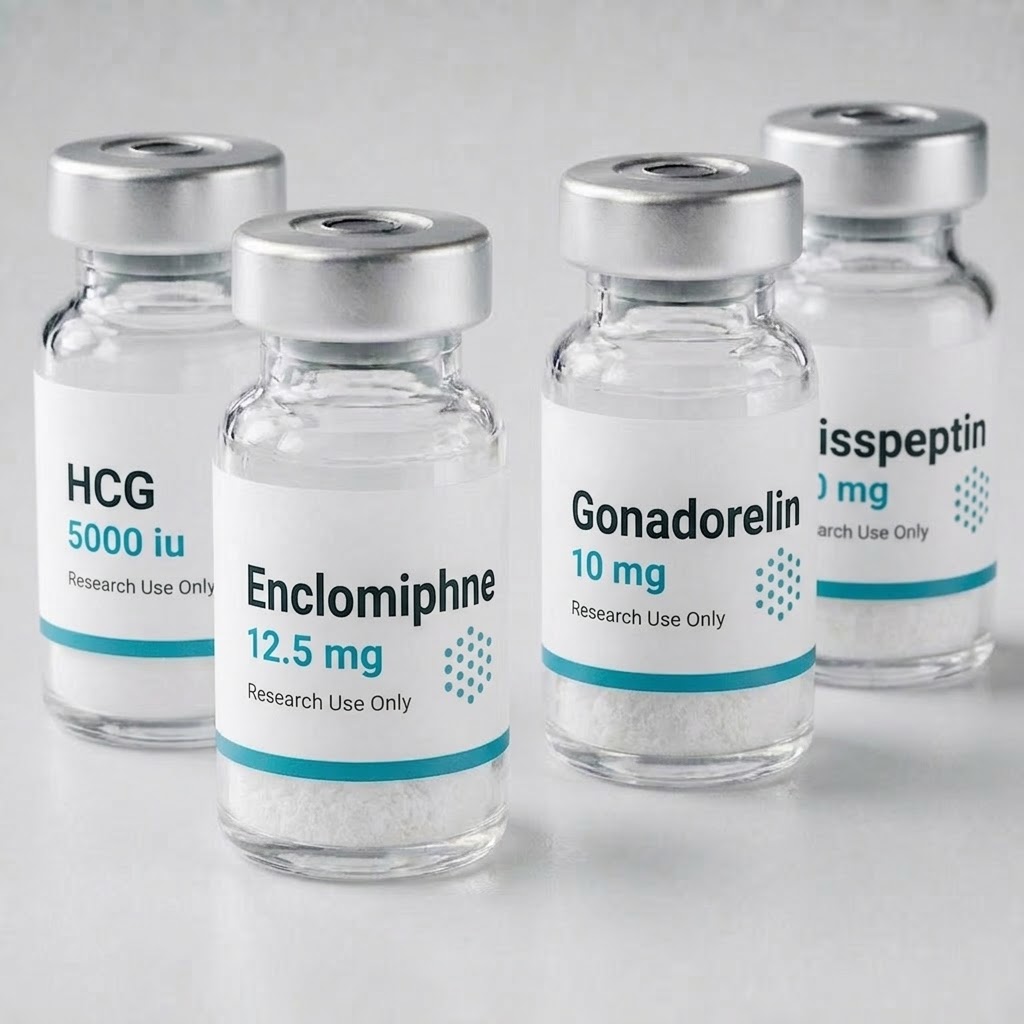
Two together did nothing measurable. The four are usually presented as a choice, and people ask whether combining two would work better. That has been tested, in the same meta-analysis. Total testosterone was higher with SERM therapy and with SERM plus HCG than with HCG alone: 158 against 153 against 134 ng/dL. [1] The SERM alone gave 158 and the SERM plus HCG gave 153, so adding the second compound produced nothing measurable.
The percentages you will see quoted. Commercial sources circulate a set of figures for how much testicular function each compound preserves in men on testosterone therapy: enclomiphene 40 to 60 percent, HCG 40 to 50 percent, gonadorelin 50 to 60 percent, kisspeptin around 65 percent. [4][6] Those numbers appear together in clinic blogs and vendor guides, always without a trial citation attached. The ordering is a rough impression and not a ranking.
What decides it in practice. Route: enclomiphene is a daily oral tablet and the other three are injections. What you are trying to preserve: HCG's clearest evidence is testicular volume and fertility, enclomiphene's is total testosterone. Estradiol: enclomiphene raises testosterone without raising estradiol. And whether the chain is intact, because kisspeptin, gonadorelin and enclomiphene all depend on the hypothalamus and pituitary working, and HCG does not.
Shared: all four aim to raise your own testosterone rather than supply it, none is testosterone, all four are prohibited or likely prohibited in sport, and none has been compared against the others in a trial.
| Attribute | Enclomiphene | HCG | Gonadorelin | Kisspeptin |
|---|---|---|---|---|
| Chemical class | Small molecule SERM | Glycoprotein hormone | Peptide | Peptide |
| Route | Oral, daily | Injected | Injected | Injected |
| Point of action | Hypothalamus | Testes | Pituitary | Above the hypothalamus |
| Needs an intact chain | Yes | No | Yes | Yes |
| Effect on estradiol | Lowers it [2] | Can raise it | Not established | Not established |
| Best evidence | Phase 2 and Phase 3 [1][8] | Testicular volume in adolescents [5] | Clinical practice reports [6] | Clinical practice reports [4] |
| Approval status | Rejected 2015, never resubmitted [8] | Approved, restricted 2023 [4] | Approvals discontinued | Never approved |
| Sport | Prohibited, S4 [9] | Prohibited in males, S2 [9] | Prohibited, S2 [9] | Not named [9] |
Scroll the table sideways to see all four
Summary compiled from published trials, regulatory records and our own pricing data.
Nobody has run a proper trial of gonadorelin or kisspeptin for this use.The percentages circulating for both come from clinical practice summaries rather than published trials. [4][6] For a four-way comparison, half the field has no trial evidence for the thing being compared.
Nobody has compared the four against each other.Every number on this page comes from a different study in a different population. The one combination that was tested added nothing. [1]
Nobody has established what any of them do long term.The trials that exist ran months. These are compounds people take for years, and no study has followed anyone that far.
And nobody ran the studies the FDA asked for.Enclomiphene's rejection came with a specific request for additional Phase 3 work. It was never done, and the sponsor abandoned the programme. [8] The question the regulator raised is still open, and it is unlikely to be answered now.
This is the only one of the four with a substantial trial safety record.
None of these are measurements from a trial of the compound in question.
Nobody has run these studies. That is different from a clean result.
Three of the four have no approved product at all.
*Where this page says nothing is established, it means nobody has studied it. It does not mean a compound is safe.
Enclomiphene's position is unusual and worth stating precisely. It has real trial safety data, better than the other three, and it has no approval and is not on the list of substances compounding pharmacies may routinely use. [8] Those two facts sit together uncomfortably, and neither cancels the other. Our guide on reading a certificate of analysis covers what to look for in a research vial.
Sport. These four are prescribed and sold heavily to men who lift, so this matters more here than on most pages. Enclomiphene is prohibited at all times under section S4, covering hormone and metabolic modulators including selective estrogen receptor modulators. HCG is prohibited in males at all times under section S2, and gonadorelin is a releasing factor falling in the same section. Kisspeptin is not named on the 2026 list, and absence from the list is not permission. [9] Everything in S2 and S4 is a non-specified substance, carrying a default four year ban for a first violation.
HCG is the only one currently approved. It has FDA approvals for specific uses, and its availability was restricted in 2023. That restriction is the event that created this comparison in the first place. [4] Gonadorelin had approvals in the United States and lost them, so what is sold now is not those products. Kisspeptin has never been approved anywhere, for anything.
Enclomiphene was rejected and never resubmitted. On 1 December 2015 the agency issued a Complete Response Letter declining to approve Androxal, having cancelled the scheduled advisory committee meeting five weeks earlier. [8] Several details beyond that are contested, and this page does not pick between them: whether that letter was the first or the third, the NDA number, whether the European Medicines Agency ever received an application, and which company acquired the sponsor and when. [8] Check the current regulatory status page before relying on any of it.
Gonadorelin, at $17.00 for the lowest in-stock listing we track, followed by kisspeptin at $19.00, HCG at $28.99, enclomiphene at $79.95. Vial sizes differ substantially, so these are checkout prices rather than a cost-per-dose comparison.
Enclomiphene, by a distance. It went through Phase 2 and Phase 3 trials and a meta-analysis of randomised trials found SERM therapy raised total testosterone by 273.76 ng/dL against placebo. The FDA still declined to approve it in December 2015.
Where they act. Kisspeptin works at the top of the chain, enclomiphene releases the brake at the hypothalamus, gonadorelin acts on the pituitary, and HCG skips the chain entirely and acts on the testes. HCG is the only one that works when the signalling above the testes is not intact.
It has been tested for one pair. Total testosterone was higher with SERM therapy than with HCG alone, and adding HCG to the SERM produced nothing measurable: 158 against 153 against 134 ng/dL. No other combination of the four has been studied.
No. The FDA issued a Complete Response Letter on 1 December 2015 declining to approve it, having cancelled the scheduled advisory committee meeting five weeks earlier. The agency asked for at least one additional Phase 3 study. It was never run and nobody resubmitted.
FDA restrictions in 2023 limited its availability. That is the event that pushed enclomiphene, gonadorelin and kisspeptin into the conversation, so their prominence is partly a fact about supply rather than about evidence.
No. All four are ways of asking your own body to make more of its own testosterone, which is a different proposition with a different ceiling than taking testosterone itself.
Enclomiphene is prohibited at all times under WADA section S4. HCG is prohibited in males under section S2, and gonadorelin falls in the same section as a releasing factor. Kisspeptin is not named on the 2026 list, which is not the same as being permitted. Everything in S2 and S4 carries a default four year ban.
HCG has the clearest evidence for testicular preservation: final testicular volume of 8.25 mL against 3.4 mL on testosterone in adolescents with hypogonadotropic hypogonadism. Enclomiphene's trials showed it preserved sperm counts where testosterone gel suppressed them. Both results come from different populations and neither was a head-to-head.
Because the bottom of the chain splits. LH acts on Leydig cells to make testosterone, and FSH acts on Sertoli cells that support sperm production. A compound can move one without moving the other, so the two results are reported separately throughout.
What Europe PMC and ClinicalTrials.gov hold for each, on the same rule.
Enclomiphene has 247 records to HCG's 601. 26 original human studies against 204. Enclomiphene has 259 registered trials to HCG's 408.
Enclomiphene: FDA: Category 1 · WADA: Prohibited at all times, in and out of competition. S4.2 Anti-estrogenic substances; clomifene named, and the class covers substances with a similar chemical structure. Specified Substance.
HCG: WADA: Prohibited at all times, in and out of competition. S2.2.1 Testosterone-stimulating peptides in males: chorionic gonadotrophin (CG). Non-Specified.
The published record
406
Papers and trials about Enclomiphene
135 papers with human data · 26 original studies
259 registered trials · 15 with posted results
Category 1RegulatorsCounted from Europe PMC indexing, not read by a person; human includes reviews and cell work, original studies exclude both. 147 papers and 100 trials indexed in detail.
The published record
17,779
Papers and trials about HCG
357 papers with human data · 204 original studies
408 registered trials · 12 with posted results
Prohibited at all times, in and out of competition. S2.2.1 Testosterone-stimulating peptides in males: chorionic gonadotrophin (CG). Non-Specified.RegulatorsCounted from Europe PMC indexing, not read by a person; human includes reviews and cell work, original studies exclude both. 501 papers and 100 trials indexed in detail.