
Peptide Decoding

Compare any peptides, side by side

Type two or more compounds the way you'd type them into Google. Spelling doesn't have to be right.

Separate them with vs, a comma, or +.

Try

IGF-1 LR3 and IGF-1 DES are each a form of IGF-1.

ComparisonIGF-1 LR3
Long R3 IGF-1 · LR3
IGF-1 DES
DES(1-3) IGF-1
How it works
How it works

IGF-1 LR3 is a modified version of the hormone that growth hormone works through, engineered to stay active far longer than the natural form.

How it works

IGF-1 DES is a shortened, more potent IGF-1 that acts where you put it and then disappears.

What it is
A powerful muscle-builder that also drops blood sugar hard.
A short-acting muscle-builder that works right where you inject it.
Status
Research only
Research only
Typical dose
0.02–0.05 mg per day
0.05–0.15 mg per dose
How often
Daily, cycled
Around training
Dose comes from
Community practice
Community practice
Cycled?
Commonly run in 4 week blocks Community practice
Used around training rather than on a cycle Community practice
What it does
Drug class
IGF-1 analog
IGF-1 variant
Used for
A powerful muscle-builder that drives growth in muscle cells and speeds recovery, staying active for hours.
A short-acting muscle-builder that works right where you inject it, used to target a specific muscle.
Receptors hit
Numbers
Full dose line
0.02 up to 0.05 mg per day (start low, increase slowly)
0.05 up to 0.15 mg per dose (start low, increase slowly)
Why that cycle
The block length comes from community practice. The stated concern is that holding IGF-1 high for long periods drives growth in tissue you did not intend, and it can drop blood sugar hard. No human study establishes a schedule or a safe duration.
Because it acts where it is injected and then clears, it is used per session rather than run continuously. No human study establishes a schedule.
Weight / effect
Not measured in a trial
Chain length
Not disclosed
Not disclosed
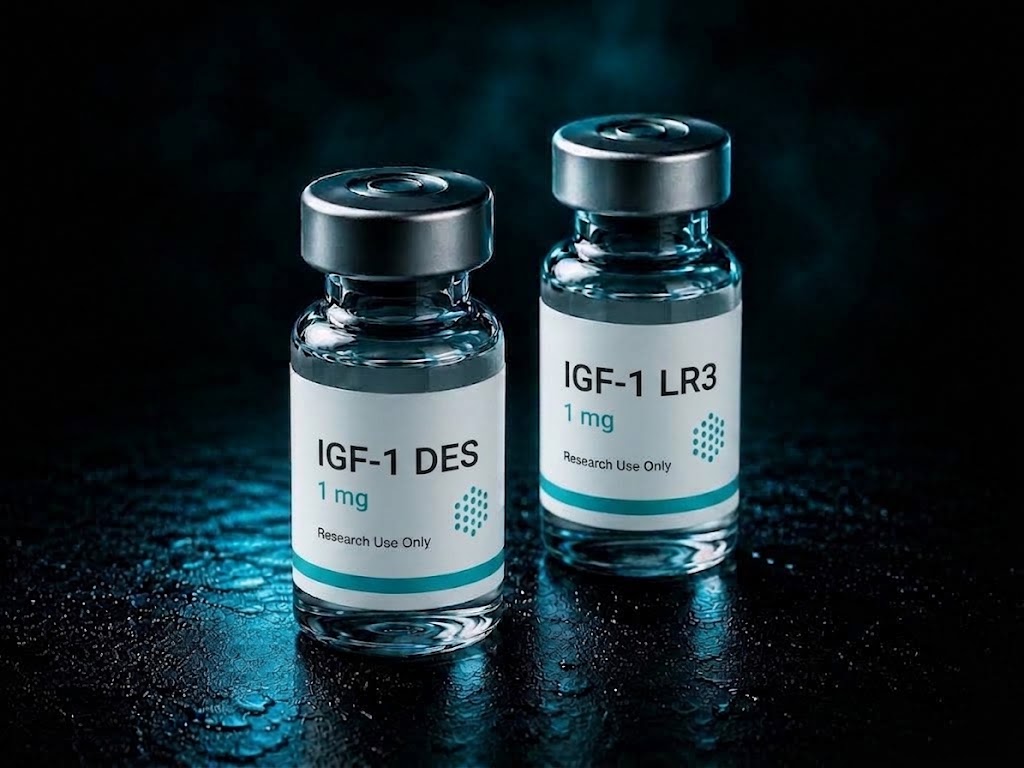
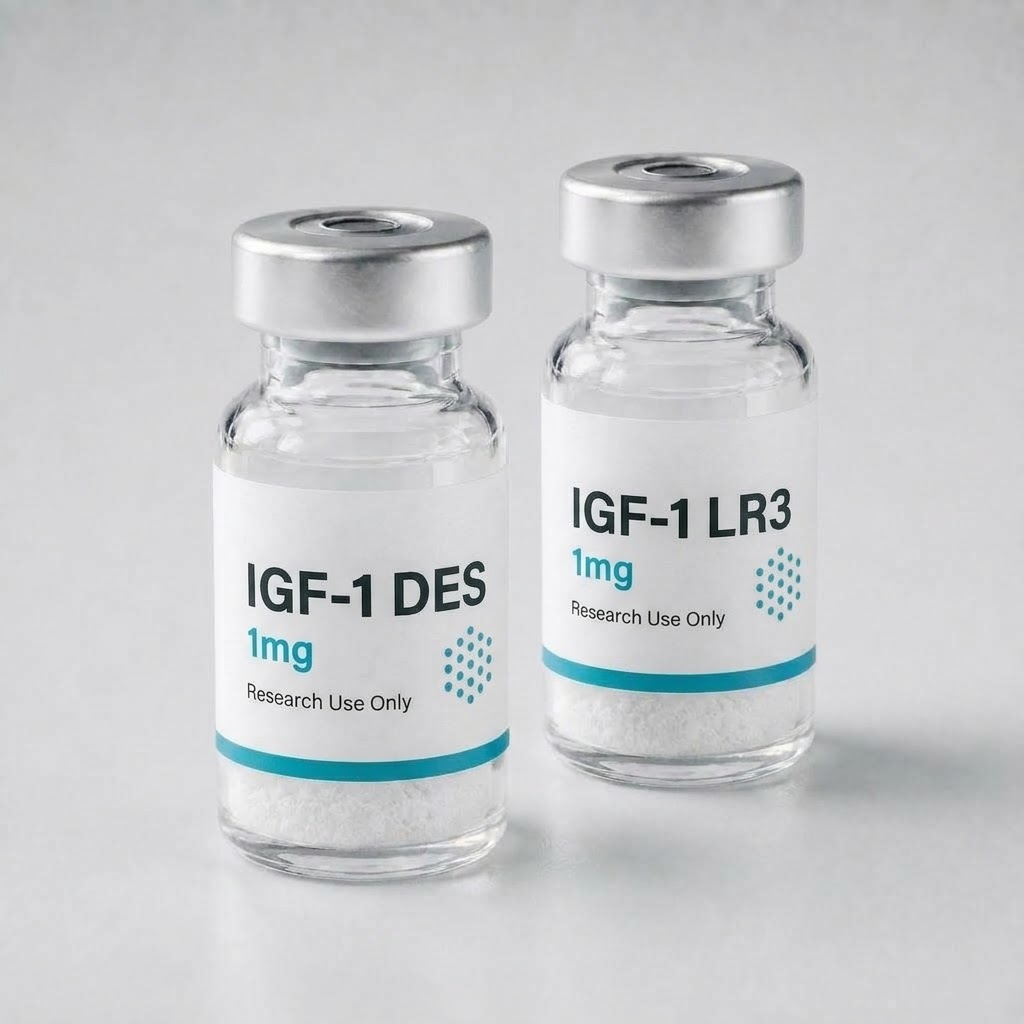
Common vial
1 mg
1 mg
Before you start
Route
Under the skin or into muscle
Do not use if
Any history of cancer, given the growth-promoting mechanism
Diabetes, or any use of insulin, because the blood-sugar drop can be dangerous
Pregnancy
Banned in drug-tested sport
Any history of cancer
Diabetes, or any use of insulin
Pregnancy
Banned in drug-tested sport

What separates them

Proof behind the dose. Every dose here comes from community practice. Not one is backed by a published human study, which is worth knowing before you read the numbers as if they were equivalent.

What doesn't differ: They are both taken the same way (under the skin or into muscle). Neither has a measured effect size from a published trial, so there is no number to rank them on.

Difference map
Each column keeps its compound color below. A shared gray row means the same answer; colored cells show where they split.
IGF-1 LR3
IGF-1 DES
PROOF
Community practice
Community practice

What people actually report

IGF-1 LR3

  • High risk: it can drop blood sugar dangerously, so it must never be combined with insulin, and it carries a theoretical cancer-growth concern.
  • Banned in drug-tested sport.
Stop and get help if
  • Signs of very low blood sugar such as shaking, sweating, confusion, or fainting, which needs fast-acting sugar and urgent help
  • New lumps or masses

IGF-1 DES

  • High risk: the same dangerous low-blood-sugar and cancer-growth concerns as the long-acting version.
  • Banned in drug-tested sport.
Stop and get help if
  • Signs of very low blood sugar such as shaking, sweating, confusion, or fainting
  • New lumps or masses

Side effects are what users and trials report most often, not a complete list. Anything sudden, spreading, or breathing-related is an emergency regardless of which compound caused it.

People also compare

This comparison does not cover cost, long-term safety, or how you personally will respond. Effect figures come from separate trials in different populations and are not always directly comparable to each other. Nothing here is medical advice or a recommendation to use any of these. Talk to a clinician about your own situation.